
Australia Sets Minimum Wage for Delivery Riders at A$31.30 per Hour, Effective 17 August
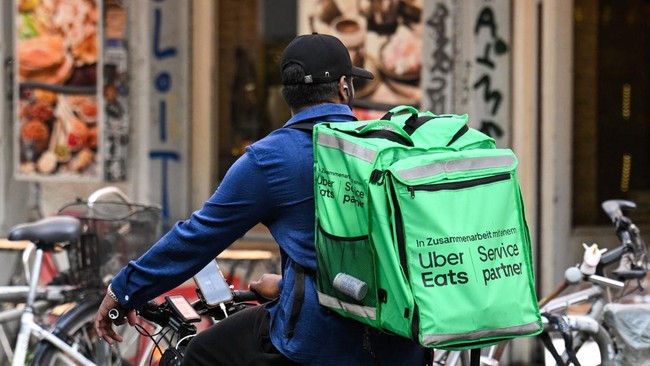
Australia’s Fair Work Commission has set a minimum wage standard for online couriers delivering food and groceries, similar to the work of online motorcycle taxi drivers on platforms such as GoFood and GrabFood in Indonesia.
The regulation released in Australia is considered one of the most comprehensive in the world, with the highest worker compensation. It will take effect on 17 August 2026 and will benefit around 250,000 workers, according to a Reuters report on Thursday (13/8/2026).
Food delivery workers in Australia are now entitled to a minimum payment of A$31.30 per hour, equivalent to Rp 345,000 per hour. This minimum wage is significantly higher than Australia’s standard minimum wage of only A$26.44 per hour.
The wage is paid for all working time, starting from when the worker accepts an order until the goods are delivered to the buyer. This means workers are still paid by the hour even when order volumes are low.
In addition to higher wages, app companies are also required to provide basic accident insurance for workers while on duty. Although the nominal amount has not yet been determined, this insurance must include protection while workers are in transit delivering orders. Meanwhile, workers remain responsible for insurance on the private vehicles they use.
This regulation has been welcomed by the Transport Workers’ Union of Australia.
“Delivery workers have for too long been marginalised from labour protections. From this Monday, they are entitled to the best protection standards in the world,” said National Secretary of the Transport Workers’ Union, Michael Kaine, in a joint statement with Uber Eats and DoorDash.
Both app companies also expressed their support. They emphasised that better protection for workers does not have to sacrifice the flexible nature that is the appeal of this work.
Until now, delivery workers have generally been categorised as independent partners rather than employees. As a result, they are not entitled to minimum wages, benefits, occupational safety guarantees, or social protection. Yet they bear their own fuel costs, vehicle maintenance, and the risk of road accidents.
In Indonesia, the government of President Prabowo Subianto is reportedly drafting a Presidential Regulation concerning workers on digital app-based platforms such as online motorcycle taxis. This regulation will be issued following Prabowo’s move to increase online motorcycle taxi drivers’ commission from 80 percent to 92 percent.