
Australia on Alert for Undersea Warfare That Could Determine the Nation's Fate
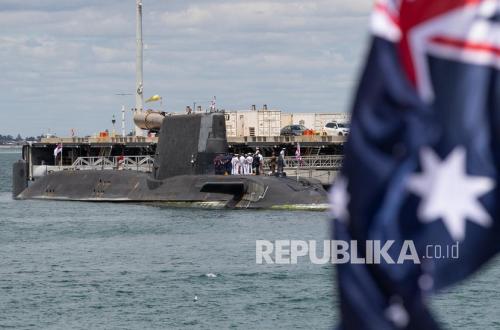
Australia is now seeing the threat of war from a place rarely noticed by the public: the seabed. Not tanks, not fighter jets, nor long-range missiles. What now concerns Canberra are the submarine cables, pipelines, offshore energy networks, and silent infrastructure that connect Australia to the world. On the surface, the sea appears calm. But beneath it lie digital communication routes that determine the life and death of the modern economy. Australia’s latest National Defence Strategy (NDS) identifies threats to critical undersea infrastructure as a risk that can no longer be ignored. In the document, the Australian government warns that ‘critical undersea infrastructure, the backbone of Australia’s digital communications, remains vulnerable to sabotage by hostile states.’ The sentence is short, but its impact is enormous. For the first time, the threat to critical undersea infrastructure (CUI) has been given a clear place in Australia’s defence strategy. This means future wars are not only imagined in the air, on land, or on the sea surface, but also thousands of metres beneath the ocean. Why is Australia so worried? The answer begins with its geographical location. Australia is an island continent. Almost all of its digital connections to the outside world depend on a network of submarine cables. Commodore Michael Turner, Director General of Maritime Integrated Capabilities for the Royal Australian Navy (RAN), said this position makes CUI a national lifeline. ‘If you look at it from an Australian perspective, Australia is an island, so CUI is absolutely critical to our national prosperity,’ Commodore Turner said at the Combined Naval Event 2026 conference in the United Kingdom, as reported by Naval News some time ago. But that does not explain everything. From a data perspective, Australia is connected to the world via 16 submarine cables that carry 98 per cent of the country’s internet traffic. If those cables are disrupted, the impact would not only be on citizens’ personal communications, but also on financial transactions, government systems, logistics, energy, and military capability. ‘The protection of that infrastructure is absolutely critical to our economic wellbeing and our ability to fight,’ Turner said. This is where the story changes. Australia does not only have submarine cables. The country also has an extensive network of offshore energy infrastructure, particularly on the North West Shelf. In that region, the oil and gas resources form a crucial part of the national economy as well as the country’s strategic interests.