
Australia and Vanuatu Sign Pact to Block Foreign Military Bases
Australia and Vanuatu have finally signed a long-negotiated security and economic agreement. This deal simultaneously closes the opportunity for other nations, including China, to establish military bases in the South Pacific island nation.
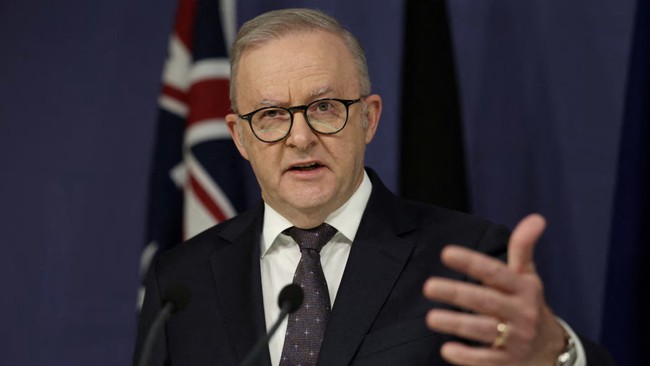
Australian Prime Minister Anthony Albanese stated that the Nakamal Agreement reaffirms Australia’s position as Vanuatu’s key partner in the fields of economy, security, and development. “Our agreement reflects and affirms Australia’s role as Vanuatu’s largest and most comprehensive economic, security, and development partner, a responsibility we take seriously,” Albanese said, as quoted by The Associated Press on Monday (29/6/2026).
The agreement was signed by Albanese alongside Vanuatu Prime Minister Jotham Napat in Canberra, approximately nine months after a previous draft was rejected by the Vanuatu government. At that time, Vanuatu felt the initial draft had the potential to limit its manoeuvrability in attracting infrastructure investment from various countries.
Napat emphasised that this new agreement is built on the basis of mutual trust and shared interests. “This agreement reaffirms our shared commitment to continue and strengthen the comprehensive partnership between our two nations, based on mutual respect, trust, and our shared vision for a peaceful, stable, and prosperous Pacific,” he said.
Under the terms of the agreement, Vanuatu commits to not allowing the construction of foreign military bases or infrastructure that could be used for military purposes within its territory. The nation will also ensure that vital infrastructure remains free from militarisation, foreign interference, and unauthorised access.
Furthermore, Vanuatu will consult with Australia when considering third-party involvement in strategic infrastructure projects, although Canberra will not possess a veto right as was proposed in the initial draft.
This agreement is part of Australia’s strategy to strengthen ties with Pacific nations to curb China’s increasing security influence in the region. Nevertheless, Vanuatu remains open to police cooperation with Beijing. The nation prioritises cooperation with members of the Pacific Islands Forum but does not rule out the possibility of receiving visits from Chinese police personnel, who have been visiting periodically.
China responded to these developments by expressing hope that cooperation between Australia and Vanuatu would not be directed at countering Beijing’s interests. “We hope that cooperation between the relevant countries and Pacific Island nations will contribute to the development and stability of the region, rather than targeting any third party or being used as a tool for geopolitical competition,” said Chinese Foreign Ministry Spokesperson Guo Jiakun.
On the other hand, Vanuatu is also negotiating the Namele Agreement with China. Napat asserted that this agreement is a comprehensive development cooperation, not a security pact. He ensured that the contents of the agreement would be published after receiving approval from the Chinese government.
“There is nothing to hide. Our government is transparent, and I am also grateful that Prime Minister Albanese allowed me to share the Nakamual Agreement with the Chinese side,” he said.
In the initial draft of the Nakamal Agreement, Australia had offered aid worth 500 million Australian dollars (approximately Rp5.5 trillion) for a 10-year period. However, Albanese stated that the funding value in the final version of the agreement will be announced this coming December.
Source: jawawa.id (https://jawawa.id/newsitem/australia-and-vanuatu-sign-pact-to-block-foreign-military-bases-1782748341)
Originally published by CNBC Indonesia (https://www.cnbcindonesia.com/news/20260629205842-4-746663/tok-tetangga-ri-bersatu-blokir-cengkeraman-china-di-wilayah-ini), translated from Indonesian