
Australia and Indonesia Strengthen Indonesian Language Learning Ecosystem
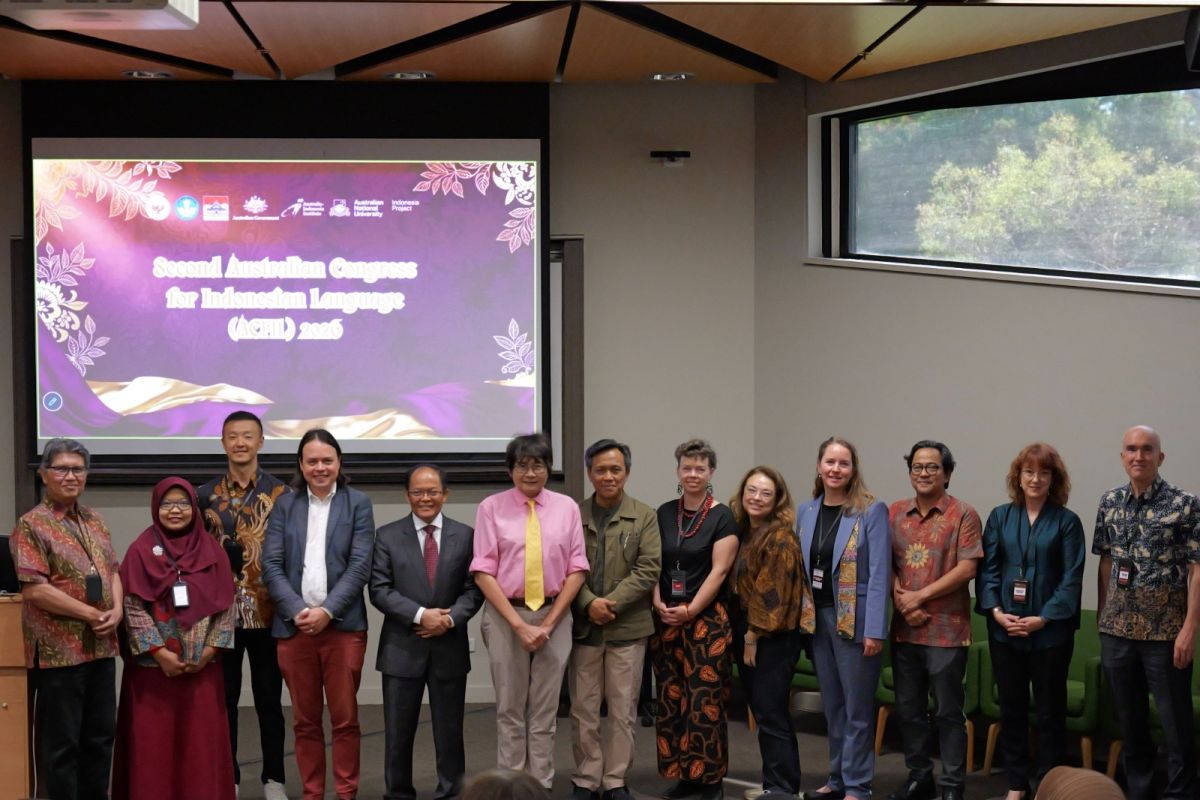
Jakarta (ANTARA) - Indonesia’s Ministry of Primary and Secondary Education (Kemendikdasmen), together with partners in Australia, is strengthening collaboration to widen access to and improve the quality of Indonesian-language learning in Australia through the Second Australian Congress for Indonesian Language (ACFIL) 2026.
In a written statement issued by the ministry in Central Jakarta on Wednesday, it said the congress, held at the Australian National University (ANU) in Canberra on 21–22 November 2026, provided a platform for collaboration to make Indonesian-language learning more engaging and meaningful, improve teachers’ skills, and expand partnerships between educational institutions in the two countries.
ACFIL 2026 was held in a hybrid format and attended by 150 participants: 50 in person and 100 online. They included government officials, academics, writers, Indonesian-language teachers and lecturers, representatives of Indonesian language centres in various parts of Australia, and other stakeholders.
At the event, Minister of Primary and Secondary Education Abdul Mu’ti stressed that language was not merely a tool for communication, but a bridge for building mutual understanding and cooperation.
“Geographically, Indonesia and Australia are close, but language helps bring us closer. By learning each other’s languages, we can understand one another’s stories, build trust, and develop lasting friendship and cooperation,” Mu’ti said.
Noting the decline in the number of school and university students studying Indonesian in Australia, he called for three priorities.
First, to provide meaningful, engaging and enjoyable learning through a deep-learning approach.
Second, to strengthen teachers’ professional development and ensure continuity in learning pathways, from school to university and the workplace.
Third, to expand the use of Indonesian beyond the classroom through cultural experiences, student exchanges, school partnerships and online conversations.
As a reciprocal commitment, Mu’ti said English would become a compulsory subject in Indonesian primary schools from Year 3, starting in the 2027/2028 academic year.
He linked proficiency in Asian languages to Australia’s strategic interest in strengthening economic ties and regional diplomacy.
He said Australia’s progress remained far short of expectations since Mandarin, Hindi, Japanese and Indonesian were designated priority languages in the 2012 Australia in the Asian Century White Paper, even as Australia now promotes its Southeast Asia Economic Strategy to 2040.
“English is important, but English alone is not enough. If Australia is serious about building relationships with Asia, its people also need to learn to communicate in Asian languages,” Siswo said.
To strengthen Indonesian-language learning in Australia, Hafidz Muksin, head of the Ministry of Primary and Secondary Education’s Language Development and Cultivation Agency (Badan Bahasa), set out seven strategic measures.
The measures cover widening access to learning, improving teaching quality and strengthening an ecosystem involving government, universities, schools, teachers and communities.
They include expanding support for Indonesian for Speakers of Other Languages (BIPA) programmes in schools and universities through academic partnerships, student exchanges, Indonesian studies and teaching-assistant internships; building the capacity of Indonesian Language Learning Ambassador (ILLA) participants with Australia Awards Indonesia (AAI) through technical guidance; and strengthening opportunities to study in Indonesia through the Darmasiswa programme and educational visits for Australian teachers and pupils.
Hafidz said the agency was also encouraging use of Rumah Pendidikan, Digital Books (BUDI), online BIPA and the online translation service Penjaring. Other measures include using Indonesian films as teaching resources, accompanied by study guides, vocabulary, listening activities, discussions and writing exercises, as well as improving teachers’ skills in pedagogy, learning materials, technology, culturally based approaches and professional networking through training, workshops and technical guidance.
Hafidz said cooperation among different parties was needed to ensure ACFIL did not remain merely a forum for exchanging ideas, but led to joint programmes with measurable follow-up.
In addition to attending the congress, the Kemendikdasmen delegation, led by the head of Badan Bahasa and accompanied by Suparto, secretary of the Directorate General of Secondary and Special Education, was scheduled to visit several schools in Canberra and Sydney.
Source: jawawa.id (https://jawawa.id/newsitem/australia-and-indonesia-strengthen-indonesian-language-learning-ecosystem-1795600540)
Originally published by Antara (Indonesian) (https://www.antaranews.com/berita/5877627/australia-indonesia-perkuat-ekosistem-pembelajaran-bahasa-indonesia), translated from Indonesian