
August Money Circulation Explodes, Do People's Wallets Benefit?
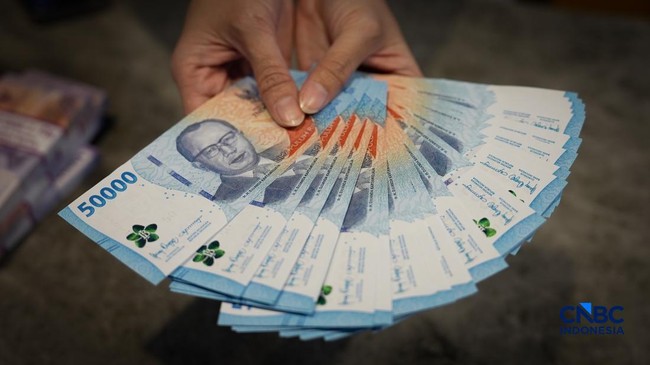
Every August, Indonesia is never short of ceremonial commotion. Red and white flags stretch across the country, entertainment stages are erected, and various community competitions are held simultaneously. Yet behind the festivities, one thing is equally worth highlighting: the surge in money circulation in the real sector.
Empirically, independence celebrations are not merely an annual ritual but a seasonal economic event capable of driving transactions from small traders to large corporations. This phenomenon raises a crucial question: does the exploding money circulation in August truly put money in ordinary people’s pockets sustainably, or is it merely a fleeting transactional euphoria?
This question becomes increasingly relevant when set against the grand theme of Indonesia’s 81st Independence Day: ‘A Sovereign, Just, and Prosperous Indonesia’.
Strong in Consumption, but Not Yet Evenly Distributed
Data from Statistics Indonesia (BPS) shows Indonesia’s economic growth reached 5.11% throughout 2025, strengthening from the previous year’s 5.03%. The main pillar supporting this growth remains household consumption, which contributes 54.25% to Gross Domestic Product (GDP).
On one hand, this figure demonstrates the resilience of public spending. Independence celebrations have succeeded in enlarging aggregate domestic demand through spending on culinary products, costume rental services, competition equipment, and regional tourism mobility.
However, from a strategic management perspective, independence celebrations that impact the economy must not stop at the level of event management. The government and stakeholders must transform them into strategic economic management aligned with the pillar of Social Justice.
Without a proper diversion strategy, the money circulating massively during August will simply evaporate back into large-scale markets without leaving behind additional assets or an increase in real purchasing power for lower-income communities.
Translating the 81-Year Independence Vision into Economic Strategy
So that the August momentum does not merely drain citizens’ savings but is instead converted into a source of productive income, the money circulation must be articulated into the three core values of Indonesia’s 81st Independence Day:
Sovereign (Strengthening Self-Reliance in Various Sectors): Celebration spending must prioritise the local-first principle. All procurement of logistics, culinary MSME consumption, regional artisan souvenirs, and local transport fleets must rely on domestic supply chains. Economic self-reliance begins when public and private spending creates a full multiplier effect for domestic business actors.
Just (Upholding Social Justice and Equitable Development): The independence festivities must not concentrate money circulation only in large cities. Through the integration of regional tourism supply chains, where BPS in its 2025 Domestic Tourism Statistics recorded domestic tourist movements exceeding 1.2 billion trips, this momentum must be packaged into an economic-cultural festival (independence festival) spread evenly across various regions so that the economic pie is fairly distributed to grassroots MSME centres.
Prosperous (Improving the Welfare of All Citizens Equitably): MSMEs enjoying increased turnover during the festival must be encouraged to reinvest, digitalise, and increase production capacity. The flow must move linearly: event > customer acquisition > repeat transactions > increased production > permanent job creation. This is the key to achieving equitable and sustainable prosperity.
The Urgency of Addressing Real Welfare
The fundamental challenge of Indonesia’s economy today is not merely creating seasonal transactional commotion. The World Bank’s Indonesia Economic Prospects 2025 report issues a stark warning: consumption growth among the aspiring middle class remains stuck at around 1.3% per year due to the lack of quality job availability and productivity stagnation.
On the other hand, BPS (February 2026) notes that although the Open Unemployment Rate (TPT) stands at 4.68%, the average national labourer wage remains at Rp3.29 million per month. This reality confirms that increased consumption during celebrations does not automatically indicate that people’s wallets are secure.
Likewise, with the decline in the poverty rate to 8.07% (BPS, March 2026), the effectiveness of this reduction must not continue to depend on social assistance but must be driven by increased productivity and real income for the people.
Redefining Economic Independence
Ultimately, economic independence is not measured by how much money people spend on festive trinkets. True independence is achieved when ordinary citizens are not merely spectators and consumers but act as producers, entrepreneurs, and asset owners who enjoy the fruits of growth fairly.
The momentum of Indonesia’s 81st Independence Day must prove that the exploding money circulation is not merely enlivening the seasonal atmosphere but is truly capable of filling people’s wallets, strengthening the middle class, and transforming the vision of a Sovereign, Just, and Prosperous Indonesia from a mere slogan into a tangible economic reality for all citizens.