
August Holds Special Significance for Indonesia and India as Fellow BRICS and G20 Members Strengthen Ties
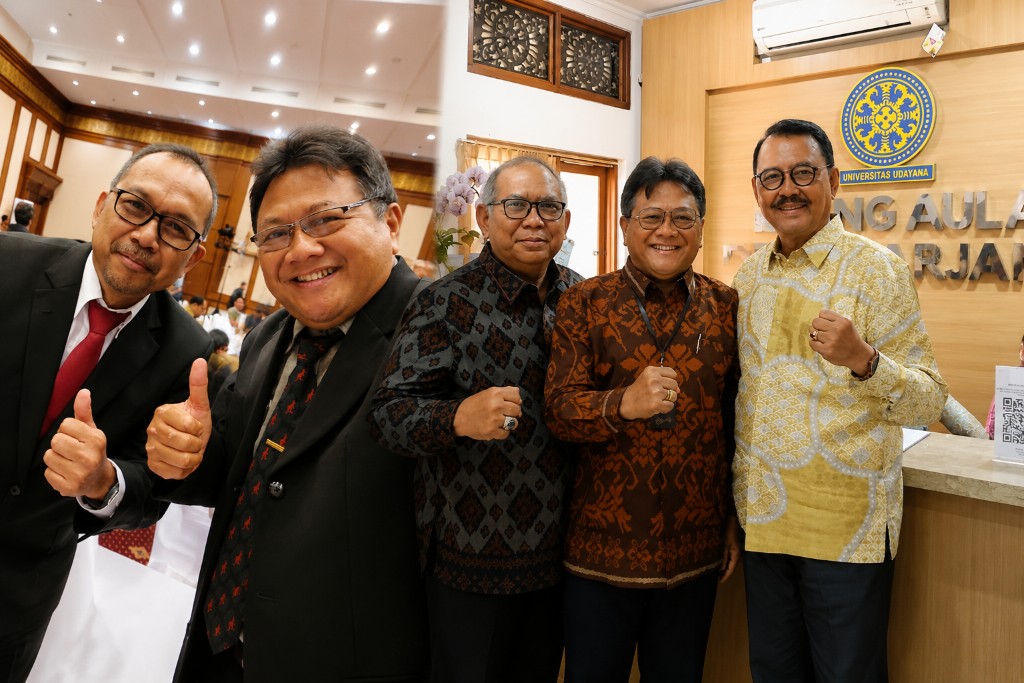
Denpasar (Atnews) - The Bali chapter of the Indonesian Hotel and Restaurant Association (PHRI), Dr. Trisno Nugroho, expressed hope that relations between Indonesia and India will grow even stronger.
August has always held special meaning for both countries. Indonesia commemorates 81 years of independence, while India’s Independence Day on 15 August 2026 marks the 80th anniversary of its freedom.
These two great democracies of Asia are not only remembering past struggles but are also writing a new chapter: turning independence into the capacity to create prosperity, master technology, strengthen economic self-reliance, and offer hope to the next generation.
Relations between Indonesia and India are far older than modern diplomatic ties. Their traces live on in language, literature, art, religion, architecture, maritime trade, and the Ramayana and Mahabharata epics that have flourished in the cultural expressions of the archipelago. That civilisational closeness is now acquiring new meaning.
Amid the shifting centre of global growth towards Asia, Indonesia and India have the opportunity to transform their historical affinity into future economic strength.
A Business Today India report published on 8 August 2026 offers an interesting context. Drawing on IMF World Economic Outlook and World Bank data, the report titled “India tops G20 growth rankings since 2014, outpaces China: IMF data” places India as the country with the highest compound growth among G20 economies during 2014-2026.
In terms of nominal gross domestic product denominated in US dollars, India recorded a compound annual growth rate (CAGR) of 6.1%, slightly above China’s 5.9% and the United States’ 5.3%.
Indonesia also holds an honourable position: sixth with a CAGR of 4.7%, after Saudi Arabia and Türkiye. This means that amid the pandemic, high inflation, supply chain disruptions, and geopolitical tensions, Indonesia and India are both among the six G20 economies with the fastest nominal US dollar expansion during that period.
These figures need to be read carefully. Nominal GDP CAGR in US dollars is not the real annual economic growth rate; it is also influenced by inflation and exchange rate movements.
Nevertheless, the indicator conveys an important message: the economic weight of India and Indonesia in the world economy continues to grow.
India has more than doubled the size of its economy and is approaching US$4.15 trillion, according to the comparison cited by Business Today.
India offers market scale, strength in information technology, pharmaceuticals, digital industry, human resources, and an innovation ecosystem.
Indonesia, meanwhile, offers a strategic position in ASEAN, resource wealth, a developing industrial base, a demographic bonus, a dynamic digital economy, and significant potential in green energy and the maritime economy.
With a combined population of around 1.75 billion people—more than a fifth of the world’s population—the partnership between the two countries possesses extraordinary market power and influence.
Indonesia itself has shown resilience with growth of 5.03% in 2024. The next challenge is not merely maintaining growth but raising its quality: higher productivity, better jobs, value-added exports, investment that strengthens national industry, and more equitable distribution of development gains.
The growth target of 8% should be read as a call to accelerate reform, not merely to chase a number.
India’s trajectory, meanwhile, shows that population scale can become a strength when supported by infrastructure investment, digitalisation of public services, industrialisation, education, and innovation.
Indonesia need not copy India, but it can draw lessons: high growth requires policy continuity, the courage to build domestic capacity, and the ability to connect millions of small businesses with markets and technology.
The Indonesia-India economic partnership must not stop at commodity trading.
The bilateral trade target of US$50 billion is indeed important, but a more meaningful measure of success is how much the cooperation creates added value, knowledge transfer, quality jobs, and economic resilience in both countries.
President Prabowo Subianto’s state visit to India on 23-26 January 2025 strengthened the Comprehensive Strategic Partnership between the two countries. The Indonesia-India CEO Forum and intergovernmental meetings opened space for cooperation in health and pharmaceuticals, the digital economy, manufacturing, infrastructure, energy, connectivity, food, and defence.
That momentum received important reinforcement through the reciprocal visit of Indian Prime Minister Narendra Modi to Indonesia on 6-8 July 2026.
The state visit affirmed that Indonesia-India relations have moved from historical closeness towards a more structured and results-oriented partnership.
President Prabowo and Prime Minister Modi again aligned the vision of Indonesia Emas 2045 with Viksit Bharat 2047, while advancing cooperation in trade and investment, the digital economy, local currency transactions and cross-border payments, critical minerals, renewable energy, health, education, maritime connectivity, and supply chain strengthening.
The series of reciprocal visits by the two leaders demonstrates diplomatic continuity and political commitment at the highest level.
The next steps must be more concrete: building shared value chains. Indian companies can expand pharmaceutical production, health technology, electric vehicles, data centres, and digital services in Indonesia.
Indonesian businesses can enlarge access to the Indian market for food products, sustainable plantations, furniture, the creative economy, tourism, and halal products. Collaboration must not be enjoyed only by large companies; MSMEs, start-ups, universities, and young talent must be part of that ecosystem.
Bali holds a distinctive position in the relationship between the two nations. Cultural closeness means Indian society does not view Bali merely as a tourist destination but as a space for civilisational encounter.
This emotional capital can be developed into quality tourism cooperation, direct flights, wedding and wellness tourism, film, cuisine, yoga, the creative economy, education, and international business meetings.
However, increased visits must be managed according to principles of quality and sustainability. Success cannot be measured solely by tourist numbers, but also by length of stay, local spending, respect for culture, use of MSME products, equitable distribution of benefits, and contribution to environmental recovery.
In this way, Bali can become a gateway for people-to-people relations as well as a laboratory for a more humane Indonesia-India partnership.
First, the two countries need to transform trade targets into a roadmap for investment and shared value chains with projects, responsible parties, timelines, and indicators of local benefit.
Second, digital cooperation should be directed towards payment interoperability, cybersecurity, artificial intelligence, skills upgrading, and expanding MSME access—not merely enlarging the market for platforms. Third, collaboration on food, clean energy, pharmaceuticals, and health technology should be positioned as a shared resilience agenda.
An uncertain world needs partners that mutually strengthen production and supply capacity. Fourth, sea and air connectivity must be expanded so that the flow of goods, tourists, students, and investment becomes more efficient. Historical closeness requires modern logistical bridges.
Fifth, the partnership must be people-oriented. Student exchange programmes, vocational training, joint research, and city-to-city or region-to-region collaboration will make bilateral relations deeply rooted, outlasting changes of government and economic cycles.
India’s rise in the G20 growth rankings and Indonesia’s position in the top six are not reasons for complacency. Both are invitations to work harder.
The challenges of poverty, inequality, education quality, productivity, employment, and the environment remain real.
Growth is only worth celebrating when it enhances human dignity and expands opportunity.
Indonesia and India are two old civilisations with young energy. Both have vibrant democracies, plural societies, large markets, and a conviction that progress need not erase cultural identity.
If those strengths are combined, the relationship between the two countries can develop from historical friendship into a strategic partnership that helps shape the Asian century.
Ultimately, the meaning of independence is not only freedom from colonialism but freedom to determine the future.
Indonesia Emas 2045 and Viksit Bharat 2047 should not proceed separately. The two can meet in a single aspiration: an Asia that grows stronger, fairer, greener, and more hopeful for the world.
Meanwhile, Professor Dr. IB Raka Suardana, Professor at the Faculty of Economics and Business of Undiknas University and Vice Chairman of KADIN Bali, said Indonesia and India will grow even stronger.
He noted that the state visit of Indian Prime Minister Narendra Modi to Indonesia is a strategic momentum to strengthen increasingly close bilateral economic relations.
The meeting of the two heads of state not only reflects good diplomatic relations but also demonstrates the commitment of both countries to building a long-term economic partnership through cooperation in trade, investment, defence, health, education, energy, agriculture, environment, and technology.
The agreement to accelerate the Indonesia–India Preferential Trade Agreement (PTA) and to review the ASEAN–India Trade in Goods Agreement (AITIGA) sends a positive signal for increased trade flows, investment, and economic connectivity between the two countries.
From an economic perspective, the cooperation has considerable prospects given that Indonesia and India are two countries with a combined population of around 1.7 billion people and possess enormous economic value.
The position of Indonesia and India as members of BRICS and the G20 further strengthens their strategic role in shaping the direction of global economic growth.
The target of increasing bilateral trade value from around US$25 billion to US$50 billion is a realistic goal if supported by regulatory simplification, improved logistics connectivity, and stronger cooperation between business actors.
For Indonesia itself, increased investment from India has the potential to accelerate industrial downstreaming, strengthen food and energy security, expand technology transfer, and create new jobs.
Cooperation in the health and education sectors can also improve the quality of human resources, thereby supporting national economic productivity in the long term.
Meanwhile, strengthened collaboration in the technology sector will drive the digital transformation increasingly needed to enhance Indonesia’s competitiveness at the global level.
The successful holding of business forums and the signing of various memoranda of understanding show that Indonesia-India relations are no longer limited to diplomatic ties but have developed into an increasingly concrete economic partnership.
If all these commitments can be implemented consistently, the cooperation will provide broad benefits for the business world, increase national exports, enlarge investment flows, expand employment opportunities, and strengthen Indonesia’s economic resilience.
With a strong foundation of relations and mutually complementary economic interests, the Indonesia–India partnership has a significant opportunity to become one of the drivers of sustainable economic growth and to bring prosperity to the people of both countries.
In addition, Prime Minister Modi’s visit to Indonesia opens quite strategic opportunities for KADIN Bali to expand economic cooperation networks with Indian business actors.
Bali can use this momentum to attract investment in several sectors, such as tourism, health, education, information technology, renewable energy, and the creative industry.
Furthermore, KADIN Bali can encourage increased exports of leading products such as handicrafts, coffee, spices, fisheries, and MSME products to the very large Indian market.
Business matching cooperation, investment promotion, and technology and innovation exchange also have the potential to increase the competitiveness of Bali’s business community while strengthening sustainable regional economic growth.
Source: jawawa.id (https://jawawa.id/newsitem/august-holds-special-significance-for-indonesia-and-india-as-fellow-brics-and-g20-members-strengthen-ties-1786729816)
Originally published by atnews.id (https://atnews.id/portal/news/33074/bulan-agustus-istimewa-bagi-indonesia-india-sesama-anggota-brics-dan-g20-perkuat-peran-strategis-pertumbuhan-ekonomi-global), translated from Indonesian