
Auditors in LPEI Corruption Trial Reveal Corporate Fund Flows, Find No Personal Use
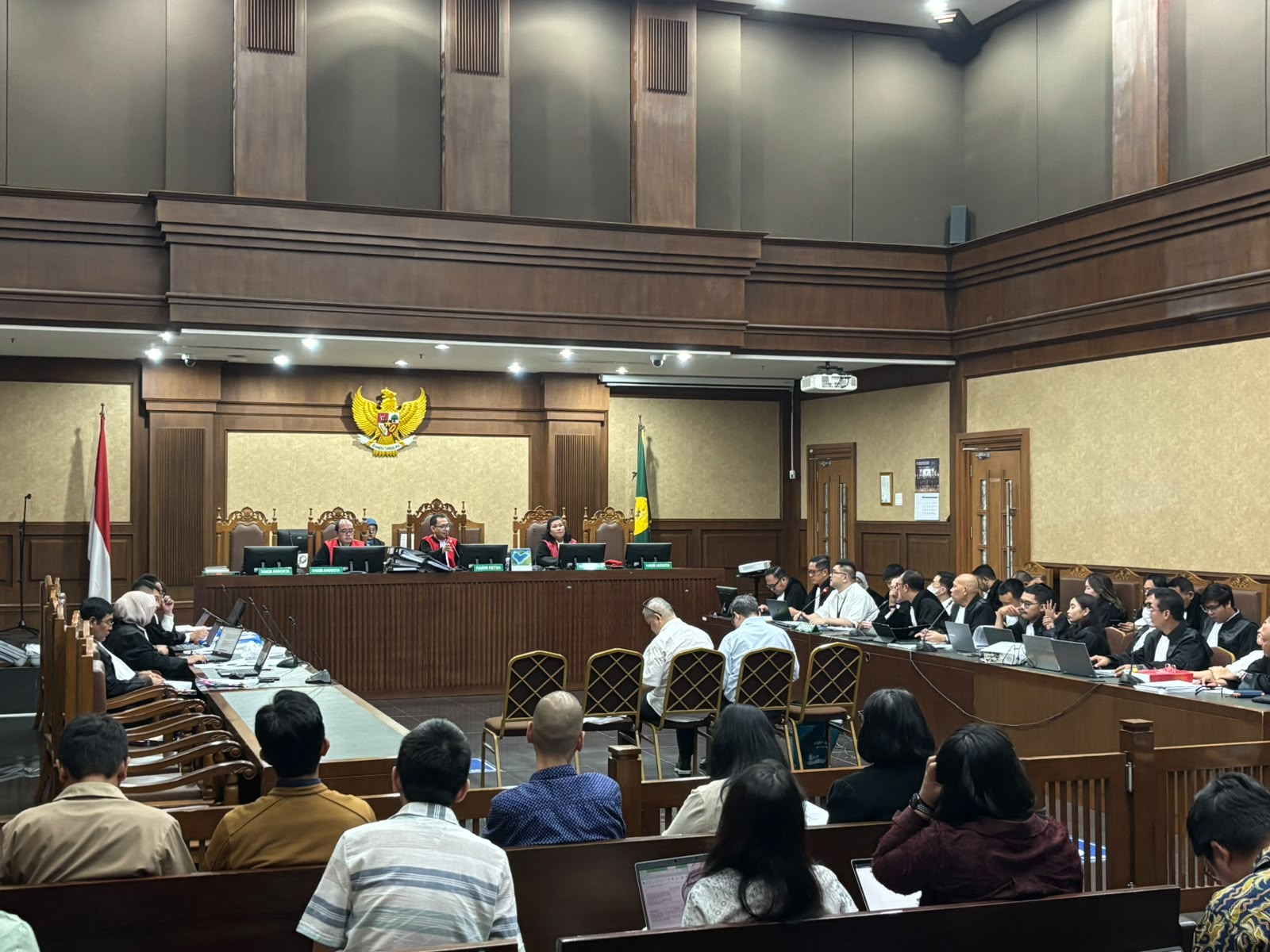
The ongoing trial of alleged corruption in the provision of financing facilities by the Indonesian Export Financing Institution (LPEI) continued with auditors revealing the use of corporate funds based on financial reports. The defendants in the case are Handoko Limaho, Dwi Wahyudi, Rian Wahyudi, and Liu Raymond.
During the hearing at the Corruption Court in Central Jakarta, two auditors, Krisnadi Swarta and Hi Heriadi, provided explanations regarding the company’s cost components, cash flows, and the collateral for the financing facilities received from LPEI.
Krisnadi explained that the company’s profit and loss report showed various costs related to business activities. For the 2019 audit period, the financial report recorded sales of approximately Rp112 billion, a cost of goods sold of around Rp97 billion, selling expenses of about Rp11 billion, general and administrative expenses of roughly Rp40 billion, and financial costs of around Rp59 billion. He stated that all these costs were recorded in the profit and loss report.
Auditor Hi Heriadi elaborated that to see the overall movement of company funds, one must refer to the cash flow report, which covers operating, investment, and financing activities. He noted that in 2018, there were operating cash outflows of around Rp11 billion, investment outflows of approximately Rp391 billion, and financing inflows of about Rp339 billion, resulting in a net cash outflow of roughly Rp36 billion.
Hi Heriadi also mentioned that the company had outstanding debts to LPEI from 2016 to 2018. In 2018, short-term debt was recorded at around Rp42 billion and long-term debt at approximately Rp600 billion.
When the legal counsel for defendant Handoko Limaho asked whether there was any use of loan funds for the defendants’ personal interests, both auditors stated they found no such evidence. “From what we sampled, there was none,” Krisnadi said. However, they clarified that their examination was conducted using a sampling method and did not cover all company transactions.
The trial also heard details regarding collateral. Hi Heriadi explained that the financial reports recorded a mortgage over 7,038 hectares of oil palm plantation land and buildings valued at approximately Rp295 billion. Additionally, there were fiduciary guarantees over PT Tebow Indah’s trade receivables worth around Rp22.5 billion and inventory worth about Rp15 billion. The trial is set to continue with further witness examinations.