
Auditor Admits Sampling Method Used in PT Tebo Indah Fund Examination During LPEI Corruption Trial
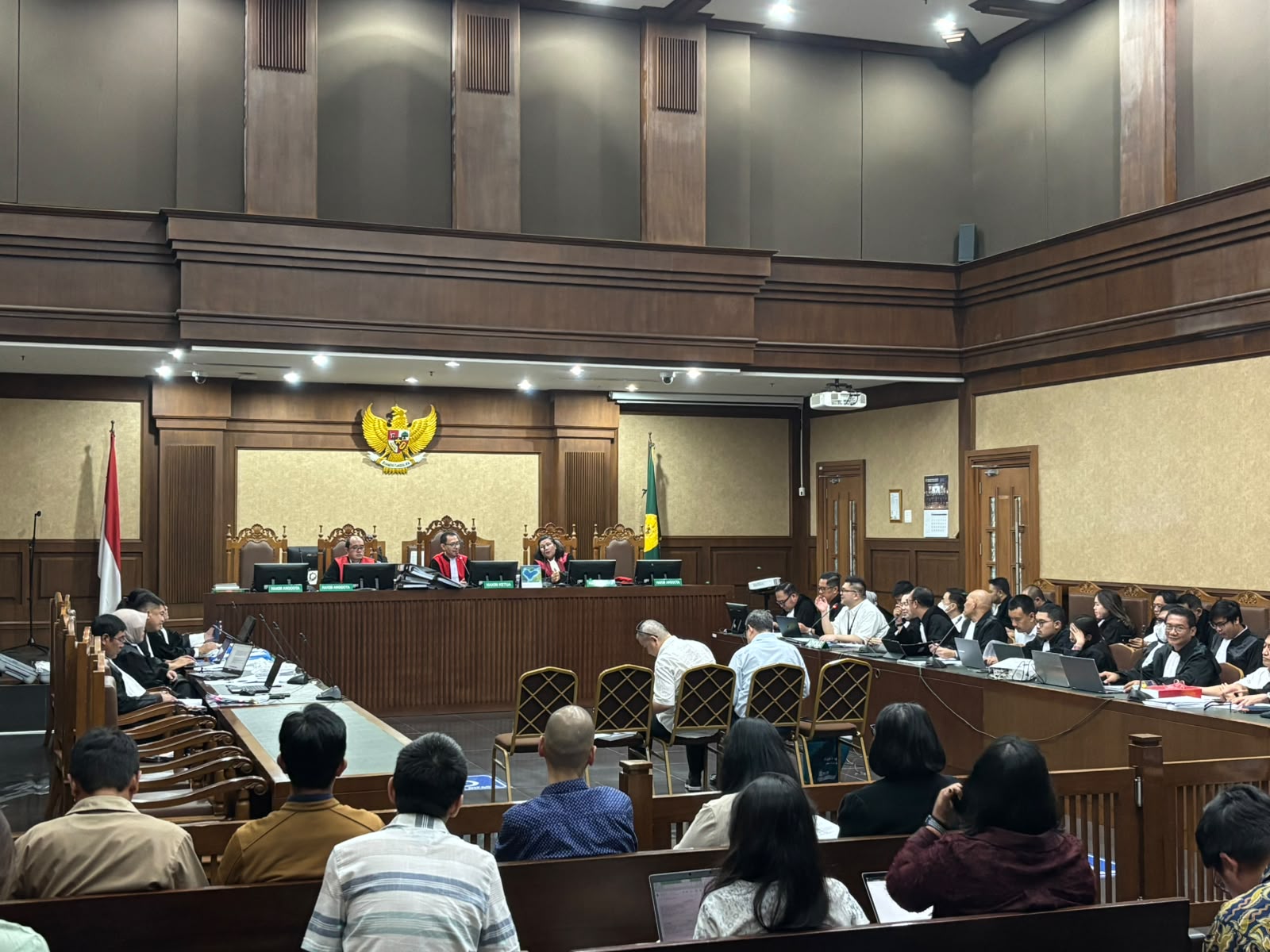
The trial of an alleged corruption case involving financing from the Indonesian Export Financing Institution (LPEI) has revealed the limitations of auditor examinations in tracing the use of funds by recipient companies. PT Tebo Indah’s financial report auditor acknowledged that the audit process was conducted based on a sampling method and did not examine every single transaction of fund usage.
This was conveyed by Krisnadi, the auditor of PT Tebo Indah’s financial reports for the 2019-2020 period, while testifying at the Jakarta Central Corruption Court. During the trial, Krisnadi explained that the examination was carried out in accordance with applicable auditing standards by taking samples of transactions for analysis.
“We do not look at the details one by one. The important thing is that when we examine, there is money coming into the company, then used by the company. We do not know in detail what it was used for,” Krisnadi stated before the panel of judges.
The testimony emerged as the defendant’s legal counsel team delved into the use of loan funds received by PT Tebo Indah from LPEI. The lawyers questioned whether the auditor knew exactly how much of the funds were used for project execution, company operations, or other needs.
According to Krisnadi, auditors only examined transactions based on samples selected from the company’s financial reports. The auditors did not trace the entire flow of funds from the loan disbursement to the final use.
In the audit of PT Tebo Indah’s 2019 financial report, Krisnadi noted that the company was recorded as receiving a disbursement of approximately Rp151 billion from LPEI. Of that amount, there were bank obligation payments of around Rp96 billion. However, when asked about the details of the remaining disbursed funds, Krisnadi stated that the auditors did not examine the detailed use of each transaction.
In addition to Krisnadi, the trial also presented the auditor of PT Tebo Indah’s financial reports for the 2016-2018 period, H.I. Heriadi. In his testimony, Heriadi explained that the examination of the financial reports was also carried out based on audit procedures, including an examination of the company’s cash flow statement.
H.I. Heriadi explained that the company’s cash flow statement is divided into three activities: operations, investment, and financing. Based on the 2018 financial report examination, there were financing receipts of approximately Rp339 billion and investment expenditures of approximately Rp391 billion. Meanwhile, for the 2017 period, the cash flow statement recorded operating activity expenditures of approximately Rp49 billion, investment expenditures of approximately Rp70 billion, and financing receipts of approximately Rp140 billion.
During the trial, the auditor also explained that the company’s use of funds cannot only be seen from the profit and loss statement. Some expenditures may be recorded on the balance sheet, such as the purchase of fixed assets, making it necessary to review other financial documents to understand the company’s entire fund flow.
The auditors’ testimonies form part of the evidentiary process in the alleged LPEI financing corruption case. The panel of judges will continue to hear testimonies from other witnesses to uncover the process of granting financing facilities to the recipient company.