
Attracting Indonesia's Solar Energy Transition Investment at New York Climate Week
Indonesia is accelerating its energy transition to strengthen national energy security and meet international climate targets. Solar energy has become a priority in the nation’s renewable energy development, offering significant opportunities to expand power generation while strengthening domestic industry. To transform this national ambition into tangible projects, Indonesia must align its policy framework, industrial readiness, and financing structures to meet the expectations of global investors.
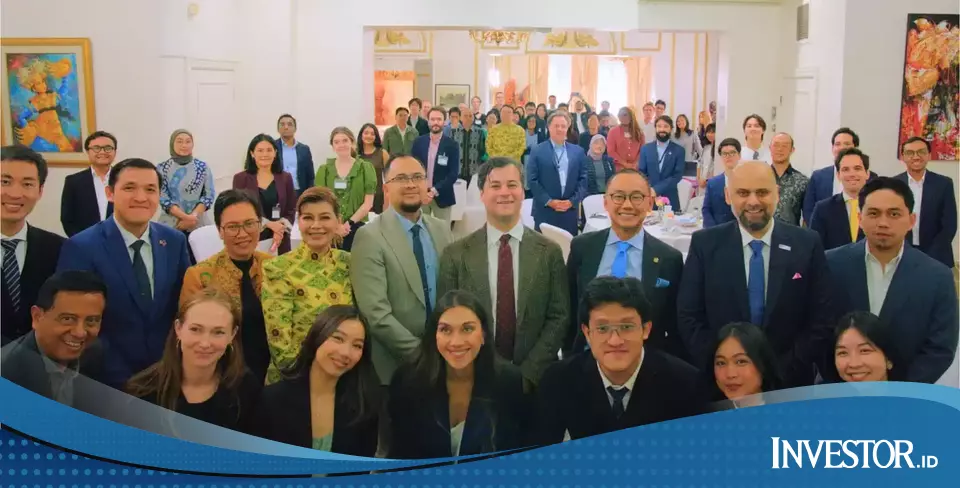
Recognising that this ambition requires cross-sector collaboration, the Indonesian Solar Energy Association (AESI) and the Indonesia Investment Promotion Center (IIPC) New York, alongside strategic partners Tenggara Strategics and SANARA, organised the Indonesia Solar Investment Forum 2026. The event took place on 24 September at the Consulate General of the Republic of Indonesia in New York, as a parallel event within the NYC Climate Week programme.
Through this forum, AESI and IIPC New York provided a platform for dialogue between policymakers, global investors, financial institutions, and international development partners. The discussions highlighted various challenges in solar energy financing, connected investment opportunities with capital owners, and focused on building partnerships to accelerate solar energy implementation across Indonesia.
Mada Ayu Habsari, Chairperson of AESI, emphasised that the national solar target requires global partnerships to achieve success. “The 100 GWp target is a direct work mandate, and opportunities for investors are open right now. We have utility-scale projects such as the Mentari 1 and Mentari 2 programmes offering 2.7 GWp, alongside rural electrification tenders targeting over 600 villages next year. We are actively seeking global partners to mobilise large-scale private capital and turn this pipeline of real projects into reality.”
Strengthening Project Economics and US Investment
The panel discussion examined how Indonesia can position its solar energy portfolio as a competitive investment opportunity in the global market. Topics discussed included project economics, regulatory certainty, technological trends, and the requirements needed by international investors before deploying funds. The discussion bridged Indonesia’s development priorities with the commercial needs of investors comparing various opportunities in developing nations.
For developers and financiers, this involves linking renewable energy potential with credible project preparation and clear incentives. Tessal Febrian, Director of IIPC New York, emphasised that investment incentives in Indonesia can play a crucial role. Through the Indonesia Investment Promotion Center (IIPC), investors can better understand the incentives and facilities available for priority investment opportunities, including renewable energy. By reducing uncertainty surrounding the investment climate and highlighting available support, these incentives can complement the fundamental commercial aspects evaluated by investors when deciding to develop or fund a project.
“We have recently implemented Government Regulation Number 28 of 2025, specifically designed to simplify business licensing, accelerate industrial development, and improve services for investors. Indonesia also provides fiscal incentives to support green investment, such as tax allowances, import duty exemptions, and super tax deductions. At the same time, we recognise that solar energy policies will continue to evolve alongside market growth,” said Tessal.
Mario Masaya, Vice President at the US-ASEAN Business Council, provided the perspective of US businesses evaluating various opportunities in Indonesia and the Southeast Asian region. His remarks highlighted the conditions enabling private sector participation, including regulatory clarity, public-private engagement, and collaborative relationships with local partners.
“For the US business community, Indonesia’s solar ambitions create opportunities across various lines, from technology and infrastructure to services. Clear policies and sustained public-private dialogue will help companies understand where they can collaborate with local partners,” stated Masaya.
Driving Connectivity
Strengthening the solar ecosystem requires a direct connection between project developers and the institutions that fund them. Alongside the panel discussions, the forum included face-to-face business consultation sessions specifically with AESI and the Indonesia Investment Promotion Center (IIPC) New York. These sessions provided space for investors to explore project requirements, investment conditions, and partnership opportunities directly with Indonesian representatives.
The discussions linked financing agendas with the capabilities required domestically. A robust project pipeline depends heavily on collaboration between the government, developers, technology providers, and financial institutions, as well as local capacity to build and operate these projects. Bringing these actors together can help identify commercial and technical requirements from the outset and improve project readiness to receive international investment.
By linking policy dialogue with practical investment matching, AESI, IIPC New York, and its partners highlighted the steps necessary to transform Indonesia’s solar potential into a credible and bankable pipeline of projects. The primary priority is to translate investor interest into real projects that can expand renewable energy capacity while strengthening the domestic industry needed to sustain large-scale development.
Source: jawawa.id (https://jawawa.id/newsitem/attracting-indonesias-solar-energy-transition-investment-at-new-york-climate-week-1790499060)
Originally published by investor.id (https://investor.id/business/455679/menarik-investasi-transisi-energi-surya-indonesia-di-new-york-climate-week), translated from Indonesian