
Attorney General's Office States SPPG Affiliated with Dadan et al. Will Not Automatically Be Stopped from MBG Program
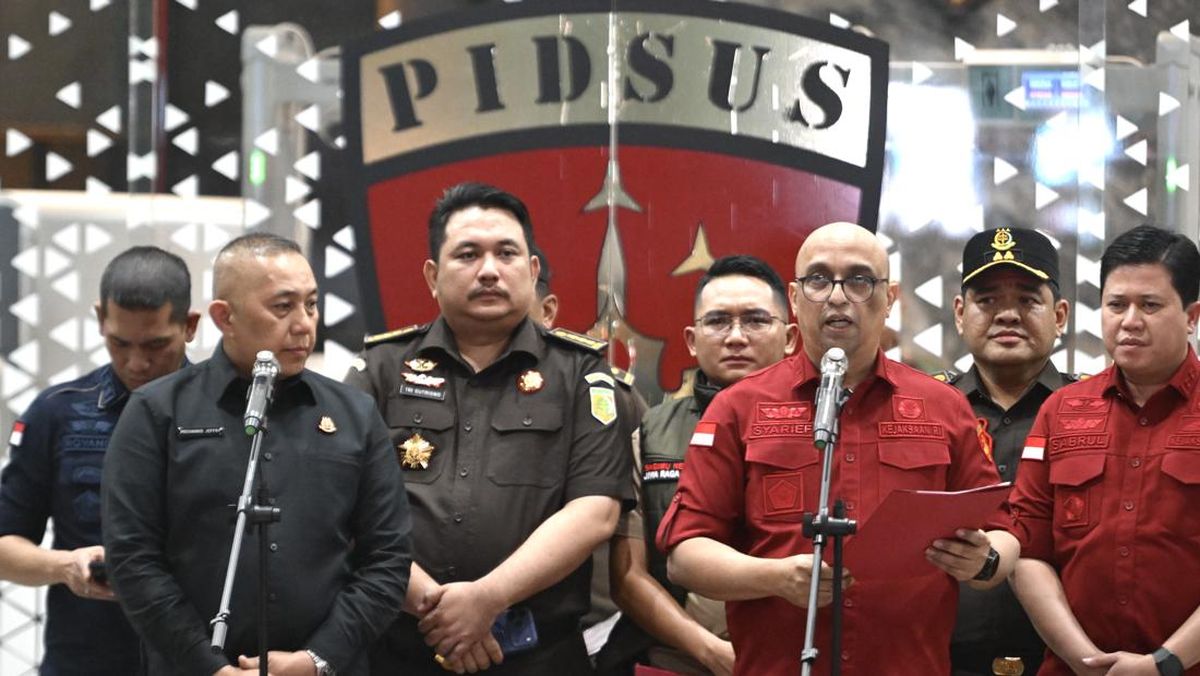
The Attorney General’s Office (Kejagung) of the Republic of Indonesia has stated that the Nutrition Fulfilment Service Units (SPPG) affiliated with the former Head of the National Nutrition Agency (BGN), Dadan Hindayana, and others, will not be immediately halted from participating in the Free Nutritious Meal (MBG) programme.
“As long as the SPPG is indeed serving the community, we will not stop its activities,” said the Director of Investigation for the Junior Attorney General for Special Crimes, Syarief Sulaeman Nahdi, during a press conference in Jakarta on Thursday (4/6).
He emphasised that the seizure of assets for investigation purposes may be limited to SPPG permit documents only. Therefore, he noted, there is no need to seize the SPPL units themselves. “The seizure is for evidence that we will use to prove the existence of a criminal act. Evidence of a crime can be documents or other items; it does not necessarily involve the SPPG itself,” he explained.
Previously, the Attorney General’s Office named the former Head of the National Nutrition Agency, Dadan Hindayana, along with former Deputy Heads of the BGN, Sony Sonjaya and Lodewyk Pusung, as suspects in a corruption case regarding the management of the MBG programme.
In this case, the Director of Investigation, Syarief Sulaeman Nahdi, explained that the MBG programme should ideally be managed by foundations affiliated with the recipient schools. However, in practice, many SPPGs were appointed due to their affiliations with high-ranking BGN officials. Syarief further explained that these foundations essentially lacked the necessary requirements to become SPPG partners.
The three suspects are also accused of price mark-ups during procurement, leading to losses that undermined the operational implementation of the MBG. The irregular procurements detailed include:
The procurement of 21,801 electric motorcycles, totalling approximately Rp1 trillion.
The procurement of 32,000 pairs of shoes that did not meet regulations and involved mark-ups.
The procurement of over 31,000 tablets that did not meet regulations and involved mark-ups.
The procurement of 5,400 units of 75-inch televisions that did not meet regulations and involved price mark-ups.