
Attorney General's Office Reveals 30% of Seized Assets Fail to Sell at Auction, Here's Why
The Asset Recovery Agency (BPA) of the Attorney General’s Office (Kejagung) has revealed that around 30 per cent of seized assets put up for auction fail to sell. One of the causes is the setting of auction reserve prices that are considered too high.
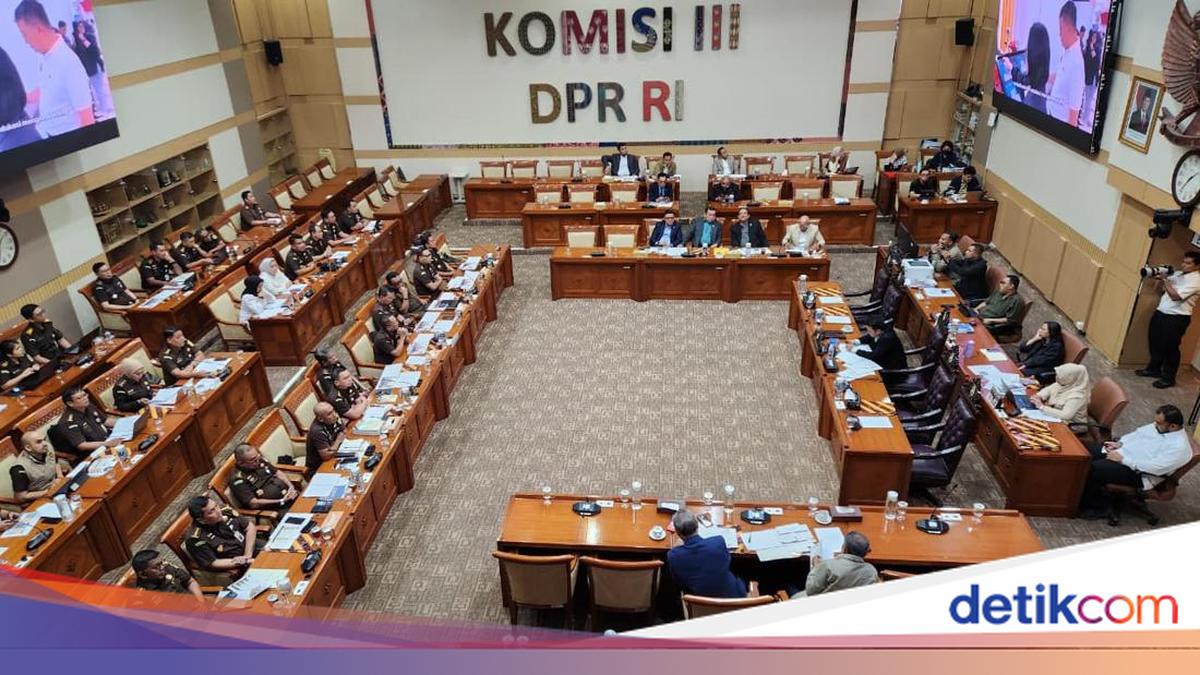
This was disclosed by the Head of the BPA at the Attorney General’s Office, Patris Yusrian Jaya, during a hearing with Commission III of the House of Representatives (DPR) at the DPR building in Senayan, Jakarta, on Tuesday (8/9/2026). He said seized assets are sometimes valued based on market prices, as with ordinary goods.
“The valuation in determining these limits is sometimes too high. These seized goods are valued like ordinary goods, at their market price,” said Patris.
According to him, this situation means some seized assets attract no bidders when auctioned. Yet buyers expect the selling price of seized assets to be cheaper than the market price.
“Meanwhile, for buyers, one of the things they expect from these auctions is that prices are cheaper. As a result, at auction time, a certain percentage — on average 30 per cent — of the goods auctioned receive no bids,” he explained.
Patris said the problem also has an impact on the management of seized assets. He said that under Ministry of Finance regulations, a revaluation of assets can only be carried out three months later.
“So here the state incurs management costs and maintenance costs, and when the second auction is held later with a lowered reserve price, there is still no guarantee it will sell. This is causing a build-up of assets that cannot yet be auctioned,” he explained.
On the other hand, the BPA of the Attorney General’s Office recorded that it has resolved 21,737 assets over the past three years. Those assets were, among other things, auctioned, destroyed, or handed over to entitled parties.
“As for the performance of the Asset Recovery Agency over the past three years since the BPA was established, it has successfully resolved assets through auctions and deposits into the state treasury, destruction, auctions, and handovers to entitled parties, as in fraudulent investment cases, totalling 21,737 assets,” he set out.
“In rupiah terms, for those deposited into the state treasury alone, the amount is Rp26,041,025,704,989,” he continued.
The breakdown is as follows: in 2024, Rp1.439 trillion; in 2025, Rp19.654 trillion; and in 2026 to date, the BPA has deposited Rp4.947 trillion into the state treasury from the auction of assets forfeited to the state.
He went on to explain other obstacles faced by the BPA. One of these concerns the status of found property.
According to him, there are still differences in perception with the courts regarding the determination of found-property status. This means the execution process is sometimes delayed or cannot be completed at all.
In addition, he said, there is the issue of execution auctions and direct sales of motor vehicles originating from execution seizures. According to him, the issuance of new registration documents by the police requires a court order.
“Meanwhile, the court orders we hold only generally impose an obligation on the convicted person to pay compensation, and to settle this obligation we carry out seizures. If the seizure involves motor vehicles, we face difficulties here because of the lack of synchronisation between the rules at the police, the finance ministry, and the prosecutor’s office,” he explained.
Another obstacle is the exchange of information between institutions. The BPA admitted it still faces difficulties in tracing and tracking assets.
“We still face difficulties in tracing and tracking assets, because as we know, data on these assets is scattered across various institutions,” he said.
Source: jawawa.id (https://jawawa.id/newsitem/attorney-generals-office-reveals-30-of-seized-assets-fail-to-sell-at-auction-heres-why-1788858004)
Originally published by detikcom (https://news.detik.com/berita/d-8653859/kejagung-ungkap-30-aset-rampasan-tak-laku-saat-dilelang-ini-penyebabnya), translated from Indonesian