
Attorney General's Office Rebuts Febrie's Claims, Asks Judge to Reject Pre-trial Motion
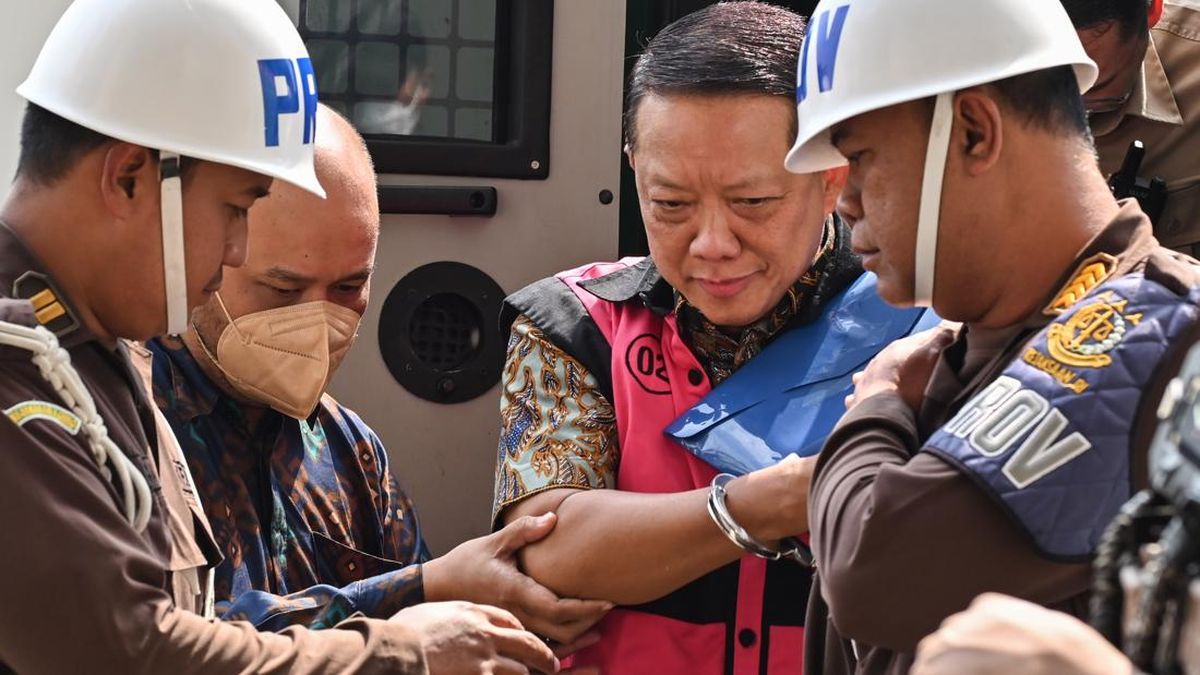
The Attorney General’s Office (Kejagung) has rebutted the arguments in the lawsuit filed by former Junior Attorney General for Special Crimes, Febrie Adriansyah, regarding the duplication of his suspect designation.
This was conveyed by the Kejagung Legal Team as the Respondent in the pre-trial hearing at the South Jakarta District Court on Thursday (20/8).
Kejagung asserted that the term ‘duplication’ is not a principle or prohibition in criminal law that automatically renders a suspect designation invalid.
“Criminal law recognises the principle of ne bis in idem, not a prohibition against what the Petitioner unilaterally refers to as duplication of suspect designation,” said the Kejagung legal team in its response.
Kejagung explained that the principle of ne bis in idem is a prohibition against a person being prosecuted a second time in the same case when that case has already received a final and binding court decision (inkracht). This provision is regulated in Article 134 of Law Number 1 of 2023 concerning the Criminal Code.
Therefore, Kejagung emphasised that the current situation differs from the duplication alleged by Febrie. This is because Febrie merely alleged the existence of more than one suspect designation letter.
“Not the existence of two prosecutions after a final and binding court decision in the same case,” it explained.
Meanwhile, Article 134 of the Criminal Code explains that the prohibition in question only applies to prosecution for a second time in the same case after a court decision has obtained permanent legal force.
Accordingly, Kejagung asked the judge to set aside the argument of duplication of suspect designation submitted by Febrie and to reject the pre-trial motion in its entirety.
“The Petitioner’s argument regarding duplication of suspect designation should be set aside and rejected in its entirety because it is not based on legal norms prohibiting more than one suspect designation and does not fulfil the elements of the ne bis in idem principle,” it said.
Kejagung also rebutted Febrie’s argument claiming the absence of a predicate offence in the money laundering case.
Kejagung asserted that Febrie’s basis for stating that the predicate offence was unclear or unproven was highly erroneous and contrary to applicable legal provisions. The Kejagung legal team said the suspect designation had expressly stated corruption as the predicate offence.
“And the money laundering investigation does not have to wait for the predicate offence to be proven first,” said the Kejagung legal team.
In addition, the content of the suspect designation letter in the considering clause letter b also expressly states that the case under investigation is an alleged money laundering offence with the predicate offence of alleged corruption and/or in another legal handling process.
The Kejagung legal team also admitted to being puzzled because Febrie, in his lawsuit, acknowledged that the suspect designation clearly contained an alleged money laundering offence with a predicate offence in the form of corruption.
Although, according to Kejagung, Febrie then questioned its scope and tempus delicti. Therefore, Kejagung considered the Petitioner’s argument stating that the predicate crime was unclear to be contrary to the document that was actually submitted and cited by the Petitioner himself.
“It should be understood that the characteristics of money laundering differ from the construction of ordinary criminal offences. Money laundering is a criminal offence related to assets that are known or reasonably suspected to be the proceeds of crime, including those originating from corruption,” it explained.
Meanwhile, based on Article 69 of Law Number 8 of 2010 concerning the Prevention and Eradication of Money Laundering, in order to conduct an investigation, prosecution, and examination in court of a money laundering offence, it is not mandatory to first prove the predicate offence through a final and binding court decision.
Therefore, Kejagung considered the basis of Febrie’s lawsuit regarding the absence of a predicate offence to be legally unfounded. It also misunderstood the provisions of Article 69 of the Money Laundering Law and had conflated the requirements of the investigation process with the proof of the principal case.
Previously, Febrie asked the sole judge of the South Jakarta District Court to cancel the detention carried out by the Attorney General’s Office (Kejagung).
This was conveyed by Febrie in the petitum of the pre-trial motion filed with the South Jakarta District Court. Febrie also asked the judge to declare the detention order invalid and without binding legal force.
In his petitum, Febrie questioned the Detention Order Number PRIN-43/F/Fd.2/07/2026 dated 24 July 2026 issued against Febrie. His legal counsel asked the judge to declare the order invalid along with all its legal consequences.
Source: jawawa.id (https://jawawa.id/newsitem/attorney-generals-office-rebuts-febries-claims-asks-judge-to-reject-pre-trial-motion-1787248259)
Originally published by CNN Indonesia (https://www.cnnindonesia.com/nasional/20260820215313-12-1394710/kejagung-bantah-sejumlah-klaim-febrie-minta-hakim-tolak-praperadilan), translated from Indonesian