
Attorney General's Office: Differing Interpretations of Gross Human Rights Violations Could Weaken Evidence
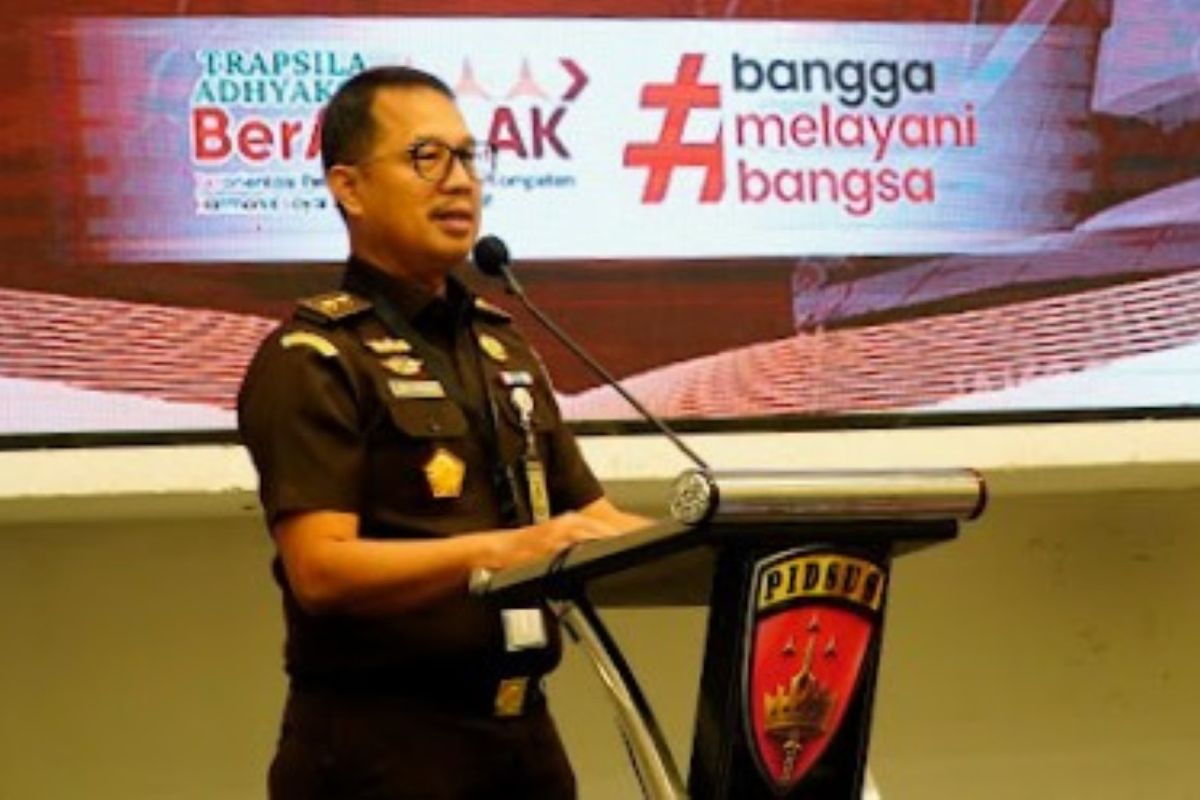
The Secretary of the Junior Attorney General for Special Crimes (Sesjampidsus) of the Attorney General’s Office, Didik Farkhan Alisyahdi, has emphasised the importance of a shared perception among prosecutors in handling gross human rights violation cases following the implementation of the new Criminal Code (KUHP) and Criminal Procedure Code (KUHAP).
Speaking in Makassar, South Sulawesi, on Friday, Didik stated that changes to criminal law through the new KUHP and KUHAP should not be viewed merely as changes to article numbers or procedures.
These remarks were made during a Technical Guidance session aimed at aligning the perceptions of prosecutors acting as investigators and public prosecutors in handling gross human rights violations in Makassar on Thursday (17/9).
“The changes in criminal law through the new KUHP and KUHAP must not be seen by us as mere changes to article numbers or procedures, but rather as a change in the way the entire criminal justice system operates,” he said.
Didik noted that the implementation of Law Number 1 of 2023 regarding the Criminal Code and Law Number 20 of 2025 regarding the Criminal Procedure Code must also be understood in relation to Law Number 26 of 2000 regarding the Human Rights Court.
According to him, a shared perception between investigating prosecutors and public prosecutors is vital in handling gross human rights violation cases. Differing interpretations of fundamental aspects, Didik warned, could create legal uncertainty during the investigation stage, which subsequently impacts the strength of evidence presented in court.
Therefore, a unified perception is required regarding the legal framework used, standards of proof, limits of authority, coordination mechanisms, and the principles that must be upheld in case handling.
“Investigation, prosecution, and evidence must be understood as one integrated series of case handling,” he added.
Participants are expected to unify their perspectives, strengthen coordination networks, and apply uniform work standards in handling gross human rights violation cases. The outcomes of this forum will serve as material for evaluation and input for the leadership of the Indonesian Attorney General’s Office to strengthen policies regarding the handling of gross human rights violations.