
Attorney General Discusses Proposal to Merge General and Special Crimes Units Under Operations Deputy
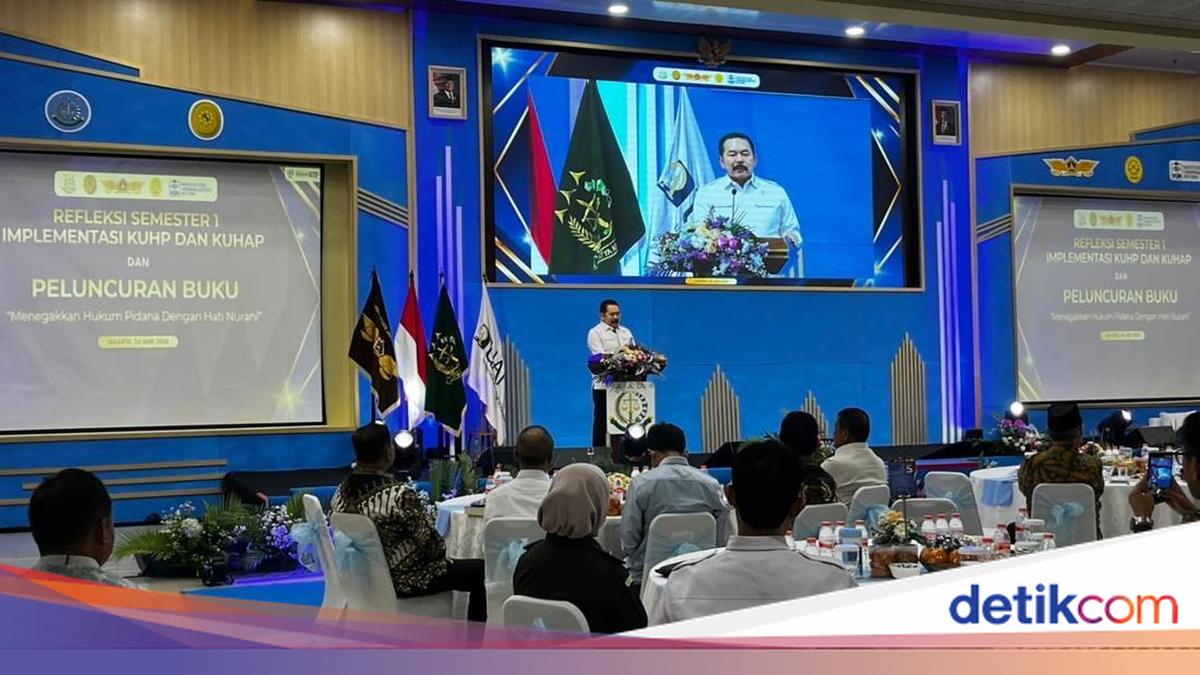
Attorney General ST Burhanuddin has raised the idea of merging the General Crimes (Pidum) and Special Crimes (Pidsus) units within the Attorney General’s Office, stating that the current separation is ineffective for implementing the new Criminal Code (KUHP) and Criminal Procedure Code (KUHAP).
Speaking at a national seminar at Al Azhar University Indonesia in South Jakarta on Wednesday, Burhanuddin noted that internal regulations for executing the laws are often created separately by the two units, leading to confusion in the field and prolonged coordination.
“Why do I keep mentioning Pidum? Because ideally, there should be a Junior Attorney General for Operations, under which General Crimes and Special Crimes would fall, so that the standard rules we create are not separated as they are now,” Burhanuddin said.
He suggested that unifying the two under a single Jaksa Agung Muda Operasi (Junior Attorney General for Operations) would streamline and harmonise the implementation of the new KUHP and KUHAP. However, he stressed that this remains a proposal and he expects input from experts to make the Adhyaksa Corps’ institutional structure more effective and efficient.
“We hope to further refine this Criminal Procedure Code so that its implementation is easier, more effective, and especially cheaper, without the lengthy separation between Pidum and Pidsus,” he explained.
Burhanuddin also outlined the achievements of the first six months of implementing the new KUHP and KUHAP, noting a paradigm shift from retributive justice to corrective and restorative justice. He reported that the General Crimes division had implemented six of the nine new mechanisms between January and May 2026, including plea bargaining and Deferred Prosecution Agreements for corporations.
Despite these advances, he acknowledged ongoing challenges, particularly the absence of official implementing Government Regulations and differing interpretations among law enforcement officers in the field. He cautioned that complex procedures must not obstruct the primary goal of achieving restorative justice.