
Attacks on Iran are Just the Beginning, Trump is 'Holding Back' Awaiting This
Top aides to President Donald Trump are currently working hard to ensure that the war between the United States and Iran does not escalate further before the mid-term elections in November, aiming to prevent an electoral defeat for the Republican Party. However, this strategy of restraint is under significant threat following a recent resurgence of retaliatory strikes between the US and Iran.
According to Reuters on Thursday (3/9/2026), White House officials are reportedly only prepared to consider increased military action after the upcoming vote on 3 November. The US military maintains that its latest series of airstrikes were purely in response to attacks against American forces and maritime traffic in the region.
For the time being, the US government intends to rely solely on economic pressure to force Iran into concessions during future negotiations, an objective that has failed to be achieved through military action over recent months. A White House official confirmed the administration’s current focus.
“We continue to pressure Iran, but November is the priority,” the official stated.
Preventing the escalation of war is believed to be a move to stop this unpopular conflict from dominating the news cycle, given that the Republican Party is campaigning to defend its slim majority in the Senate and House. A Reuters/Ipsos poll at the end of August showed that only 31% of Americans approved of the war, while 63% opposed it, as voters are highly dissatisfied with high petrol prices. This tactical pause is also seen as providing space for the US military to replenish its increasingly depleted ammunition stocks.
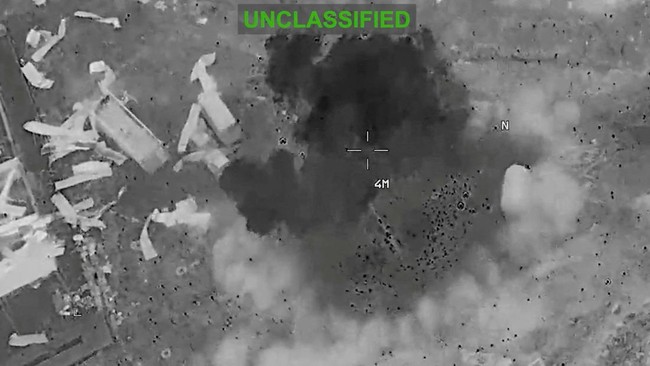
However, implementing this strategy of restraint is becoming more difficult by the day. Last weekend, the US attacked rocket launchers on Larak Island, prompting Iran to fire missiles towards Jordan and the United Arab Emirates. The US subsequently struck more targets around the Strait of Hormuz on Tuesday in the largest clash since July, resulting in the deaths of military personnel and civilians in Iran.
As Iran grows bolder, analysts predict that Iranian leaders, emboldened by a lack of internal unrest, will continue to periodically attack US and Gulf targets. Barbara Leaf, a former high-ranking State Department official for the Middle East under former President Joe Biden, assessed that Iran has every reason to continue attacking the US.
“The regime has every incentive to disrupt the ‘calm’, which is not actually calm, because the explicit goal of the government is to increase massive economic pressure on Iran,” she explained.
Furthermore, Trump himself remains a wild card. His approval rating has plummeted from 40% to 33% since the conflict began. Despite having no interest in escalation, Trump threatened on the Truth Social platform on Tuesday that he would respond far more harshly if Iran dared to retaliate.
“If the failed State of Iran fails to respond to these very justified attacks, they will be attacked again at a much harder and higher level, but that is not the biggest attack of all; that is waiting behind the scenes,” he asserted.
On Wednesday, Trump stated that his military campaign would not be long-lasting and strongly denied that the elections were influencing his war strategy against Iran.
“Number one, I am not running; my party is running, and I will help my party. But I think my party appreciates the fact that we are not letting Iran have nuclear weapons,” he said.
Entering the seventh month of the war, the White House is increasingly constrained by logistical and political realities. A senior White House official admitted there has been a shift in plans.
“The timeline has changed. The calendar is controlling Iran,” the official noted.
The Washington Post reported that the Chiefs of the US Army, Navy, and Air Force have warned Pentagon Chief Pete Hegseth that prolonging the war is unsustainable and will reduce military readiness elsewhere, as the military has also used almost all supplies of certain precision missiles. Although the Pentagon insists that the US has everything it needs, White House spokesperson Olivia Wales provided a defence.
“President Trump has destroyed Iran’s military capability and crippled what remains of its poor economy with the most powerful maritime blockade in world history and devastating sanctions. The President will continue to advance American interests at home and abroad and will never allow Iran to possess nuclear weapons,” she stated.
Gulf allies have also previously urged a reduction in tensions. Vice President JD Vance and Secretary of State Marco Rubio are among high-ranking officials supporting the maintenance of calm until November. However, the tightening of economic isolation and the threat of sanctions on nations trading with Iran also have limits, given that Iran has endured sanctions for decades.
US Treasury Secretary Scott Bessent warned that the pressure campaign could instead trigger Iran to strike militarily. Furthermore, major powers such as China have also refused to join the efforts to isolate Iran. Alex Plitsas, a senior fellow at the Atlantic Council, expressed doubt regarding the effectiveness of such a policy.
“The goal of this new sanctions package is to add economic pressure on top of the pressure caused by the blockade to force Iran back to the negotiating table, after the government determined that it was a better option than returning to kinetic action. Iran is concerned, but China has indicated they are not willing to play ball, which calls into question how effective this will ultimately be,” he concluded.