
Attack on Iranian Infrastructure: A Violation of International Law?
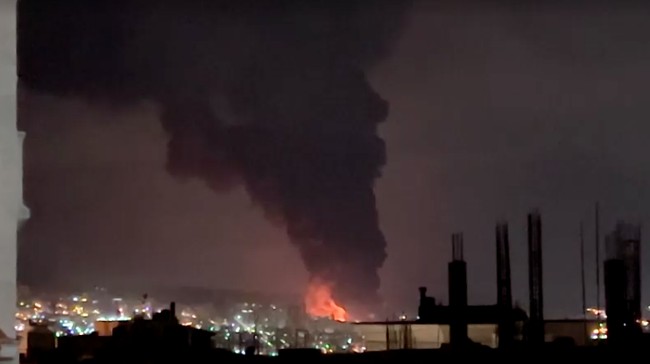
Geopolitical tensions have intensified once again after US President Donald Trump suggested the possibility of attacks on Iranian infrastructure, ranging from power facilities to water desalination plants.
However, can civilian facilities be targeted in an attack? The answer is not as simple as “yes” or “no”.
In modern conflicts, the boundary between military and civilian targets has become increasingly blurred, and the legality of an attack depends heavily on its purpose, impact, and method of execution.
There Are Rules: Three Conditions That Must Be Met
Under international humanitarian law, civilian facilities are fundamentally not to be attacked. However, there is an exception if the target meets three main criteria.
From Bridges to Clean Water: Which Are Legal, Which Are Not?
In practice, not all infrastructure is treated the same. Michael Schmitt, a retired US Air Force officer who is now a professor of law at the University of Reading, explains that military aggression often targets bridges, but only if there is evidence that the facility is being used by the enemy.
Conversely, attacking facilities vital to civilian life that support the basic needs of the population could constitute a violation of international law. Attacks carried out on a wide scale without distinguishing targets, including the destruction of buildings on the grounds that they “might be used” by the enemy, are also deemed not to meet the standards of the laws of war.
However, not all harsh actions are automatically illegal. A naval blockade, for example, is still considered lawful in the context of the laws of war, even though it has a significant economic impact.
How America Justifies Attacks on Economic Infrastructure
This is where the debate on the laws of war becomes even more heated. Not all countries agree that economic facilities can be attacked. However, the United States has a broader and more controversial interpretation.
Washington employs the concept of “war-sustaining target”, meaning targets that are not directly used for military operations but play a role in funding and sustaining the enemy’s war capabilities.
Under this logic, facilities such as oil refineries, oil fields, and energy infrastructure can be considered part of the enemy’s war machine, even though they are technically civilian objects.
This is the source of the controversy: is destroying the enemy’s sources of revenue a legitimate military strategy, or does it open the door to the legalisation of attacks on civilian objects?
In practice, the answer to this question is not determined solely by law, but also by the power and interests of the states interpreting it.