
ATR/BPN Tightens Oversight of Strategic Programmes to Ensure Public Benefit
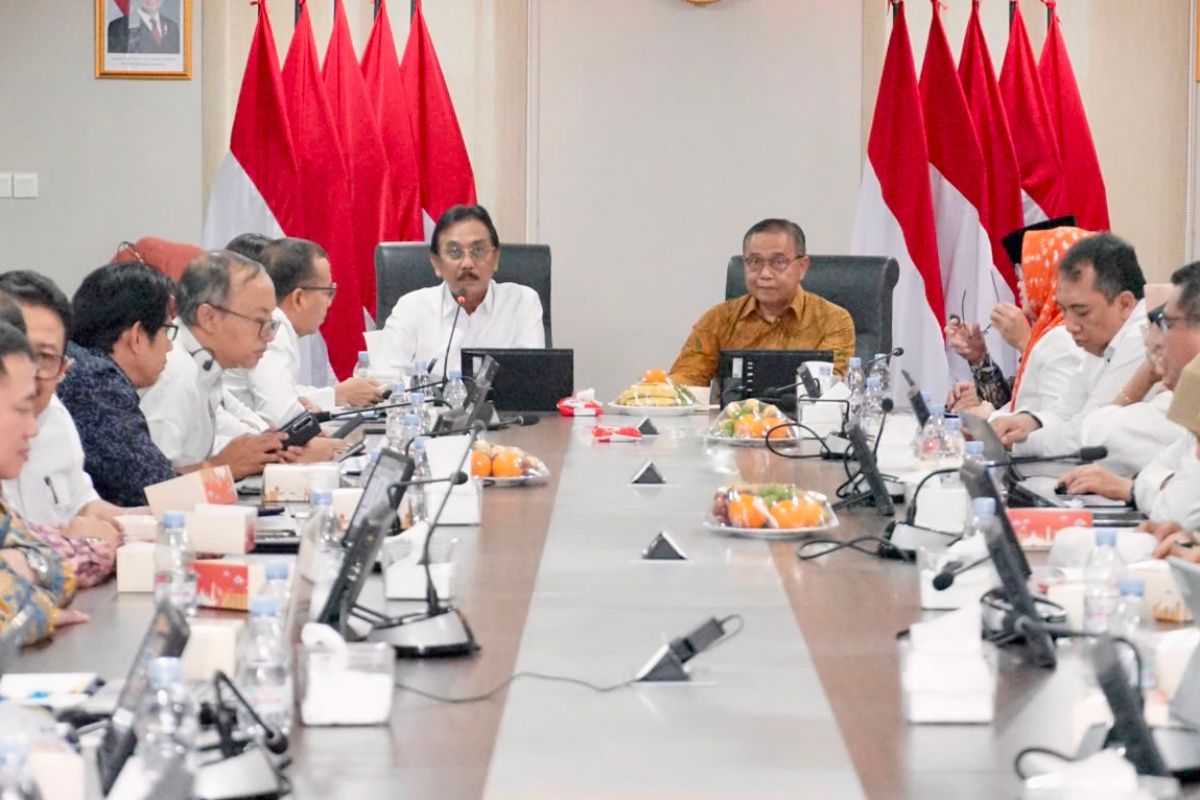
The Ministry of Agrarian Affairs and Spatial Planning/National Land Agency (ATR/BPN) is tightening oversight of strategic national programmes to ensure they produce real benefits for the public. Inspector General of ATR/BPN Pudji Prasetijanto Hadi stated in Jakarta on Tuesday that thematic supervision will be carried out in the second semester, particularly for programmes with very large budgets. “For instance, the Complete Systematic Land Registration (PTSL) and the Detailed Spatial Plan (RDTR). If the outcomes do not benefit the community, that is a gap that will attract the attention of law enforcement officials,” he said.
Pudji also urged the heads of work units to periodically evaluate these matters to ensure programmes comply with applicable regulations. “Please evaluate the PTSL and RDTR programmes, for example, on a weekly basis. The goal is so we can map our programmes, identify shortcomings, and then evaluate and fix them,” he stated. The Ministry gathered and provided direction to the heads of provincial BPN regional offices and district/city land offices to conduct regular evaluations and monitor the progress of ongoing strategic programmes.
Secretary General of ATR/BPN Dalu Agung Darmawan said the target for 2026 is 98 percent, therefore all officers at both the provincial and district/city levels must prepare technical strategies before the end of July. “Regional office heads and land office heads must truly understand the priority targets in their areas and ensure all programmes run according to plan,” Dalu Agung Darmawan said at the opening of the Performance Evaluation for Programmes, Activities, and Action Plans for the Second Quarter of 2026. According to Dalu Agung Darmawan, the Government Agency Performance Accountability System (SAKIP) can serve as a primary instrument in managing programmes and budgets. The content within SAKIP can measure and ensure that every budget used produces tangible benefits for the public, or is result-oriented. “SAKIP is strategic, not only looking at achievements but also starting from planning, implementation, reporting, and internal evaluation. So if the supervisory team looks at the elements of SAKIP, I think that already reflects the condition of programme guidance and evaluation at the Echelon 1 and Echelon 2 levels,” he said.