
Atmospheric Temperature Inversion Causes Anak Krakatau Eruptions to be Heard as Far as Bandung
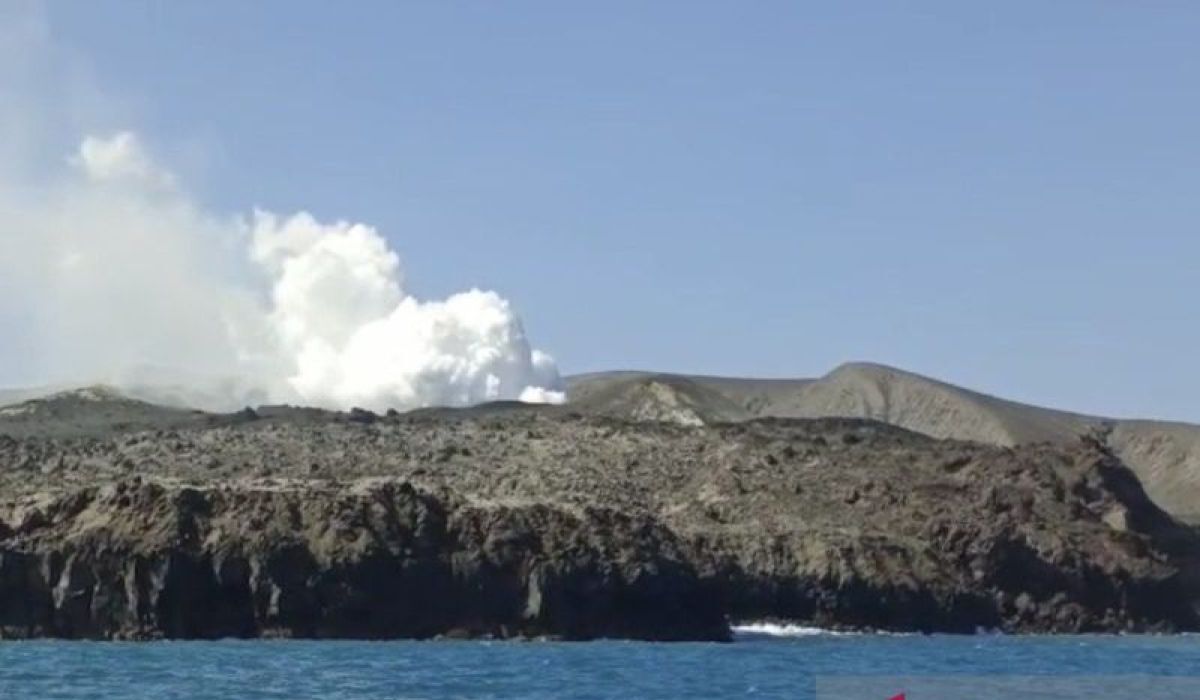
The sound of the booms produced by the eruption of Mount Anak Krakatau (GAK) was reported to be heard in several areas, including Bandung. According to Sonni Setiawan, a lecturer from the Department of Geophysics and Meteorology at IPB University, this occurrence can be influenced by atmospheric temperature inversion layers.
“Atmospheric conditions, particularly during a temperature inversion layer, can cause sound waves from an explosion to travel further and be heard more strongly at the surface,” Sonni stated in his briefing on Saturday (12/9).
Temperature inversion is a condition where air temperature actually increases with altitude. In normal atmospheric conditions, air temperature generally decreases as altitude increases.
“An inversion layer forms when air near the surface cools more rapidly than the air above it. This cooling can occur due to radiative cooling at the surface, the influx of cold and dry air advection, or other meteorological processes,” he explained.
According to him, this condition affects the propagation of acoustic waves. Sound is a wave that travels through the air, with a propagation speed influenced by temperature.
Temperature differences between atmospheric layers can cause sound waves to undergo reflection or refraction, with the dominance of either depending heavily on vertical temperature variations.
If vertical air temperature variation decreases, refraction becomes more dominant, whereas if vertical air temperature variation increases, reflection becomes more dominant.
“In inversion conditions, the bending of acoustic waves causes the wave path to curve back downwards, so that sound from a distant source can still be heard at the surface,” he said.
In the context of the Anak Krakatau eruption, eruptive activity produces not only volcanic material but also releases energy in the form of acoustic waves. When these waves travel through an atmosphere experiencing inversion conditions, the sound energy can undergo bending and reflection, thereby extending the sound’s range.
“An inversion layer can make the sound of an eruption heard from further away. Simply put, this condition is like the formation of a space that helps maintain sound energy so that it does not immediately disperse into the upper atmosphere,” he added.
Regional topography can also reinforce this condition. Cold air tends to accumulate in basins or lowlands, which supports the formation of inversion layers.
“The Bandung Basin is one of the regions that is topographically vulnerable to the accumulation of cold air. When atmospheric conditions support the formation of an inversion, this area can become a pathway that allows sound energy to travel further,” he revealed.
A boom does not always indicate a nearby source. The wave energy reaching a recipient area can be heard not only as a boom but, under certain conditions, can also cause vibrations in surrounding objects, such as window panes, doors, or parts of buildings.
This phenomenon demonstrates that the booming sounds heard by the public do not always originate from a source near their location. Eruptive activity as the energy source, atmospheric conditions as the propagation medium, and regional topography are the factors that collectively determine how far the sound can be heard.
Source: jawawa.id (https://jawawa.id/newsitem/atmospheric-temperature-inversion-causes-anak-krakatau-eruptions-to-be-heard-as-far-as-bandung-1789206691)
Originally published by Media Indonesia (https://mediaindonesia.com/humaniora/932597/inversi-suhu-atmosfer-bikin-dentuman-anak-krakatau-terdengar-sampai-bandung), translated from Indonesian