
ATC Officers Begin to be Replaced by AI, Experts Fear Hallucinations Threaten Airports
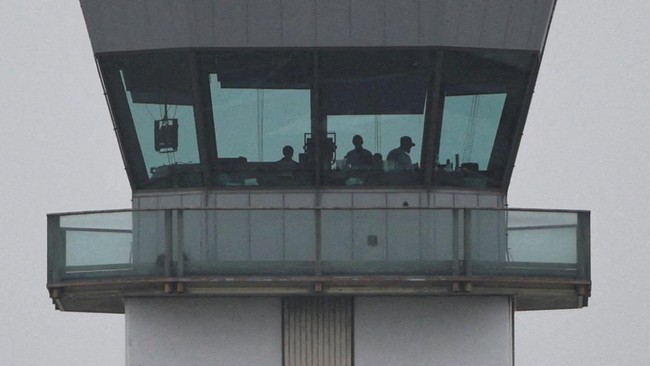
Imagine a major airport where all operations are controlled by an intelligent system. Aircraft take off and land based on algorithmic commands, baggage is managed by robots, and flight paths are determined without human intervention.
On one hand, such a system appears faster, more organised, and more cost-effective. On the other hand, there is a very serious threat: the system could make incorrect decisions without any clear reason, and if that happens, the airport could descend into total chaos. This is the primary warning in a recent report regarding the risks of automated systems in the transport sector, as cited from Futurism.
The intelligent systems in question are technologies designed to automatically control air traffic, airport operations, and flight schedules. This technology is considered the future of air transport, particularly for busy airports handling thousands of flights daily.
However, experts warn that these systems must not completely replace humans. The reason is simple: the system can experience what is known as ‘hallucination’—generating decisions that appear logical but are actually incorrect, dangerous, and inexplicable.
The United States federal government has begun implementing AI in air traffic control systems at some of the busiest airports in the US. This plan has met with criticism, including from former airport ATC officers.
Todd Sheridan Yeary, who has 13 years of experience as an ATC officer, revealed that the Strategic Management of Airspace, Routes and Trajectories (SMART) system to be used in the US remains mysterious. Aviation practitioners are still confused about how the system will be utilised in airports.
“The first thought is, what is this for?” Yeary said in an interview with News Nation. “If AI is to provide suggestions on how to manage conflicts in the airspace, especially at busy airports, the question is different. ATC is a very dynamic environment.”
He explained that conditions in the airspace are constantly changing. However, Yeary’s primary concern is AI hallucination.
“AI is known to frequently provide inaccurate and unverified data and information, without clear sources. If the source is flight schedules, there must still be room for revision, and those revisions must be provided by human officers,” said Yeary.
What is AI System “Hallucination”?
In the context of an airport, hallucination means the system perceives something that does not exist or decides on something that should not happen. For example:
AI detects an aircraft on the runway that is not actually there.
AI instructs two aircraft to land on the same path at almost the same time.
AI perceives bad weather when conditions are normal, leading to the cancellation of hundreds of flights.
AI ignores warnings from sensors because it deems them unimportant.
AI changes schedules en masse without warning, causing passenger delays of several hours.
Errors like these are often initially undetected. AI systems appear to be working normally until a highly erroneous decision suddenly occurs. When humans are no longer involved in the oversight process, such errors can persist longer and cause greater damage.
Automated systems are indeed capable of processing data far faster than humans. They can read thousands of data points in seconds, ranging from wind speed and aircraft altitude to runway schedules and engine conditions. However, there are aspects that only humans can understand, particularly when unusual situations arise, such as an aircraft experiencing technical issues at the last minute.
One of the biggest issues is accountability. If a human makes a mistake, there is an investigation process, sanctions, and a party that can be held responsible. But if an intelligent system makes a mistake, the question becomes much more complex.
Indonesia has several large airports with very heavy traffic, particularly Soekarno-Hatta, Ngurah Rai, and Juanda airports. In the coming years, automated systems in these airports are likely to be used more extensively. While this technology can increase efficiency, it must be accompanied by readiness in human oversight.
If automated systems are implemented without adequate supervision, the risk of chaos could increase. Imagine if Soekarno-Hatta Airport, which serves millions of passengers every month, experienced an automated system failure. The impact would not only be felt in Jakarta but could spread across the entire Indonesian and even international flight networks.
Source: jawawa.id (https://jawawa.id/newsitem/atc-officers-begin-to-be-replaced-by-ai-experts-fear-hallucinations-threaten-airports-1790139277)
Originally published by CNBC Indonesia (https://www.cnbcindonesia.com/tech/20260923104220-37-770126/petugas-atc-mulai-diganti-ai-ahli-ngeri-halusinasi-ancam-bandara), translated from Indonesian