
At UNDIP Forum on PPHN, Ibas Stresses Development and Popular Sovereignty
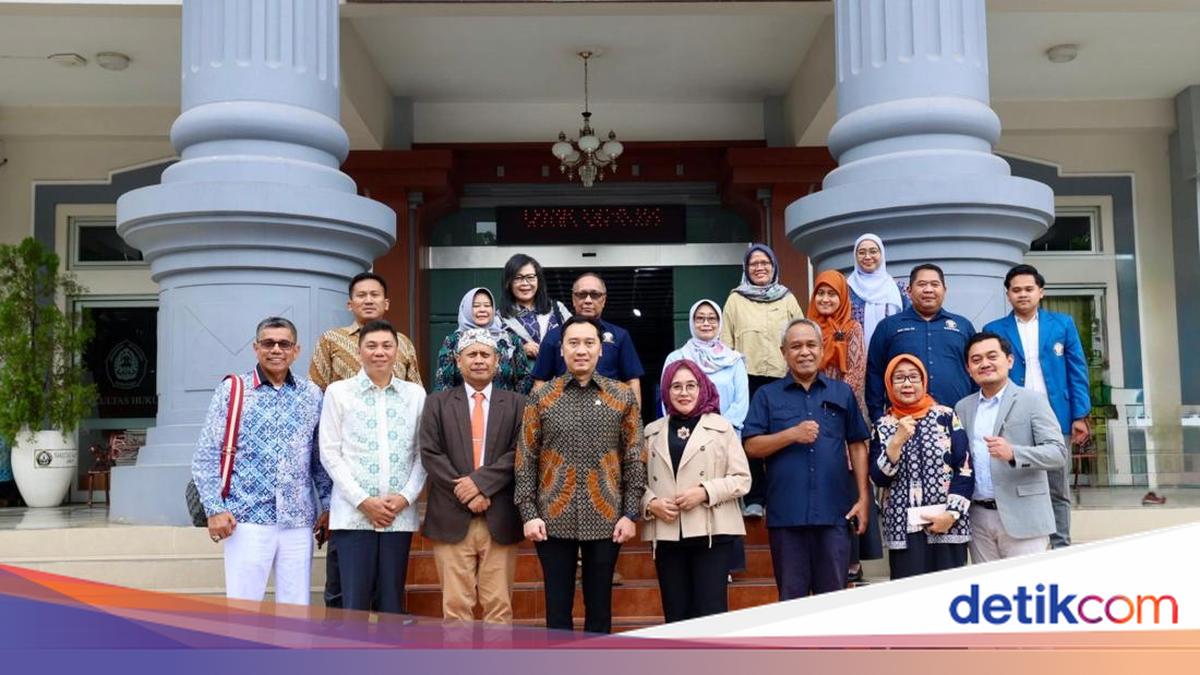
Deputy Speaker of the People’s Consultative Assembly (MPR) and chairman of the Democratic Party faction in the House of Representatives (DPR), Edhie Baskoro Yudhoyono (Ibas), stressed the importance of an in-depth and open discussion of the State Policy Guidelines (Pokok-Pokok Haluan Negara, or PPHN). He said the proposal should be examined constitutionally to ensure the continuity of national development without undermining democracy or popular sovereignty.
At a forum involving academics, Ibas invited professors, lecturers, constitutional law experts and the wider academic community to examine the PPHN proposal together from a range of perspectives.
He said discussion of the PPHN was not merely about setting the direction of national development. It also raised fundamental questions about how Indonesia could maintain policy continuity between administrations, respect democratic mandates and ensure that every policy improved public welfare.
“We need continuity, but not rigidity that imposes limits. We also need consistency, but not uniformity,” Ibas said in a written statement on Wednesday (28 October 2026).
He made the remarks at an academic discussion on the urgency of the PPHN for Indonesia’s future, held at Diponegoro University (UNDIP) in Semarang on Monday (26 October).
Development continuity must go hand in hand with democracy
Ibas said Indonesia already had several development-planning instruments, including the National Long-Term Development Plan (RPJPN), the National Medium-Term Development Plan (RPJMN), government work plans and the state budget (APBN).
He said discussion of the PPHN should examine whether Indonesia’s development challenges stemmed from inadequate planning, or instead from the need to strengthen links between plans, ensure consistent implementation and sustain programmes that deliver tangible benefits to the public.
Ibas said changes in leadership under a democratic system were part of the people’s mandate. Each president had a vision, mission and development priorities legitimised through elections, and differences between administrations’ programmes were a normal part of democracy.
However, he cautioned that a change of leadership should not mean that all achievements and programmes proven to benefit the public had to be restarted from scratch.
“How do we safeguard those aspirations without limiting the democratic mandate? How do we ensure the development direction is maintained while leaving the president room to lead, without being constrained? And how do we ensure that every plan ultimately delivers real benefits to the people?” he said.
Ibas said these questions required objective and comprehensive study drawing on a range of ideas and experience.
UNDIP Faculty of Social and Political Sciences dean Prof Teguh Yuwono also highlighted the importance of having guidelines for the conduct of government. “We need guidelines as a basic reference for governing,” he said.
PPHN is not simply a political decision
Ibas said discussion of the PPHN should not stop at an idea that seemed sound in theory. Any formulation must have a clear legal basis, an accountable implementation mechanism, and constitutional systems for oversight and evaluation.
He said fundamental issues required joint examination, including which body had the authority to establish the PPHN, its place in the national legal system and how it would operate alongside the powers of each state institution.
Ibas also called for careful consideration of possible legal forms for the PPHN, including their implications for the presidential system, the separation of powers and constitutional review mechanisms.
“We are not seeking to justify one particular view. We are looking for the best design for Indonesia’s future,” he said.
He said the process required political maturity, sound judgement from stakeholders and a willingness to accept criticism and differences of opinion.
Ibas stressed that the PPHN study was not intended to unilaterally expand the MPR’s authority or restore the inter-institutional arrangements that existed before the Reformasi era. Discussion must continue to respect the Constitution, the presidential system, checks and balances, and popular sovereignty.
From an academic perspective, former UNDIP rector Prof Yos Johan Utama, whose term ran from 2015 to 2019, voiced support for discussing the direction of national development. “I very much agree that there should be a direction for where we are going,” he said.
Meanwhile, DPR member Benny Kabur Harman highlighted the need for a legal foundation for the proposal to revive the PPHN. “If we want to revive the PPHN, where is its legal basis? It turns out there is no legal basis,” he said, emphasising the need for careful constitutional study.
DPR member Hinca Panjaitan proposed a more meaningful form of accountability to the public. He said the forum should not simply be an annual MPR session, but also a space for those in power to account to the people for their mandate. “A plenary accountability session on the exercise of power for the people of Indonesia,” he said.
In a similar vein, Democratic Party deputy secretary-general Jansen Sitindaon commented on the MPR’s position in the post-Reformasi constitutional system. “The MPR is no longer the highest state institution, but it is the most comprehensive one,” he said.
Academics and the public should be involved
Ibas welcomed the academic community’s involvement in studying the PPHN. He said universities had an important role in providing critical analysis, testing legal arguments and offering recommendations to enrich the process of formulating state policy.
He said the nation’s future should not be shaped solely within the corridors of power. Academic research, people’s experiences and the views of younger generations should also have a place in decision-making.
Ibas also called for openness to input from the wider public. Views both supporting the need for the PPHN and questioning its necessity, legal form and implications should be considered as part of the democratic process.
“Every citizen has the right to express their views. That is democracy. We need to gather different ideas, examine them and seek common ground in the interests of the nation,” he said.
For Ibas, consensus on the direction of national development should be built through an open and accountable process, not simply through political decisions made without taking public views into account.
UNDIP law student Elisa Novelia Br. Hasibuan also stressed the importance of clear measures for assessing the success of long-term development. “There must be significant indicators and, in due course, parameters for measuring the achievements of Indonesia’s long-term development itself,” she said.
Learning from other countries’ experience
In his address, Ibas also discussed a visit to Australia, including talks with members of parliament and academics there.
He cited the development of Canberra, Australia’s capital, as an example of long-term planning. He said the experience could prompt reflection on the importance of policy continuity and a commitment to development across generations.
However, Ibas stressed that every country had a different constitutional system, history and democratic character. International experience should therefore be studied critically, rather than applied wholesale without regard to Indonesia’s circumstances.
He encouraged academics to identify lessons relevant to Indonesia, particularly on maintaining continuity in national goals while preserving room for necessary policy changes.
Measure success by benefits to the people
Responding to academics’ contributions, Ibas said discussion of the PPHN was complex and could not be concluded in a single forum.
He acknowledged differing views on the proposal’s urgency, constitutional basis, legal form, implementation and oversight. Such differences, he said, should be treated as part of a healthy process of deliberation in a democratic country.
Ibas urged participants to assess development continuity not only through documents and institutions, but also by examining outcomes that people could feel in their daily lives.
Relevant indicators included changes in poverty and unemployment, improvements in public welfare, economic growth, and the state’s ability to strengthen national self-reliance and competitiveness.
“We should continue good programmes, improve those that are not working well, and stop those that are no longer relevant,” he said.
Ibas said continuity did not mean preserving every policy without evaluation. Sustainable development, by contrast, had to leave room for correction based on evidence, changing public needs and the times.
Safeguarding national aspirations for future generations
Ibas said Indonesia’s development direction must ultimately remain grounded in the national aspirations set out in the Preamble to the 1945 Constitution: protecting the whole Indonesian nation, advancing public welfare, educating the nation and contributing to world order.
He said these aspirations were a shared compass to be safeguarded across generations. The means of achieving them, however, should remain open to evaluation, innovation and democratic change.
Ibas said he hoped the academic forum at UNDIP would enrich study of the PPHN with perspectives from constitutional law, experience in government and the aspirations of the public.
He stressed that the ultimate aim of any discussion of development guidelines was not to strengthen the interests of a particular institution, but to ensure that the state could fulfil its constitutional mandate effectively, democratically and with public welfare at its centre.
Through open dialogue and in-depth study, Ibas said, Indonesia could find an appropriate framework for maintaining national development continuity while upholding democracy and popular sovereignty.
Source: jawawa.id (https://jawawa.id/newsitem/at-undip-forum-on-pphn-ibas-stresses-development-and-popular-sovereignty-1793170339)
Originally published by detikcom (https://news.detik.com/berita/d-8727672/bahas-pphn-di-undip-ibas-tekankan-pembangunan-dan-kedaulatan-rakyat), translated from Indonesian