
At the DPR, Peradi Profesional Urges Anticipation of Cross-Border Legal Relations
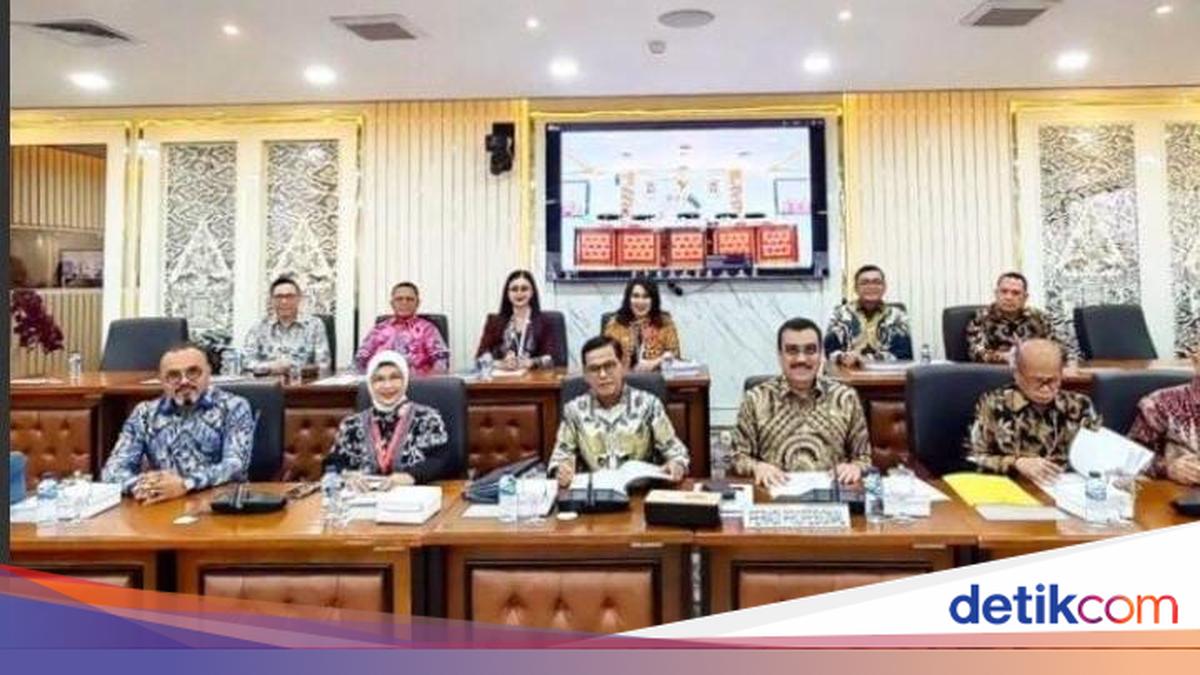
The Indonesian Advocates Association (Peradi Profesional), led by Harris Arthur Hedar, has discussed and provided strategic input on the drafting of the International Civil Law Bill (RUU HPI), which is currently being deliberated by the House of Representatives (DPR). The input was delivered directly during a Public Hearing (RDPU) with the Special Committee (Pansus) for the RUU HPI at the Parliament Complex in Senayan, Jakarta, on Monday (12/7).
Peradi Profesional’s Chairman, Prof. Harris Arthur Hedar, urged the anticipation of increasingly complex cross-border legal relations. He also stressed the importance of adaptive regulations, particularly concerning technology-based legal relationships. ‘We view the RUU HPI as a crucial milestone in reforming Indonesia’s international civil law history amidst increasing human mobility, foreign investment activities, international trade, digital transactions, international arbitration, cross-border asset protection, and global technological developments. Therefore, Indonesia needs a legal system that provides certainty, justice, and benefit for all parties,’ Prof Harris said in a written statement on Monday (13/7/2026).
Consequently, Peradi Profesional welcomed the DPR’s initiative to draft the RUU HPI as a pillar for developing a national legal system. ‘A system that is modern, responsive, and adaptive in facing global developments, yet remains grounded in Pancasila, the 1945 Constitution, and Indonesia’s national interests,’ he continued. The Professor at Makassar State University (UNM) acknowledged that various international civil law issues have so far been sporadically scattered across diverse provisions, jurisprudence, and judicial practices. This condition often triggers legal uncertainty, particularly regarding judicial competence, choice of law, choice of forum, and the recognition and enforcement of foreign judgments. ‘On that basis, all the input we submitted is the result of a comprehensive study conducted by the Peradi Profesional team, taking into account national law, judicial practice, comparative law, and various relevant international legal instruments,’ Prof Harris concluded.
During the same session, the Secretary General of Peradi Profesional’s National Leadership Council (DPN), Yuhelson, delivered a number of detailed recommendations regarding the drafting of the RUU HPI. Firstly, regarding the expansion of the bill’s scope to accommodate future legal practices. ‘Our recommendation is to expand the scope of the HPI Law to accommodate evolving legal practices in the future. Concretely, in Article 4 paragraph 2, the proposed form is an addition,’ Yuhelson asserted. Secondly, the need for clarification between choice of law, choice of forum, and Indonesian jurisdiction to achieve legal certainty. ‘We recommend that these parameters include the principles within the law, Pancasila, the 1945 Constitution, or mandatory laws, citizens’ constitutional rights, and national interests,’ he said.
Thirdly, concerning the recognition and enforcement of foreign court decisions, which are deemed not yet regulated in detail in the academic draft or the bill. ‘For this, our recommendation is, if possible, to regulate in detail the requirements, procedures, and timeframe for examination, as well as the scope of the judge’s assessment and the grounds for rejecting a foreign court decision,’ Yuhelson explained. Fourthly, regarding international judicial cooperation. Peradi Profesional considers the current provisions for assistance from foreign authorities to be too general. ‘Peradi Profesional’s view is that this practice requires clear procedures concerning the exchange of information, evidence, and witness examination. These are concrete and practical matters we have experienced, and we hope they can be accommodated in the RUU HPI. Therefore, in the recommendations we submitted, we wish to add provisions regarding the mechanism for cross-border court cooperation and its implementing regulations,’ he stated.
Fifthly, the necessity of regulatory harmonisation with various national laws, given that HPI is closely linked to other sectoral regulations. ‘For this, we recommend harmonisation with the Civil Code, the Judicial Powers Law, the Arbitration Law, the Dispute Settlement Law, as well as the Notary Office Law, the Bankruptcy Law, and the Population Administration Law. Because these are the laws related to the implementation of HPI,’ Yuhelson detailed. Sixthly, harmonisation with international conventions, which he deemed crucial for protecting Indonesia’s national interests. ‘Our recommendation is that the application of such international law be carried out in accordance with national legal mechanisms and remain guided by Pancasila and the 1945 Constitution,’ he said. Lastly, Yuhelson stressed the urgency of strengthening the capacity of law enforcement officials (APH), which he noted was overlooked in the bill’s draft. ‘For this, our view is that the success of implementing the legislation is highly dependent on the competence of judges, advocates, court clerks, notaries, and other legal professions,’ he concluded.
Source: jawawa.id (https://jawawa.id/newsitem/at-the-dpr-peradi-profesional-urges-anticipation-of-cross-border-legal-relations-1784008450)
Originally published by detikcom (https://news.detik.com/berita/d-8573279/di-dpr-peradi-profesional-dorong-antisipasi-hubungan-hukum-lintas-negara), translated from Indonesian