
At Public Hearing, Organisation Calls for Faster Deliberation of Asset Forfeiture Bill
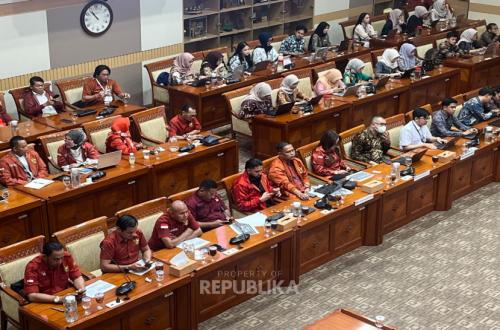
JAKARTA — Advokasi Rakyat Untuk Nusantara (ARUN) has called for the deliberation of the Asset Forfeiture Bill to be accelerated. The organisation said the regulation is important to ensure that the proceeds of crime are not enjoyed by offenders, while restoring the rights of the public and recovering state losses.
The position was presented by Yudi Rijali Muslim, head of legal advocacy at ARUN’s central board, during a public hearing with Commission III of the House of Representatives (DPR RI) in Jakarta on Wednesday (11 November 2026). ARUN put forward three main points, based on the organisation’s internal research and input gathered from the public.
Alongside its views on the Asset Forfeiture Bill, ARUN praised the passage of agrarian reform legislation. The organisation also voiced support for law enforcement action over alleged wiretapping and treason, saying it should be transparent and brought to a conclusion.
“First, we commend Commission III and the House in particular for passing legislation that represents the people’s interests, namely the Agrarian Reform Law,” Yudi said.
On the allegations of wiretapping and treason, Yudi said ARUN supported efforts by Commission III and President Prabowo Subianto to uphold the law. However, he hoped the cases would be resolved transparently and swiftly.
“We hope this legal process can be conducted transparently and quickly, and can address the core issues at stake,” he said.
ARUN’s third point concerned the urgency of the Asset Forfeiture Bill. Yudi said the regulation was needed to strengthen fair law enforcement and restore public confidence in the legal system.
He urged that deliberations on the bill be accelerated. Based on the organisation’s research and the views it had collected, the regulation should benefit not only the state but also the public, and help prevent crime from recurring.
“The public’s expectation is that this Asset Forfeiture Law will be able to restore people’s rights and cut off the profits from crime,” he said.
Yudi cited corruption as an example of crime that can deprive the public of resources meant for public purposes, such as infrastructure development, education, poverty alleviation and healthcare services.
He stressed that sentencing offenders may not always be enough to deter crime if its proceeds can still be stored, transferred, concealed or enjoyed by others. The state therefore needs legal instruments to ensure that criminals cannot retain control of the gains from their offences.
“Imprisonment alone is not always enough if the proceeds of crime are still stored, transferred, concealed or enjoyed by others. The state must be able to ensure that offenders cannot hold on to the gains from crime,” Yudi said.
He said the Asset Forfeiture Bill should also close loopholes that allow assets to be hidden, including through changes in ownership or transfers overseas.
The regulation is also expected to strengthen the recovery of state losses and deliver justice for the public. Yudi said the success of law enforcement should not be measured solely by the sentence imposed on offenders, but also by how far state losses and the public’s rights are restored.
“What matters most is that it delivers justice for the public. Ordinary people should not be made to answer for their actions while perpetrators of economic crimes are able to retain the proceeds of their crimes,” he said.
He also warned that the proceeds of crime should not be used to finance the exercise of power, build new criminal networks or influence public policy.
Yudi further hoped the bill would address increasingly complex crimes, including those involving digital transactions, modern financial systems and cross-border activity.
“This law must be able to trace, freeze, secure and recover assets. It must also prevent those assets from becoming a source of new criminal networks, influencing policy or undermining healthy economic competition,” he said.
He stressed that asset forfeiture provisions should ultimately protect the country’s wealth and ensure it is used to the greatest possible extent for the people’s prosperity, as stipulated in Article 33 of the 1945 Constitution.
Source: jawawa.id (https://jawawa.id/newsitem/at-public-hearing-organisation-calls-for-faster-deliberation-of-asset-forfeiture-bill-1794415922)
Originally published by Republika (https://news.republika.co.id/berita/toc5qy349/dalam-rdpu-organisasi-ini-dorong-percepatan-pembahasan-ruu-perampasan-aset), translated from Indonesian