
At Meeting with Administrative Reform Minister, BRAN Chief Urges Faster Institutional Restructuring
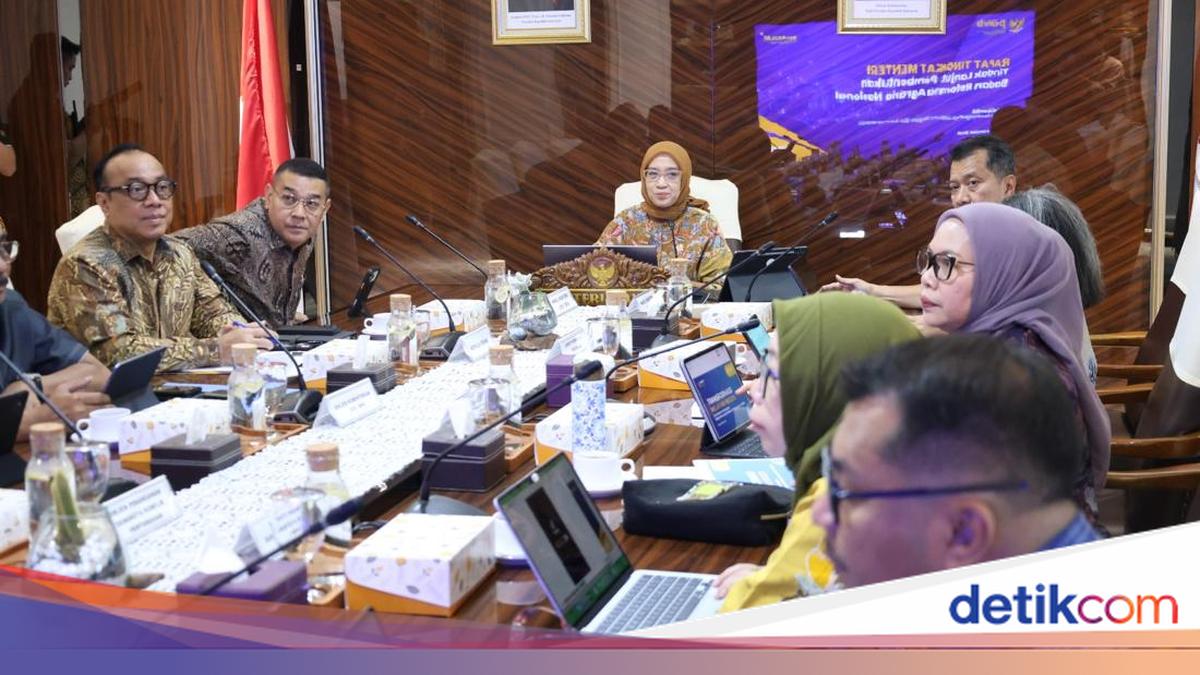
The National Agrarian Reform Agency (BRAN), headed by General Dedi Prasetyo, is ensuring that the national agrarian reform agenda is implemented effectively and in line with President Prabowo Subianto’s policy direction. It is accelerating institutional restructuring by drafting its organisational structure and working procedures (SOTK), while finalising the division of functions, duties and authorities.
Dedi discussed the matter at a meeting with Administrative and Bureaucratic Reform Minister Rini Widyantini and Deputy Minister of Agrarian Affairs and Spatial Planning/National Land Agency (ATR/BPN) Ossy Dermawan at the Majapahit Meeting Room in the Ministry of Administrative and Bureaucratic Reform in Jakarta on Friday (9 October 2026). The meeting focused on accelerating the drafting of BRAN’s SOTK, aligning the views of ministries and agencies, and clarifying the boundaries of authority to ensure agrarian reform is implemented clearly and without overlapping responsibilities.
“Accelerating BRAN’s institutional restructuring is a priority so that President Prabowo’s agrarian reform agenda can be implemented with a clear organisational structure, an appropriate division of authority and measurable working mechanisms. We want this process to move quickly, but also carefully and in accordance with laws and regulations,” Dedi said in a statement on Saturday (10 October 2026).
Dedi said clear functions and responsibilities between BRAN and ATR/BPN were important to ensure each institution worked within its mandate. This would strengthen agrarian reform implementation without overlapping duties or lengthening bureaucratic processes.
“BRAN was not established to take over the authority of ministries and agencies already in operation. We want to build synergies, clarify roles and coordinate our efforts. Land administration will continue under ATR/BPN’s authority, while BRAN strengthens coordination of cross-sectoral agrarian reform, particularly on agrarian issues requiring an integrated response,” he said.
In discussions, the organisational design was being refined to enable BRAN to carry out its duties effectively, adaptively and accountably. The restructuring also needs to take into account coordination requirements with ministries, agencies and local governments involved in agrarian affairs.
Dedi stressed that the success of agrarian reform could not be measured solely by the drafting of regulations or the establishment of an organisation. The most important measure, he said, was the state’s ability to deliver solutions that provide legal certainty and tangible benefits for the public.
“People should not be burdened by complicated divisions of authority between agencies. When agrarian problems arise, the state must be present through clear coordination and accountable solutions. That is why we need to build an integrated, data-based and results-oriented working system from the outset,” he said.
Alongside the organisational structure, integrating land data is a priority in establishing BRAN’s operational foundations. Integrated data is needed to map agrarian issues, set priorities, align programmes and objectively monitor the results of agrarian reform implementation.
“Accurate data is an important basis for setting priorities. We need to understand the problems, map the subjects and objects of agrarian reform, and then develop solutions with the relevant ministries and agencies. A data-based approach will make responses more measurable and accountable,” Dedi said.
The institutional framework and authority-allocation matrix will be finalised through technical coordination across ministries and agencies. Further discussions are also needed to align requirements for supporting regulations and ensure every stage of BRAN’s establishment complies with the law.
Accelerating the drafting of the SOTK is an important step for BRAN in building an organisation with a clear mandate and measurable performance indicators to support the national agrarian reform agenda. Dedi said BRAN was intended to ensure that agrarian reform policy did not stop at institutional restructuring, but led to practical work that people could feel.
By accelerating institutional restructuring and aligning responsibilities, BRAN is seeking to strengthen the foundations for national agrarian reform as part of President Prabowo Subianto’s strategic agenda. The agency is currently focusing on institutional restructuring, clarifying authority and speeding up agrarian reform in pursuit of agrarian justice and public welfare.
“Our measure of success is not simply whether the organisation has been established, but the extent to which agrarian reform delivers justice, legal certainty and improved public welfare. BRAN will prioritise cross-sector collaboration to make implementation more effective and ensure people genuinely benefit,” he concluded.
Source: jawawa.id (https://jawawa.id/newsitem/at-meeting-with-administrative-reform-minister-bran-chief-urges-faster-institutional-restructuring-1791586266)
Originally published by detikcom (https://news.detik.com/berita/d-8700435/rapat-dengan-menpan-rb-kepala-bran-tekankan-kebut-penataan-kelembagaan), translated from Indonesian