
At Malaysia’s MABIMS Forum, Religious Affairs Ministry Shares Best Practices in Mosque-Based Community Economic Empowerment
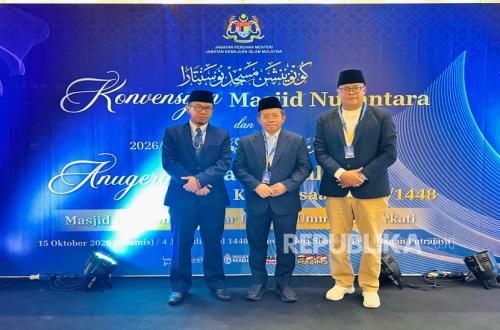
KUALA LUMPUR — The Ministry of Religious Affairs shared Indonesia’s experience and strategic policies for advancing mosque-based community economic empowerment at the MABIMS Nusantara Mosque Convention, themed “Harmonious Mosques, Rooted in Innovation, Blessed Communities”, at Dewan Seri Siantan in Putrajaya, Malaysia.
Bunyamin M. Yapid, an expert adviser to the Minister of Religious Affairs on international cooperation, spoke at the regional forum. His presentation was titled “Transforming Mosque Management”.
He said that, under the leadership of Religious Affairs Minister Nasaruddin Umar, Indonesia was continuing to promote the transformation of places of worship from sites for rituals alone into centres of community economic self-reliance.
“In Indonesia, we are continuing to develop a new paradigm for mosque management. In line with the Minister’s policy direction, mosques must be restored to their historical function, as in the time of the Prophet Muhammad: centres of civilisation and social services, and drivers of the community’s economy,” Bunyamin told MABIMS delegates on Thursday (15 October 2026).
Also attending as Ministry of Religious Affairs representatives were Muhlis Muhammad Hanafi, Director of Islamic Religious Information (Penais) and Acting Director of Islamic Affairs and Sharia Development, and Nurul Badruttamam, Deputy Director for Mosque Affairs at the Directorate General of Islamic Community Guidance.
During a session on sharing best practices, Bunyamin outlined three main pillars of the Ministry’s strategy to maximise mosques’ economic potential. The first is incubating congregants’ small and medium-sized enterprises (SMEs), by using mosque assets and facilities for productive business activities, including SME bazaars, creative-economy ecosystems and sharia-compliant microbusiness partnerships.
The second pillar is the productive use of Ziswaf — zakat, infaq, sadaqah and waqf — managed professionally, accountably and transparently to support poverty alleviation, scholarships and business capital for local residents.
The third is inclusivity and the Green Mosque policy. This involves making mosques welcoming to children, people with disabilities and older people, while adopting environmentally friendly management practices such as reducing water use for ablutions and using renewable energy.
“The success of mosque management is no longer measured by the grandeur of its physical structure, but by the scale of its tangible contribution to improving congregants’ welfare and quality of life,” Bunyamin said.
The Ministry hopes the initiatives and best practices it presented will strengthen cross-border collaboration among MABIMS countries — Brunei Darussalam, Indonesia, Malaysia and Singapore — to develop modern, inclusive mosque governance with economic competitiveness.
Source: jawawa.id (https://jawawa.id/newsitem/at-malaysias-mabims-forum-religious-affairs-ministry-shares-best-practices-in-mosque-based-community-economic-1792158725)
Originally published by Republika (https://khazanah.republika.co.id/berita/tn04c9430/di-forum-mabims-malaysia-kemenag-bagikan-praktik-baik-pemberdayaan-ekonomi-umat-berbasis-masjid), translated from Indonesian