
At HPV Vaccination Launch, Sri Suparni Bahlil Urges Women Not to Delay Health Checks
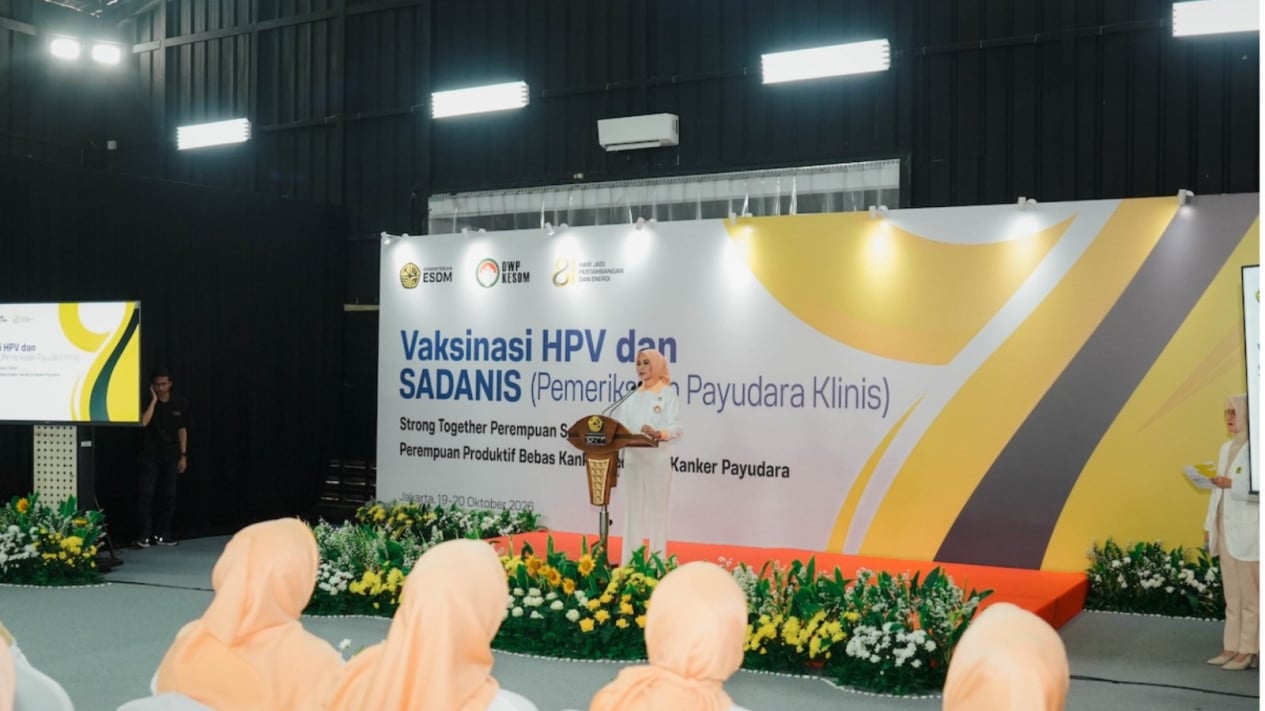
Jakarta – Sri Suparni Bahlil, adviser to the Dharma Wanita Persatuan (DWP) of the Ministry of Energy and Mineral Resources (ESDM), has urged women to undergo health checks without waiting for symptoms to appear.
She delivered the message while opening a Human Papillomavirus (HPV) vaccination programme that had registered 784 participants in four cities. The event was launched at the ESDM Ministry’s badminton hall in Jakarta on Monday (19 October 2026).
Alongside HPV vaccination, organisers provided clinical breast examinations, known as SADANIS, to promote awareness of women’s health.
“It doesn’t mean we should only go to hospital once we are ill. So, let’s all take better care of ourselves. As mothers and as women, we play a very important role. If we are healthy, God willing, our families will be healthy too,” Sri Suparni said in her remarks.
The vaccination service was held in Jakarta, Bandung, Yogyakarta and Cepu. Of the 784 people registered, 446 were in Jakarta.
The programme specifically targeted female employees and members of the ESDM Ministry’s DWP. It formed part of events marking the 81st Mining and Energy Anniversary.
The event was supported by the Geological Agency, health workers, Dharmais Hospital, PT Bio Farma and the Indonesian Breast Cancer Foundation.
Sri Suparni said concern for health could be fostered within one’s immediate surroundings. She hoped that busy schedules, fear or embarrassment would not deter women from taking the opportunity to undergo examinations.
“Do not delay examinations; do not wait until you are ill before going to hospital. Do not let fear, embarrassment or a busy schedule stop us from looking after our health. Caring for ourselves is part of how we care for our families,” she stressed.
Sri Suparni reminded participants that HPV vaccination was not the end of efforts to prevent cervical cancer. Regular examinations should still be carried out in accordance with the advice of health professionals.
This message is consistent with the World Health Organization’s (WHO) approach, which treats HPV vaccination, screening and treatment of precancerous lesions as complementary elements in cervical cancer prevention. Vaccination helps reduce risk, while screening aims to detect changes in the cervix before they develop into cancer.
She also encouraged participants to become health advocates in their families and communities. They can do so by sharing accurate information, encouraging other women to pay greater attention to their health, and urging girls to receive HPV immunisation in line with government programmes.