
At G20 TMM, Trade Minister: Food must not become an instrument of geopolitical pressure
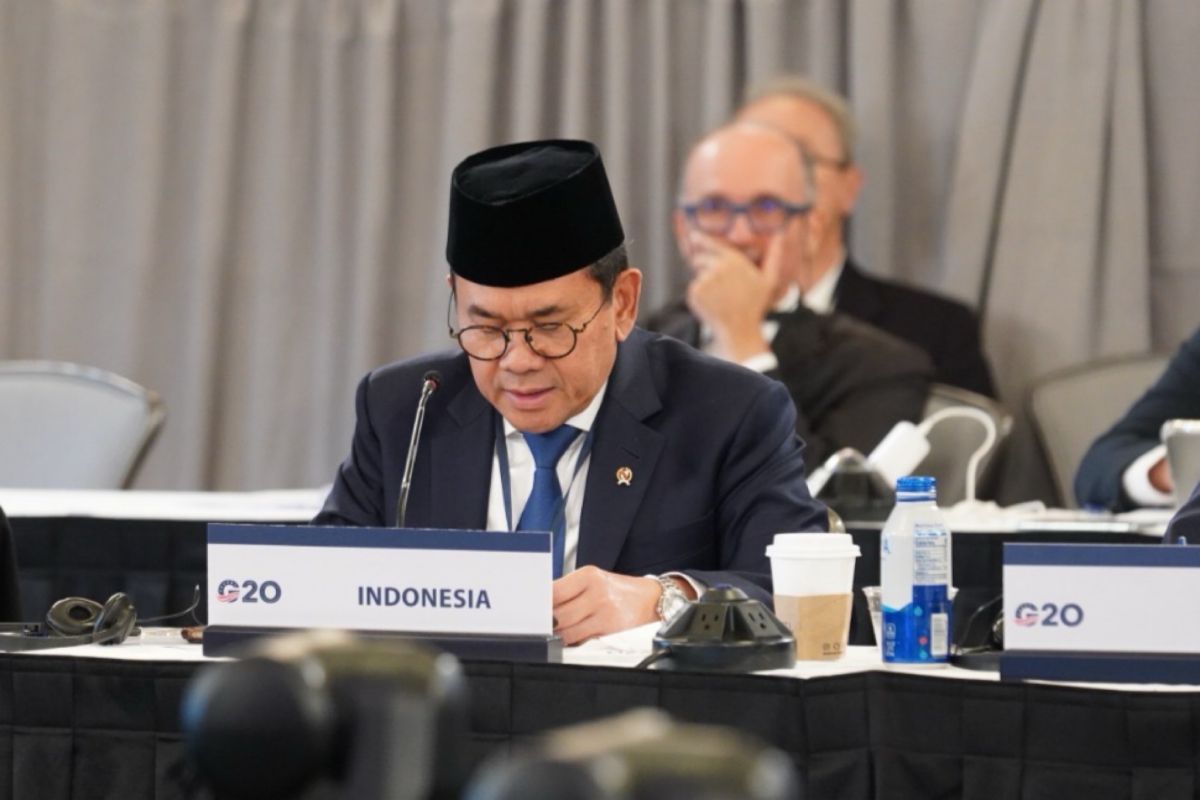
Jakarta (ANTARA) - The Minister of Trade, Budi Santoso, has urged collective action to strengthen food security and ensure sustainable food access for the global community during the first session of the G20 Trade Ministers’ Meeting (TMM) in Milwaukee, Wisconsin, United States.
Budi stated that food security, as a foundation of human dignity, must be protected from efforts to turn it into an instrument of geopolitical pressure.
“Food commodities must be the foundation of human dignity. Food must not be used as an instrument of coercion. Our task is clear: to overcome differences, strengthen pragmatic cooperation, and ensure that food remains a bridge between nations,” Boded in a press statement received in Jakarta on Thursday.
At the same time, Indonesia believes that an open, predictable, and rules-based multilateral trading system remains one of the foundations that must be maintained.
According to Budi, public stockholding, when used proportionally and transparently, can bridge periods of food surplus and scarcity, maintain food access for vulnerable populations, and provide reliable markets for smallholder farmers.
Meanwhile, the Special Safeguard Mechanism is necessary as a protective instrument for developing countries when facing import surges or significant price drops.
Furthermore, he explained that food security rests on two pillars: predictable food access and resilient national food systems. Both must operate in accordance with the principles and objectives of the global trading system.
“Every country has a legitimate right to maintain food security and implement public policies that benefit their people. This right must be exercised responsibly,” he said.
Budi also emphasised that developing resilient national food systems is not merely a humanitarian issue, but a component of economic strategy. A resilient food system influences trade balances, productivity, health, inflation, and economic growth.
“Investment in resilient food systems should not be viewed solely as social assistance, but rather as part of risk management,” he asserted.