
At COP31, Eddy Soeparno to Outline Indonesia’s Efforts to Curb Climate Change
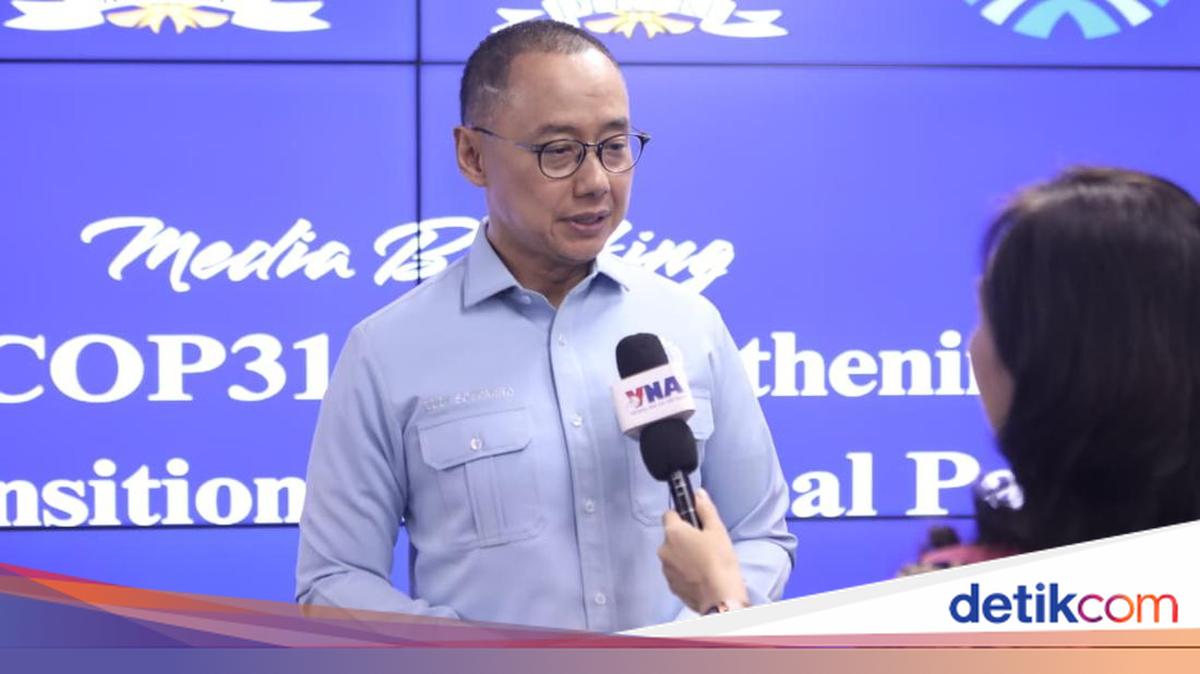
Eddy Soeparno, Deputy Speaker of the People’s Consultative Assembly (MPR) from the PAN faction, will outline Indonesia’s efforts to strengthen the legal framework for controlling climate change at the 31st UN Climate Change Conference (COP31). The move forms part of efforts to strengthen Indonesia’s climate diplomacy.
The proposals take the form of the Draft Law on Climate Change Control (RUU PPI) and the Draft Law on New and Renewable Energy (RUU EBET).
Eddy presented the ideas at a foreign media briefing with Indonesian Environment Minister Jumhur Hidayat and the Indonesian Communication Agency (Bakom RI).
“These two regulations (the RUU PPI and RUU EBET) are strategically important to ensure that Indonesia’s decarbonisation and sustainable development agenda has a strong legal foundation,” Eddy said in a written statement on Thursday (5 November 2026).
Eddy hopes COP31 will enable Indonesia to strengthen its position and leadership in global climate diplomacy.
The announcement of plans to draft the Climate Change Control Bill and the New and Renewable Energy Bill is expected to send a strong signal to the international community that Indonesia is continuing to align its Nationally Determined Contribution (NDC) commitments with economic development and the transformation of the national energy sector.
From an international diplomacy perspective, Eddy views COP31 as an important opportunity for Indonesia to reinforce its place in global climate discussions and negotiations. Indonesia needs to present a clear agenda rooted in national interests while contributing to the world’s collective efforts to address climate change.
He said Indonesia’s climate diplomacy should balance emissions-reduction commitments, economic development needs, energy security and fairness for developing countries.
Indonesia should also press developed countries to fulfil their commitments on climate finance, technology transfer and capacity-building support for developing nations.
“Indonesia’s climate diplomacy begins with our national agenda and needs. We have our NDC commitments, a Net Zero Emissions target for 2060 and an agenda to accelerate the energy transition. We need to communicate all of this to the world as part of Indonesia’s contribution to addressing global climate change,” Eddy said.
“At the same time, we also need to emphasise the importance of access to finance, technology transfer and fairer international cooperation for developing countries,” he added.
Eddy said the energy transition has significant economic potential. Developing the renewable energy industry could create around four million new jobs, help eradicate structural poverty and improve Indonesia’s export competitiveness through the production of low-carbon goods and services.
“Developing clean energy creates investment opportunities, high-quality jobs and greater competitiveness for national industry. That is why we need regulatory certainty to realise this economic potential,” Eddy said.
Eddy also highlighted the importance of strengthening energy resilience and self-sufficiency by diversifying energy sources. Dependence on imported energy commodities leaves the economy vulnerable to price volatility and global geopolitical and geoeconomic shifts.
Indonesia has substantial renewable energy potential, estimated at around 3,600 gigawatts (GW), including 3,300 GW of solar power. The use of solar, geothermal, hydropower and wind energy needs to be accelerated to strengthen the national energy mix.
“Indonesia’s renewable energy potential is a strategic asset for building energy self-sufficiency. We need to ensure it can be harnessed with support from regulation, investment, infrastructure and the development of domestic industries,” Eddy said.
Eddy stressed that accelerating the energy transition is also essential to meeting Indonesia’s NDC targets under the Paris Agreement.
Through its Second NDC, Indonesia has set out its climate action contribution for 2031–2035, covering mitigation and adaptation across sectors including energy, forestry, agriculture, industry and waste management.
Eddy urged all stakeholders to take part in delivering the NDC commitments. He said concrete domestic action was needed, including regulations to ensure emissions-reduction targets are implemented consistently and measurably.
“We must translate our NDC commitments into concrete action at home. We need regulations that ensure emissions-reduction targets can be implemented consistently and measurably, with the involvement of all stakeholders,” Eddy said.
“Indonesia has a major opportunity to make the energy transition a driver of economic growth, green industrialisation and job creation. With a strong regulatory foundation, we can strengthen energy resilience while fulfilling our commitment to controlling climate change on the path to Net Zero Emissions by 2060,” he added.
Source: jawawa.id (https://jawawa.id/newsitem/at-cop31-eddy-soeparno-to-outline-indonesias-efforts-to-curb-climate-change-1793868710)
Originally published by detikcom (https://news.detik.com/berita/d-8739655/di-cop-31-eddy-soeparno-akan-jelaskan-upaya-ri-kendalikan-perubahan-iklim), translated from Indonesian