
At 2026 National Santri Day Ceremony, Religious Affairs Minister Delivers Address
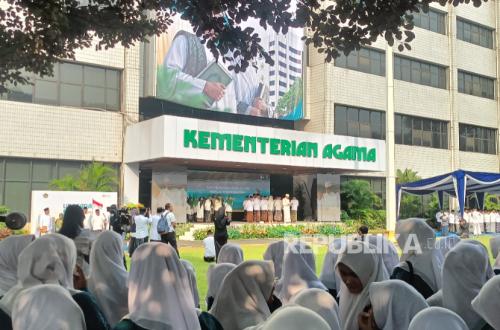
The Ministry of Religious Affairs, through its Directorate-General of Islamic Boarding Schools, held a ceremony to mark National Santri Day 2026 in the grounds of the ministry’s office in Jakarta on Thursday morning (22 October). The event was an opportunity to reaffirm the role of santri in building the nation.
According to Republika’s observations at the site, the ceremony began at 7 am Western Indonesian Time. The santri and female santri attending recited Pancasila, the 1945 Constitution, the Jihad Resolution and the Santri Pledge. The event was then followed by an address from Religious Affairs Minister Prof Nasaruddin Umar.
“Santri Indonesia!” Nasaruddin said at the start of his address as ceremony inspector. Ministry civil servants in attendance responded in unison: “Excellent, independent and globally recognised!”
This year’s National Santri Day theme is “Santri Strengthening the Nation Towards a Golden Indonesia”. Beyond being a national ceremonial event, the ceremony offered a chance to reflect on the history of pesantren and the contributions of santri through education, service, unity and tangible work for the nation.
After the minister’s address, the programme continued with prayers, a report from the ceremony commander and a salute to the inspector. The entire ceremony was scheduled to end at 9.15 am Western Indonesian Time.
Basnang Said, Director-General of Islamic Boarding Schools at the Ministry of Religious Affairs, who served as ceremony commander, said that life in a pesantren plays an important role in shaping santri character. He said pesantren are not only places to study religion, but also institutions that cultivate independence, discipline and good character.
Source: jawawa.id (https://jawawa.id/newsitem/at-2026-national-santri-day-ceremony-religious-affairs-minister-delivers-address-1792641105)
Originally published by Republika (https://news.republika.co.id/berita/tnah8s366/upacara-hari-santri-2026-menag-sampaikan-amanat), translated from Indonesian