
Asymmetric Regional Election Discourse Criticised, JPPR Claims It Could Strengthen Political Elite Dominance
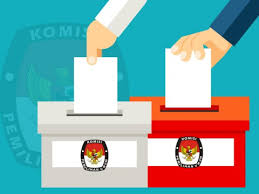
The Voter Education Network for the People (JPPR) has criticised the discourse regarding the implementation of asymmetric regional elections, or elections that are not held simultaneously. According to JPPR, the idea is paradoxical because Indonesia previously implemented an asymmetric pattern before transitioning to the simultaneous election system.
JPPR Steering Committee member, Nurlia Dian Paramita, assessed that the reasons used to promote asymmetric elections, such as high political costs, are inconsistent with the spirit of establishing a simultaneous election system. “The discourse on asymmetric regional elections being pushed after the implementation of simultaneous elections is a tendency towards paradox and will create new problems. This is because, before simultaneous elections were implemented, regional elections were held asymmetrically,” Nurlia told Media Indonesia on Saturday (6/6).
According to her, simultaneous regional elections were originally designed to encourage budget efficiency, maintain political stability, align development programmes, and save time and human resources in the administration of elections. “The true spirit of simultaneous elections lies in the effort to encourage budget efficiency, political stability, and programme alignment, as well as the efficiency of time and human resources. Therefore, the reason of high political costs is highly contradictory to the spirit of simultaneous elections,” she said.
She also reminded that issues of money politics and electoral conflicts do not only occur in simultaneous elections, but also emerged when regional elections were still held asymmetrically. “Money politics and electoral conflicts also appeared during the practice of asymmetric regional elections that we previously implemented,” she said.
Nurlia assessed that returning to an asymmetric system could potentially lead to new issues regarding the terms of office of regional heads. In her view, adjusting the regional election schedule could imply the extension or reduction of regional heads’ terms of office. “If it has been implemented simultaneously and is to be returned to an asymmetric system, then problems will arise, such as the term of office of regional heads being extended or reduced as an implication of organising asymmetric elections,” she said.
She emphasised that such a policy would be difficult to justify without strong and rational arguments, especially since the 2024 simultaneous regional elections were deemed to have proceeded as expected. “Such restructuring would be very problematic without clear and grounded rationalisation. Especially since the recent simultaneous elections proved to have proceeded as expected,” she said.
Furthermore, Nurlia warned that the discourse on asymmetric elections could potentially conflict with Constitutional Court Decision Number 135/PUU-XXII/2024, which regulates the separation between national elections and local elections, while still being conducted simultaneously within each level. “The discourse would also clash with Constitutional Court Decision 135/PUU-XXII/2024, which mandates that national and local elections be separated but still implemented simultaneously,” she said.
JPPR also questioned the motive behind the resurgence of this discourse. According to Nurlable, it needs to be examined whether the proposal truly aims to reduce money politics and electoral conflict, or if it has the potential to strengthen the dominance of political elites. “Is this discourse truly intended to avoid money politics, budget inefficiency, and electoral conflict, or is it a scheme for the strengthening of political elite dominance? This is something we need to reflect upon carefully,” she said.
Furthermore, she assessed that public oversight of regional heads could be strengthened through consistent political education, particularly by political parties. If regional elections are held asymmetrically, political parties are feared to focus more on electoral victories rather than performing their political education functions. “If asymmetric regional elections are conducted, parties will certainly work together to focus on winning the regions holding the elections. Consequently, political education potentially becomes neglected. This poses a potential weakening of public control,” she said.
On this basis, JPPR considers the discourse on asymmetric regional elections to be a step backward in the reform of the election and regional election system in Indonesia. The organisation encourages the strengthening of simultaneous regional elections and the increased role of political parties in public political education. “Asymmetric regional elections are a regression and need to be reconsidered. The recommendation is to strengthen the implementation of simultaneous regional elections and to encourage political parties to conduct massive political education,” she concluded.