
Astronomers Warn of Threat from Artificial 'Saturn Ring' Created by Satellites
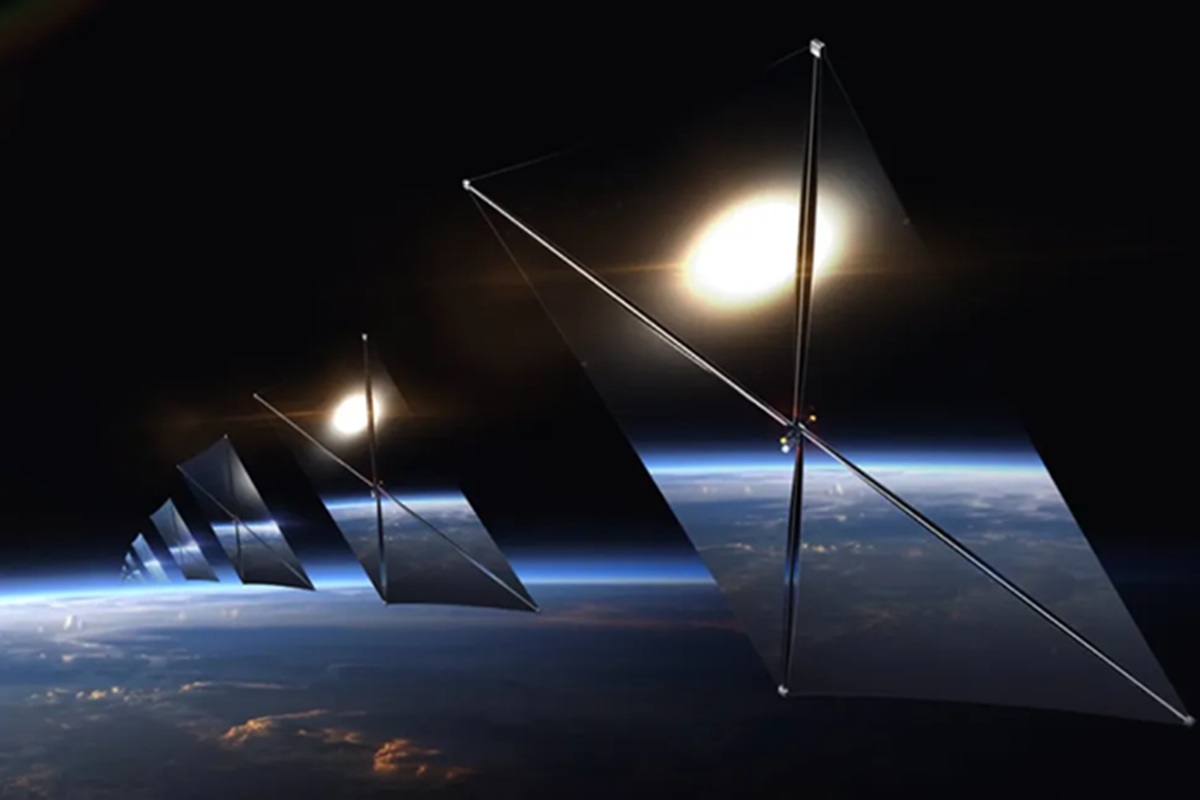
Astronomers are concerned about the potential formation of a man-made ‘ring of Saturn’ around the Earth as a result of mass satellite launches. This glowing belt is projected to come into being if plans by private companies to launch millions of data-centre satellites and tens of thousands of space mirrors are actually realised.
The situation is considered risky for space observation and could permanently alter the appearance of the night sky.
Professor of Astronautics at the University of Birmingham in England, Hugh Lewis, explained that the main way to accommodate an enormous number of satellite constellations is to stack them in orbit above the boundary between day and night. This arrangement would create an artificial ring visible crossing the sky.
The satellites could form a bright band illuminating the sky for several hours after sunset and before dawn. Its brightness is estimated to exceed that of stars and other planets, and it could even be visible from every region of the Earth.
“If you look up at night, everything will be in one very closely packed plane moving in the same direction,” said Lewis. “The impact on the night sky would be catastrophic.”
The brightness of the ring depends on the exact number of satellites in orbit. Researchers caution that space mirrors designed to reflect sunlight back to Earth, such as those being developed by Reflect Orbital, have the potential to be as bright as the planet Venus. As a result, the accumulation of reflected light could trigger extremely intense illumination.
Currently, around 14,000 satellites are operating in Earth’s orbit. However, the expansion of mega-satellite constellations has grown rapidly in recent years. SpaceX, for instance, has filed an application with the United States Federal Communications Commission (FCC) to operate up to one million data-centre satellites. Meanwhile, Reflect Orbital plans to place around 50,000 space mirrors in orbit.
Scientists remind that the total number of satellites globally should ideally remain below 100,000 units so as not to damage astronomical activity. Overly bright satellites risk creating streaks of light in telescope images, disrupting deep scientific observation.
Beyond interfering with telescopes, the increase in the number of objects in space raises the risk of a build-up of space debris. Collisions between satellites are feared could trigger a chain reaction known as Kessler Syndrome, in which debris from collisions would threaten future space missions.