
Astronomers Grow Increasingly Concerned as Earth's Orbit Faces Satellite Overcrowding
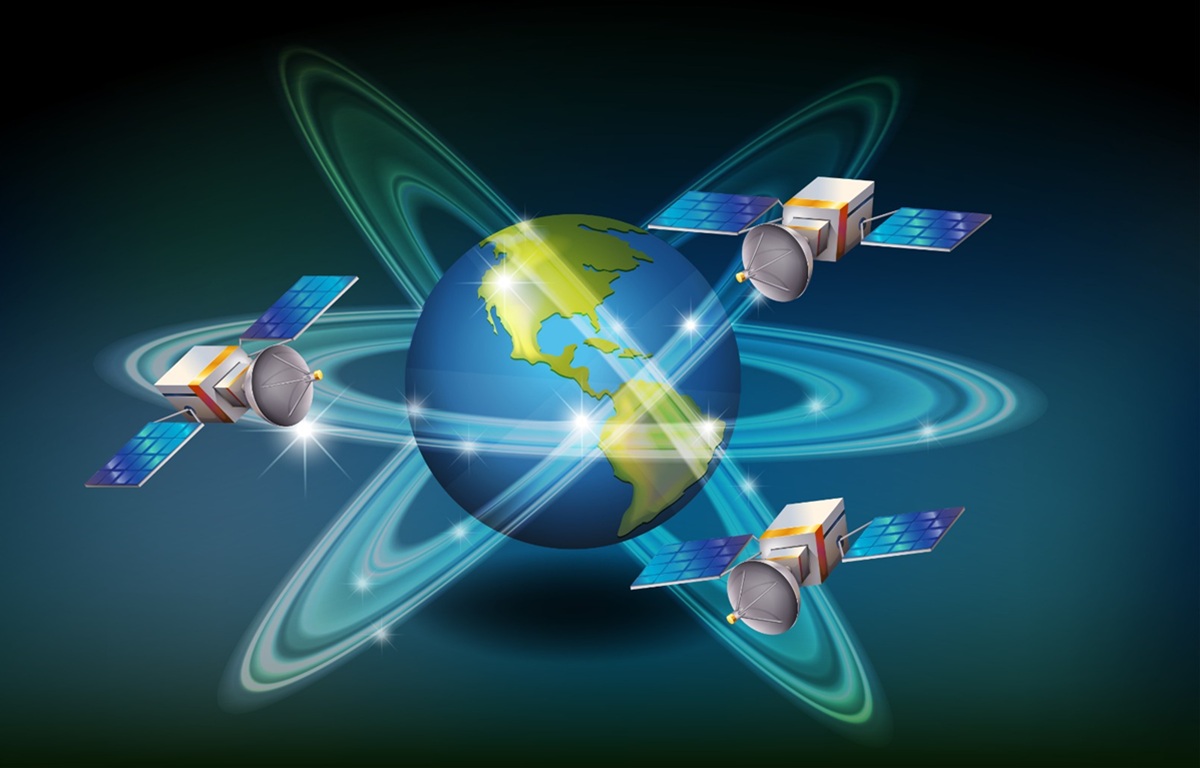
In recent years, the number of satellites orbiting Earth has increased at a remarkable pace. Whereas previously there were only thousands of active satellites, various space companies now plan to place tens of thousands to millions of small satellites, or satellite constellations, in low Earth orbit (LEO). This phenomenon has raised new concerns among astronomers, as the night sky could potentially be filled with satellite trails resembling a thin ring encircling the Earth, much like the rings of Saturn.
These satellites do bring great benefits, such as providing high-speed internet to remote regions, supporting global communications, navigation, and disaster monitoring. However, behind these benefits lie increasingly serious consequences for the world of astronomy.
According to the International Astronomical Union (IAU), the growing number of satellite constellations means telescopes around the world are increasingly capturing bright streaks caused by sunlight reflecting off satellite bodies. These light trails can obscure the celestial objects under observation, from distant galaxies and asteroids to cosmic phenomena that appear only briefly.
The interference occurs not only in observations with optical telescopes but also with radio telescopes. Some satellites emit radio waves that can disrupt natural signals from outer space, thereby degrading the quality of scientific data.
For astronomers, this situation presents a major challenge, as more satellites mean a higher likelihood of disrupted observations, especially at dusk and dawn when satellite reflections are at their brightest.
Beyond disrupting astronomical research, the explosion in satellite numbers also increases the risk of collisions in orbit. If two satellites collide, the fragments can turn into thousands of pieces of space debris travelling at extremely high speeds.
Such debris has the potential to strike other satellites and trigger a chain reaction known as the Kessler Syndrome, a condition in which Earth’s orbit becomes so filled with debris that launching and operating new satellites becomes far more dangerous.
For this reason, the international scientific community is urging satellite operators to design dimmer satellites, share orbital data openly, and ensure satellites can be removed from orbit once their operational life ends.
Advances in satellite technology cannot be halted, but their impact on science can be minimised through global cooperation. The IAU considers the protection of the night sky a shared interest, as observatories around the world play a vital role in studying the origins of the universe, detecting dangerous asteroids, and searching for signs of life beyond Earth.
With the number of satellites expected to keep growing in the decades ahead, maintaining a balance between the needs of modern communications and the preservation of the night sky is a major challenge that must be faced together.