
Astronomers Discover Traces of Galaxy Loki, Victim of Ancient Milky Way Cannibalism
PT DSI Persero will take over full export functions starting January 2027.
PT DSI Persero will take over full export functions starting January 2027.
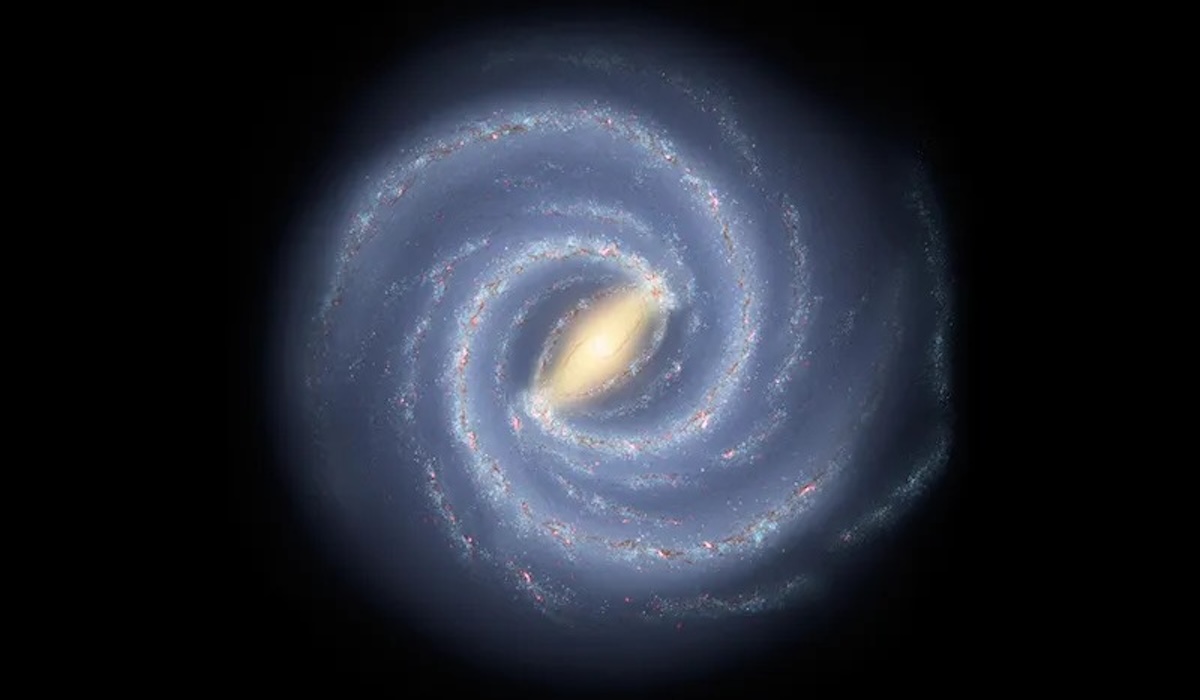
Astronomers have found strong evidence that the Milky Way is a “cannibal galaxy” that grew large by devouring a dwarf galaxy named Loki around 10 billion years ago. The discovery of this cosmic debris offers new insights into the early evolution of the galaxy where Earth resides.
Based on a study published in the Monthly Notices of the Royal Astronomical Society, scientists successfully identified 20 ancient metal-poor stars in the galactic disc. These stars are believed to be remnants of the destroyed Loki galaxy, consumed by the Milky Way when it was very young.
The research team led by Federico Cestito used data from the European Space Agency’s (ESA) Gaia telescope and the Canada-France-Hawaii Telescope to track these stars. Analysis showed the stars are approximately 7,000 light-years from the solar system and over 10 billion years old.
The uniqueness of this discovery lies in the opposing orbital directions of these stars. Scientists concluded that such a scenario is only possible if a major collision occurred when the Milky Way was smaller and had weaker gravity.
The discovery of the Loki galaxy adds to the long list of “food” the Milky Way has consumed during its growth. Previously, scientists had found evidence of the Milky Way merging with the giant Gaia-Sausage-Enceladus galaxy between 8 and 10 billion years ago.
The Milky Way is estimated to have expanded to a diameter of 100,000 light-years with a population of 400 billion stars. This galactic cannibalism process is key to understanding how spiral galaxies reached their current size.
ELSI researchers discovered that extreme temperature cycles on ancient Earth triggered the merging of primitive cells (protocells) and DNA exchange, an early step in evolution.
The combination of a slender body and strong muscles allows swiftlets to undertake long-distance flights without significant fatigue.
Recent studies on finches reveal that the pigment pheomelanin (responsible for red hair/orange feathers) acts as a protective mechanism against toxic excess cysteine.
Did you know that millions of years ago, human ancestors had tails like monkeys? Why don’t modern humans have them?
What would happen to Earth if humans went extinct? Professor Tim Coulson from the University of Oxford explains the possible emergence of new species.
Astronomers have successfully mapped the previously hidden Vela Supercluster. With a mass of 30 quadrillion suns, this structure is one of the largest in the universe.
This weekend, on 23 August 2025, a seasonal black moon will occur—a rare third new moon in a season.
Bimasakti, a name that has gone viral online in the past three months due to its candidacy for Tegal Regent, has recently released a single titled “Terbit Dan Tenggelam” in January 2024.