
Astronomers Astonished to Discover a Green Star
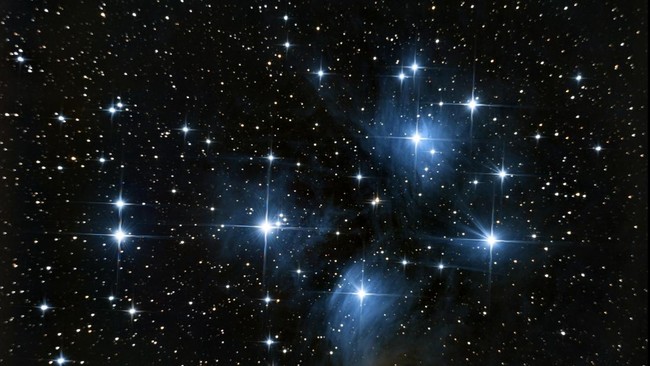
An unusual discovery has been made in the Milky Way: a green-coloured star has been identified for the first time, unlike the colours of most stars.
A star’s colour generally depends on its temperature. Cooler stars are orange, the Sun and stars like it appear white, and the hottest stars are pale blue.
The green star, WD J1330+6435, is a dense stellar remnant known as a white dwarf, which is usually white. It lies in the Milky Way’s Draco constellation, 280 light-years from Earth.
Mark Hollands, an astrophysicist at the University of Warwick in the UK and lead author of the study, explained that material from planets falls on white dwarfs, enriching their outer layers with elements including calcium, lithium and sodium.
In ordinary stars, sodium absorbs orange wavelengths. In some white dwarfs, however, the high density means sodium atoms are continually bombarded by surrounding helium atoms, changing their energy levels.
“As a result, sodium atoms no longer absorb one very narrow orange wavelength; they absorb yellow, orange and a number of red wavelengths. What remains is a beautiful greenish light, something that cannot happen in a star like the Sun,” he said, as quoted by Reuters on Monday (19 October 2026).
White dwarfs are extremely dense, roughly the size of Earth but with 165,000 times our planet’s mass. Another study author, Boris Gänsicke of the University of Warwick, said this means a small amount of sodium can block much of the orange light.
The researchers studied 151 white dwarfs. These stars are about 65 light-years away and are white on average.
One of them, WD J1011+2845, is salmon pink and the brightest of all the stars. It is located in the Leo Minor constellation, 48 light-years from Earth.
Gänsicke explained that sodium does not change this star’s colour palette; instead, the colour is caused by carbon emerging from its interior.
“Rather than something falling onto the star, in this case carbon is coming out from inside it,” he said.
Astronomers have also found that white dwarfs come in a variety of colours spanning the spectrum. Their colours differ according to the composition of their atmospheres.
For example, white dwarfs may appear pink or purple when rich in carbon, while yellow ones are coloured by debris from the remnants of a destroyed planetary system.
Cool white dwarfs with atmospheres containing hydrogen and helium appear pale blue.