
Astronauts' Constipation Woes: Researchers Seek Solutions
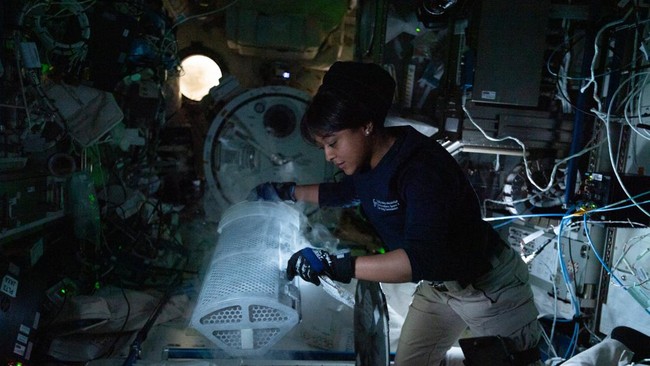
Constipation is one of the problems frequently experienced by astronauts in outer space. However, the cause of this difficulty in defecating remains a mystery.
To find out, researchers from the University of Copenhagen and NASA analysed blood samples from astronauts collected before, during and after space missions.
The samples were taken from 52 astronauts who lived on the International Space Station (ISS). All astronauts carried out missions lasting between two and nine months in the period 2006-2018.
The team applied metabolomics techniques in this study to measure small molecules in the blood.
It was found that the movement of food through the intestines slows down due to microgravity. This alters the way gut bacteria break down nutrients.
“We saw changes in the astronauts’ blood samples indicating that gut bacteria began fermenting protein in larger amounts within a few weeks of the astronauts arriving in space, and this change continued until they returned to Earth,” explained one of the study authors, Giorgia La Barbera, as quoted from Space on Wednesday (26/8/2026).
A total of 488 plasma samples were analysed and changes in 40 compounds were found during flight. These included a number of metabolites produced when bacteria in the large intestine ferment protein.
All of these compounds increased while in space, indicating that food moves more through the intestines.
This metabolic change is said not to stem from diet alone. One of the study authors, Henrik Roager, explained that the lack of gravity in space likely makes food move more slowly through the intestines.
“This could also explain the reason for constipation in astronauts,” he said.
The findings of this study are important given the increasing length of time astronauts spend in outer space. Not only constipation, the impact of this phenomenon could also be linked to other health effects.
This could be addressed with a potentially simple solution, namely increasing fibre intake. Slowly fermented carbohydrate intake for astronauts is believed to provide gut microbes with more carbohydrates to consume and reduce reliance on protein fermentation.