
Astra Foundation assists dragon fruit farmers in penetrating modern and export markets
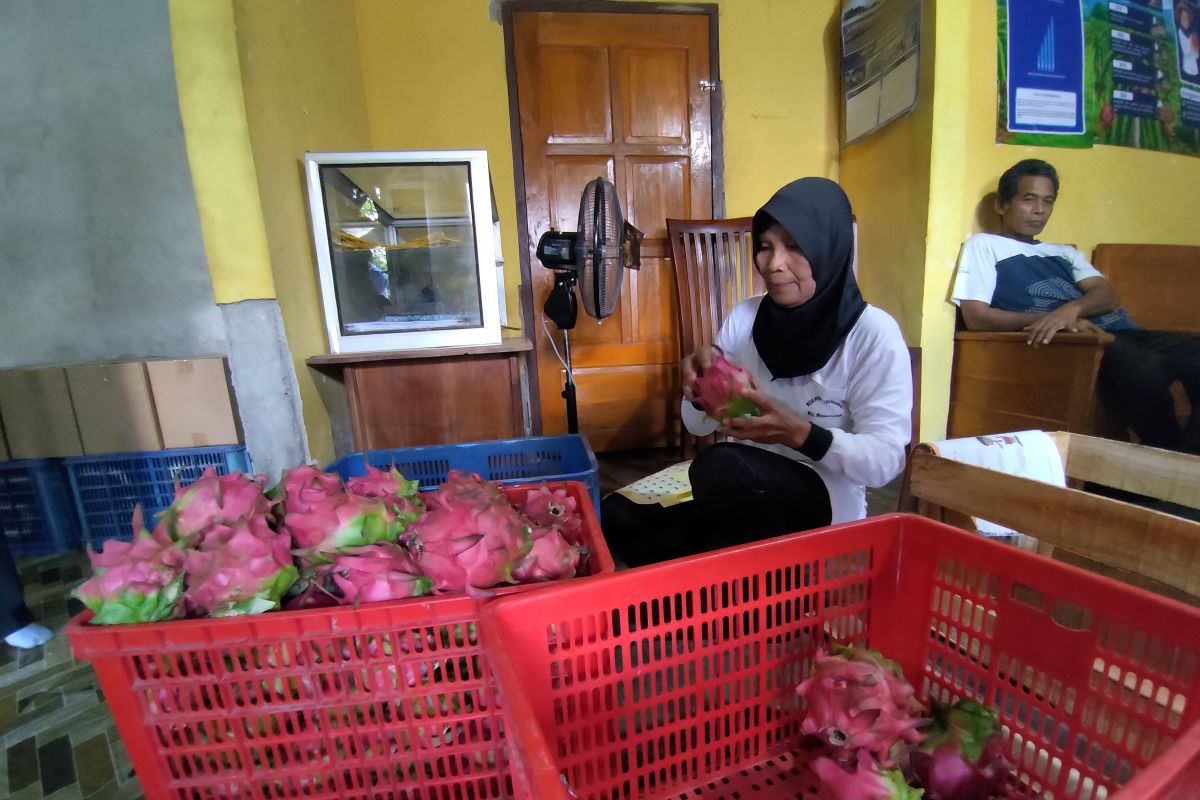
The Astra Foundation-Yayasan Dharma Bhakti Astra (YDBA) is assisting dragon fruit farmers in Banyuwangi, East Java, to improve cultivation standards and business management, thereby strengthening product competitiveness and expanding access to modern markets and exports abroad.
Rahmat Samulo, Chairman of the Astra-YDBA Foundation, said the assistance is provided through the Banyuwangi UMKM Assistance Centre (PPU). “The PPU runs training and assistance programmes on basic mentality and technical aspects so that farmers’ cultivation processes and harvests can meet the Quality, Cost and Delivery standards of both local and international modern markets,” Rahmat said in Banyuwangi on Thursday.
He stated that strengthening the farmers’ capacity is expected not only to improve product quality but also to expand business opportunities based on dragon fruit through the development of supply chains and derivative products. “We also facilitate market access so that farmers can become part of the supply chain ecosystem for dragon fruit products and their derivatives,” he said.
Sumartini, Chair of the Sinar Cabe Farmer Group, said the assistance has helped the group expand its marketing access, which previously depended solely on traditional markets. “Now we have many of our own markets. We have traditional markets, we have modern markets. So our products now have a market with bargaining power,” Sumartini revealed.
The Sinar Cabe Farmer Group currently has 30 active members managing 9.2 hectares of dragon fruit planting land. “The switch was because of the price. With chillies, one planting yields a harvest in three months. After that, when it’s finished, we scramble to find capital again. With dragon fruit, once planted, you just maintain it and it yields continuously,” she said.
The farmer group now markets organic dragon fruit to modern markets, hotels and supermarket suppliers, and has previously prepared shipments for the export market with business partners. Together with fruit exporting company PT Nusa Tropical Indonesia, operating under the Nusa Fresh brand, the group also prepared a 1.7-tonne shipment of dragon fruit for the export market to Singapore in 2022–2023. Sumartini added that in 2025-2026, through Agro Resources Indonesia, the group has also exported 11.8 tonnes of dragon fruit to Singapore. In 2025, the farmer group also sent dragon fruit samples for the development of processed dragon fruit products to the Netherlands.
“We can now send to supermarkets, then to hotels. We have also prepared exports to Singapore and Europe,” she said. The expansion of marketing channels gives farmers a stronger bargaining position compared to when they only relied on traditional markets. According to her, the farmer group also received assistance to meet various business requirements, including certification, intellectual property rights (HAKI), and Home Industry Food Production Permits (PIRT), making the products easier to market. “In the past, it was whatever the market said. Even if the price was low, we harvested. Now we definitely have bargaining power,” she said.
The assistance programme continues the development previously carried out through the Astra Prosperous Village (DSA) programme in Sumbermulyo Village, Pasanggaran District, Banyuwangi. Zuri, Coordinator of the Astra-YDBA Foundation in Banyuwangi, said the development of dragon fruit farmers began when the Banyuwangi dragon fruit sector experienced price pressure in 2017-2018. At that time, the price of grade A dragon fruit was only around Rp1,000 to Rp2,000 per kilogramme, so the initial development focused on strengthening market access. Following the establishment of the YDBA Banyuwangi branch in 2021 and the programme’s development, the assistance was expanded to cover cultivation aspects and strengthening farmer capacity. “The obstacle turned out to be not only the price, but also the cultivation aspect; even the farmers cultivating it needed development,” Zuri said. Through the programme, farmers receive training on cultivation, business management, group administration, and post-harvest management tailored to the needs of the modern market.