
Astamaops Polri Urges Transformation of Police 110 Service and Command Centre
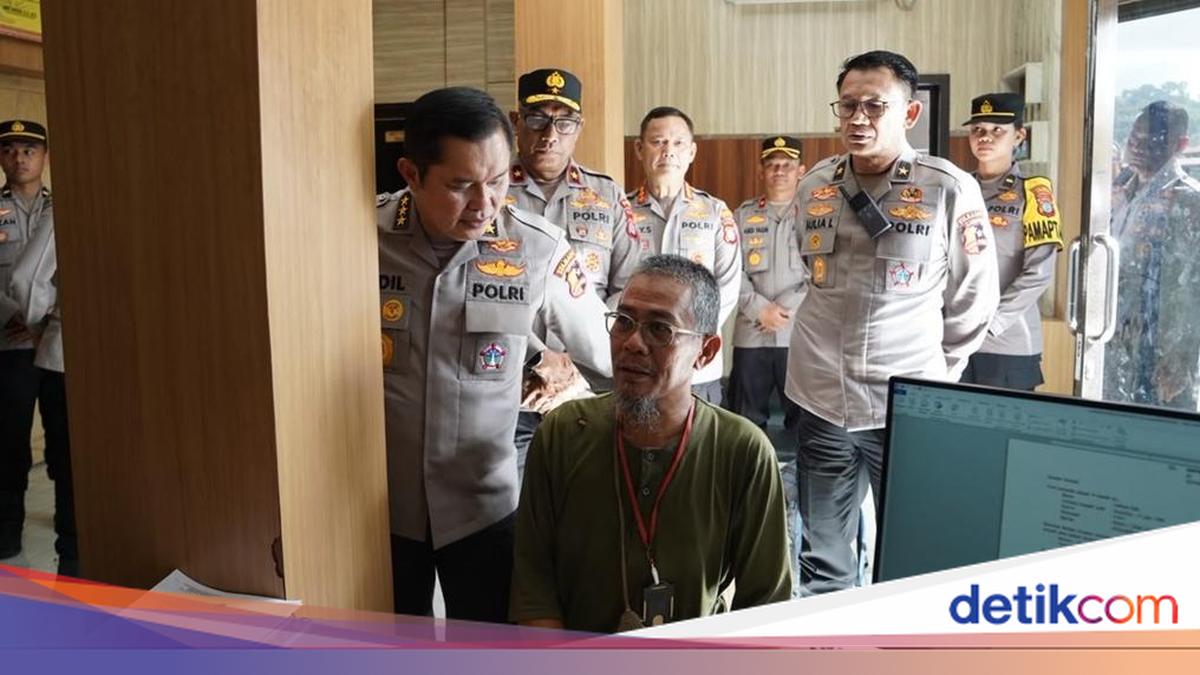
The National Police’s Assistant for Operations (Astamaops Polri), Commissioner General Fadil Imran, is pushing for a transformation in police services. He stressed that the Police 110 Service and Command Centre should not be mere formalities but must prioritise rapid response in the field.
This was conveyed by Fadil during a visit to the Sorong City Police in Southwest Papua on Thursday (16/7/2026). During the visit, he inspected the readiness of the 110 Service and the Command Centre mechanism at the Sorong City Police. Fadil checked the coordination flow from the operator and the Integrated Service Centre (SPKT) to the personnel on patrol. He appreciated the increase in the number of reports via 110 and emphasised that the success indicator is not solely about answering calls.
“An answered call is the beginning of service, not the end. What we must ensure is that after the public reports a problem, who responds, how long it takes for the police to arrive, and whether the public’s issue is truly resolved,” he said in a statement on Friday (17/7/2026).
Based on data from the National Police Headquarters Command Centre 110, the Sorong City Police 110 Service received 3,392 calls from January to June 2026. Of that number, 2,672 calls were successfully answered, achieving a call success rate of 88.18 percent, an increase compared to the previous year. Despite this, Fadil requested a change in the service paradigm. According to him, the most important measure of success is how many members of the public are genuinely helped after making a report.
“Don’t just ask how many calls we answered. Start asking how many people we actually helped. That is a far more important measure of service,” he said. The former Metro Jaya Police Chief also instructed his ranks to periodically measure response times, from the moment a report is received, to the dispatch of personnel, to the arrival of officers at the scene.
“The public does not need to think about which function this falls under. For the public, it’s simple: I need the police. It is our job to ensure that need is forwarded to the most appropriate and fastest personnel,” he stated. Furthermore, Fadil reminded his ranks not to get caught up in the physical facilities of the Command Centre. He asserted that the Command Centre must function as a rapid decision-making centre, not just a room with expensive technology.
“A Command Centre should not always be imagined as a large room with many screens or expensive technology. All of that is just a tool,” he said. “The essence of a Command Centre is how we receive information, understand the problem, make decisions, deploy personnel, and ensure the public’s problem is handled.”
In addition to rapid response, Fadil encouraged the use of data to prevent crime. Referring to the National Police’s DORS data, there were 1,503 criminal cases in Sorong City in the first semester of 2026, with motor vehicle theft being the most frequent. He requested that this data be mapped to determine vulnerable locations and times, so that police patrols can be more targeted. “Data must be able to answer: where do crimes most often occur, what time is most vulnerable, what are the patterns of incidents, and which patrol is closest. From there, we can deploy personnel more precisely,” concluded Fadil.