
Asta Cita from the Far End of Miangas
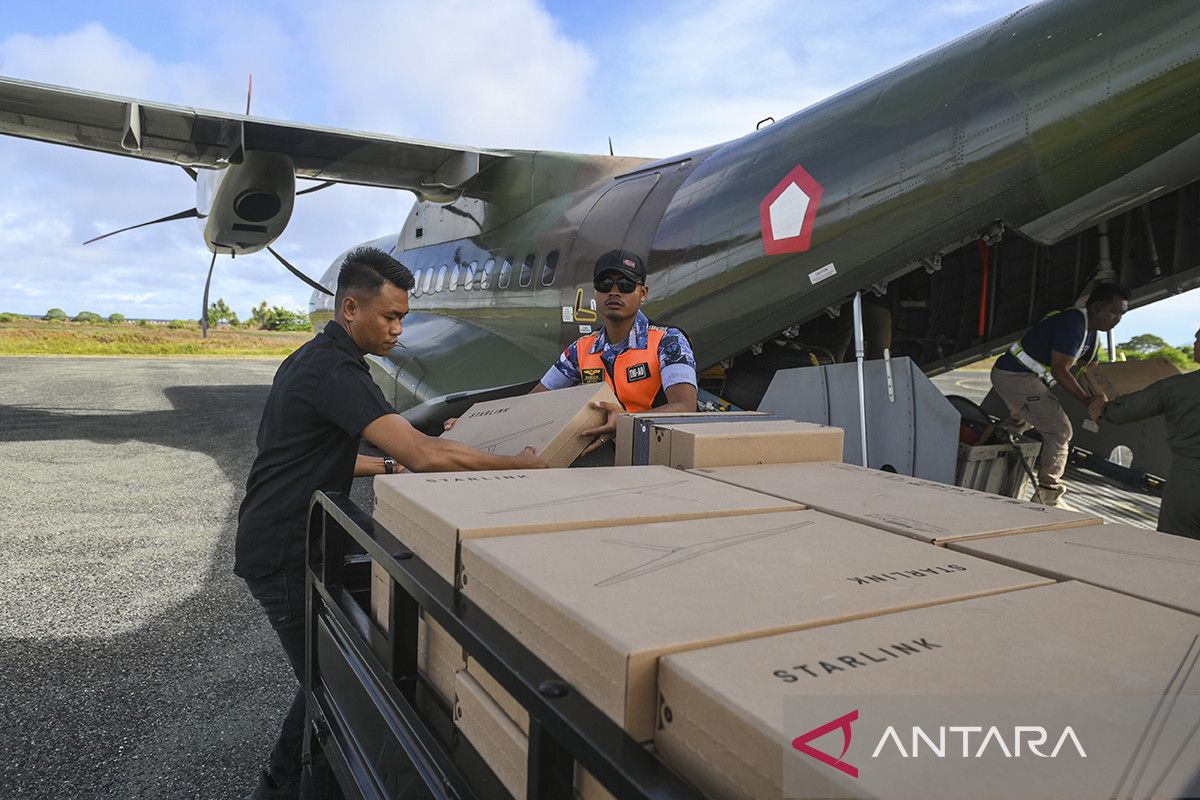
On 22 October 2026, Indonesian Military (TNI) General Maruli Simanjuntak stood on Miangas, an island closer to the Philippines than to its own provincial capital. He inspected the Zero Point, a security post, cross-border facilities and a school. The residents’ needs he noted were straightforward: a drilled well, village roads and school renovation.
A week earlier, President Prabowo Subianto had appointed him Deputy Commander of the TNI and head of the National Agency for the Management of Border and Remote Areas (BNPPDT). The agency, which has managed border areas since 2010, has now also been tasked with attending to remote regions.
On Miangas, the two responsibilities can be seen on a single island. The national border has been marked by a point with precise coordinates. Residents’ needs have only recently been recorded; priorities and implementation arrangements are still being drawn up.
That point has its own history. In 1928, Miangas, referred to as Palmas in the case documents, was disputed by the Netherlands and the United States at the Permanent Court of Arbitration.
The sole arbitrator, Max Huber, ruled in the Netherlands’ favour not on the basis of who had discovered the island first, but of who had exercised state authority there continuously and peacefully.
Today, the maritime boundary with the Philippines has been agreed, in 2014, and ratified by Indonesia through legislation in 2017. The lesson of 1928 remains relevant in a more everyday form.
The two responsibilities on the island also reflect two of the Asta Cita, President Prabowo’s eight national priorities. The second Asta Cita calls for strengthening defence and security and national self-reliance, including in food, energy and water. The sixth emphasises development starting from villages and the grassroots, to promote equitable growth and eradicate poverty.
On an island such as Miangas, these priorities cannot be pursued separately. A drilled well is a matter of welfare, but also of a region’s ability to sustain itself.
The question, then, is what criteria the state should use to decide which areas to prioritise.
The National Border Management Agency (BNPP) is not starting from scratch. For 2025–2029, it is working with 299 priority subdistricts: 204 border subdistricts and 95 located within the delineated areas of national strategic activity centres. Its development indicators cover education, health, markets, drinking water and sanitation. Welfare has long been part of border management.
However, the unit used is the subdistrict, while the sixth Asta Cita focuses on villages. The BNPP recognised this gap in September 2024. A border subdistrict may include one village with good roads and another where residents have to travel by boat to collect water. Subdistrict-level data is sufficient to set a direction, but choosing between a drilled well and a jetty requires village-level data.
That is why one of the BNPPDT’s first tasks is to establish criteria. On 26 October, the agency and the Presidential Staff Office discussed mapping and criteria for remote areas as the basis for a master plan and action plan. Those criteria will determine whose needs are incorporated into planning.
Remote and underdeveloped
Source: jawawa.id (https://jawawa.id/newsitem/asta-cita-from-the-far-end-of-miangas-1793501480)
Originally published by Antara (Indonesian) (https://www.antaranews.com/berita/5824443/asta-cita-dari-ujung-miangas), translated from Indonesian