
Asset Forfeiture Bill: No Conviction Required to Seize Assets Worth at Least Rp1bn
Jakarta, CNBC Indonesia — The government has proposed a mechanism to forfeit assets connected to criminal offences without waiting for a criminal conviction against the perpetrator. The proposal would apply only to assets worth at least Rp1bn.
The proposal is set out in Issue List (DIM) No. 66 of the Bill on the Forfeiture of Assets Related to Criminal Offences, discussed at a meeting of the Drafting and Harmonisation Teams on Wednesday (11 November 2026).
According to the DIM document presented at the meeting, asset forfeiture without a criminal conviction would have to meet several conditions and criteria, including a minimum asset value of Rp1bn. The drafting team has approved this provision.
Dhahana Putra, Director-General of Legislation at the Ministry of Law, confirmed the proposal. Under it, assets could be forfeited on the basis of a judge’s ruling, or without a prior criminal conviction against the perpetrator.
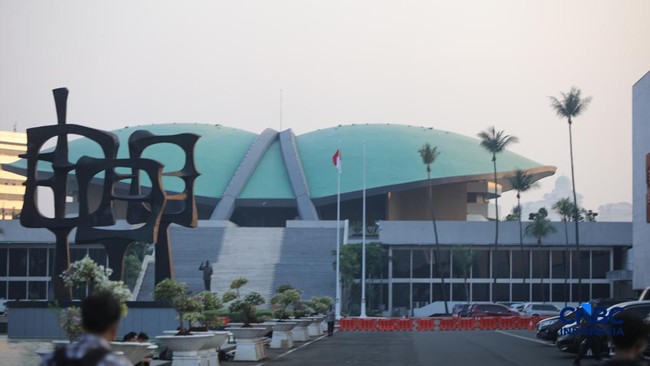
“Yes, [asset forfeiture against a perpetrator of a crime can be carried out] on the basis of a judge’s ruling and without a conviction,” Dhahana told reporters after the meeting at the parliamentary complex in Central Jakarta on Wednesday (11 November 2026).
Dhahana explained that forfeiture without a criminal conviction could apply when a perpetrator has fled, died, or become ill or permanently incapacitated.
In such circumstances, even if someone has been identified as a perpetrator of a criminal offence, the asset-forfeiture process could proceed without waiting for a criminal conviction against them.
“First, they are identified as a perpetrator, but when that happens they have fled, died or become permanently incapacitated. Those are the cases covered,” he said.
Under the DIM document, non-conviction-based asset forfeiture (NCB) would proceed through several stages. These include tracing, blocking and seizing assets, preparing case files, filing an application for asset forfeiture, summoning parties, examining the case in court, issuing and enforcing a ruling, and pursuing legal remedies.
DPR says asset forfeiture must go through the courts
Although the proposal would allow asset forfeiture without a criminal conviction, the House of Representatives (DPR) has warned that the mechanism must not be applied arbitrarily.
Soedeson Tandra, deputy chair of the working committee on the Asset Forfeiture Bill, said NCB must be treated as a last resort (ultimum remedium) and applied only in limited circumstances.
He also stressed that every seizure or forfeiture must go through the courts to ensure legal certainty and prevent abuse of authority.
Soedeson made the remarks while chairing a public hearing of Commission III of the DPR with Wim Tohari Daniealdi, an academic from the Indonesian Computer University (Unikom); Yudi Rujali Muslim, representing the DPP ARUN; and participants in the DPR’s national internship programme, Maganghub. The hearing took place at the parliamentary complex in Senayan, Jakarta, and was reported on Thursday (12 November 2026).
Soedeson said the NCB mechanism was complex because it uses special procedural rules combining quasi-criminal and quasi-civil characteristics.
Its application must therefore be clearly limited, including through legal protection for third parties who own assets in good faith.
“Under our legal principles, ultimum remedium is used when other laws are no longer capable of addressing the issue. I should make clear that this bill uses special procedural law, which is quasi-criminal and quasi-civil. Above all, we want to stress that seizure, forfeiture or any other measure must go through the courts,” Soedeson said, according to the DPR’s official website.
At the hearing, the DPP ARUN representative also raised several concerns about applying the NCB mechanism. These included the standard of proof, protection for asset owners, and how assets should be returned if they are not proven to be connected to a criminal offence.
The committee will consider these comments as it drafts the bill, with the aim of ensuring that crime proceeds can be recovered effectively without disregarding legal certainty or citizens’ property rights.
Source: jawawa.id (https://jawawa.id/newsitem/asset-forfeiture-bill-no-conviction-required-to-seize-assets-worth-at-least-rp1bn-1794448293)
Originally published by CNBC Indonesia (https://www.cnbcindonesia.com/news/20261112064516-4-784469/ruu-perampasan-aset-tak-perlu-vonis-harta-rp1-m-bisa-dirampas), translated from Indonesian