
Asset Forfeiture Bill Fast-Tracked, Draft Under Scrutiny
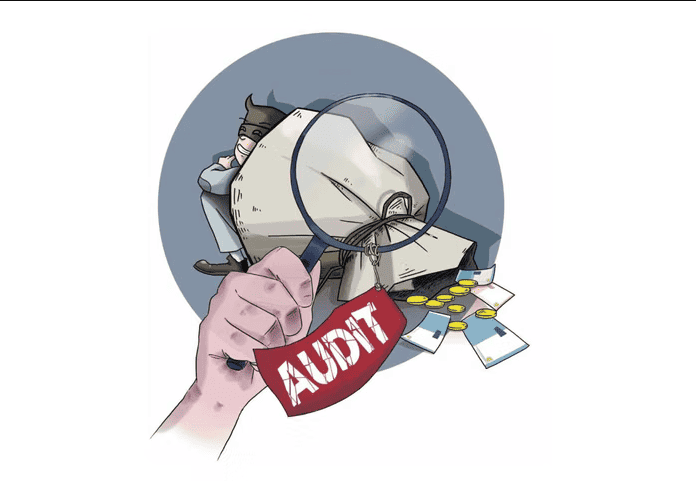
The House of Representatives Commission III is targeting the Asset Forfeiture Bill (RUU PATP) to be completed and passed by December 2026 at the latest. However, the deliberation process is taking place while the latest draft of the regulation has not been published to the public.
The Civil Society Coalition considers this condition to require attention. Document transparency is deemed important so that the public can know and oversee the substance of the regulation that will become an instrument in efforts to recover assets resulting from criminal acts.
Indonesia Corruption Watch (ICW) researcher Wana Alamsyah, representing the Civil Society Coalition, said that openness is an important part of the process of forming the Asset Forfeiture Bill. “The deliberation of the Asset Forfeiture Bill should not be conducted behind closed doors, especially when the DPR is targeting its passage in the near future. The public needs to see the draft and the Problem Inventory List (DIM) in order to examine every provision openly,” Wana said in a statement on Thursday (27/8).
The Asset Forfeiture Bill has gone through a long process. Its drafting was first initiated by PPATK in 2008 and later became one of the Nawa Cita promises of Joko Widodo-Jusuf Kalla in the 2014 election.
Progress in the deliberation only resumed in May 2023 after President Joko Widodo sent a Presidential Letter, academic paper, and draft bill to the DPR as a government proposal. However, the 2019-2024 DPR did not have time to discuss the draft until its term ended in September 2024.
In 2025, the DPR took over the bill as a parliamentary initiative. This step meant that the draft and academic paper that had been available since 2023 had to be redrafted.
The Civil Society Coalition considers that the takeover does not necessarily accelerate the deliberation. On the contrary, the step is considered to potentially prolong the process while opening room for changes to the substance of the government’s draft.
“The 2023 government version of the draft is indeed not perfect. However, changes from the government draft to the DPR draft also need to be monitored because they could remove a number of important provisions needed to strengthen asset recovery,” Wana said.
In August 2026, Commission III Chairman Habiburokhman stated that the DPR wants to complete the Asset Forfeiture Bill soon and is targeting its passage by December 2026 at the latest through a Plenary Session.
The DPR said that the process of gathering aspirations has been carried out through 35 Public Hearing Meetings and three working visits. Nevertheless, the draft document being discussed is not yet available to the public.
The Civil Society Coalition is of the view that the large number of public hearings does not automatically indicate the fulfilment of the principle of meaningful public participation. According to the coalition, public involvement is not sufficiently measured by the number of forums that have been held. The public needs to obtain access to the draft to examine provisions article by article and provide input based on the actual substance being discussed.
The Constitutional Court has previously established three elements of meaningful participation: the right to be heard, the right to be considered, and the right to receive an explanation. Wana considers that these three aspects will be difficult to fulfil if the public cannot see the document being discussed by the DPR.
“Public participation is not enough just by counting how many times public hearings are held. The public must be given the opportunity to read the draft, compare articles, submit criticism, and know how that input is considered,” Wana said.
Therefore, the Civil Society Coalition is asking the DPR to open the academic paper, official draft, and Problem Inventory List before the first-level deliberation takes place.
On the other hand, the Civil Society Coalition considers the existence of the Asset Forfeiture Bill to remain important because the asset forfeiture mechanism in the current regulations still has limitations.
Asset forfeiture instruments are actually already regulated in the Corruption Crime Law and the Money Laundering Crime Law. However, their application is still closely linked to the process of proving a criminal offence.
This condition causes law enforcers to face obstacles when dealing with assets that cannot be processed through criminal mechanisms, whose owners are unknown, or whose origins cannot be legally proven. As a result, case handling risks stopping at the conviction of the perpetrator without being followed by an optimal process to pursue, freeze, and return the proceeds of crime.
ICW data in the 2024 Corruption Conviction Trends report recorded that state losses due to corruption reached Rp330.9 trillion. However, only 4.84 percent of assets were successfully recovered.
Of the 364 corruption cases monitored by ICW throughout 2024, 48 cases used Article 18 of the Corruption Law. Meanwhile, money laundering instruments to trace and seize assets were only used in five cases.
According to Wana, this condition shows the importance of strengthening legal instruments to pursue the proceeds of crime. “More than 95% of corrupted money never returns. This condition shows that convicting the perpetrator alone is not enough. Legal instruments must also be able to ensure that the proceeds of crime can be traced and recovered,” Wana said.
The Asset Forfeiture Bill is expected to strengthen the asset recovery system, including through a non-conviction-based asset forfeiture mechanism. This mechanism allows asset forfeiture efforts under certain conditions without having to wait for a conviction of the perpetrator.
This instrument is also considered to be usable in handling natural resource crimes. Law enforcement against natural resource crimes is expected not to stop at field perpetrators, but also to reach parties who control capital and obtain profits from illegal activities.
Auriga’s study in the Natural Resource Crime Outlook mentions that natural resource crime…
Source: jawawa.id (https://jawawa.id/newsitem/asset-forfeiture-bill-fast-tracked-draft-under-scrutiny-1787827852)
Originally published by Media Indonesia (https://mediaindonesia.com/politik-dan-hukum/926612/ruu-perampasan-aset-dikebut-draf-disorot), translated from Indonesian