
Asset Forfeiture Bill: Experts Say Assets Not Derived from Crime Must Not Be Seized
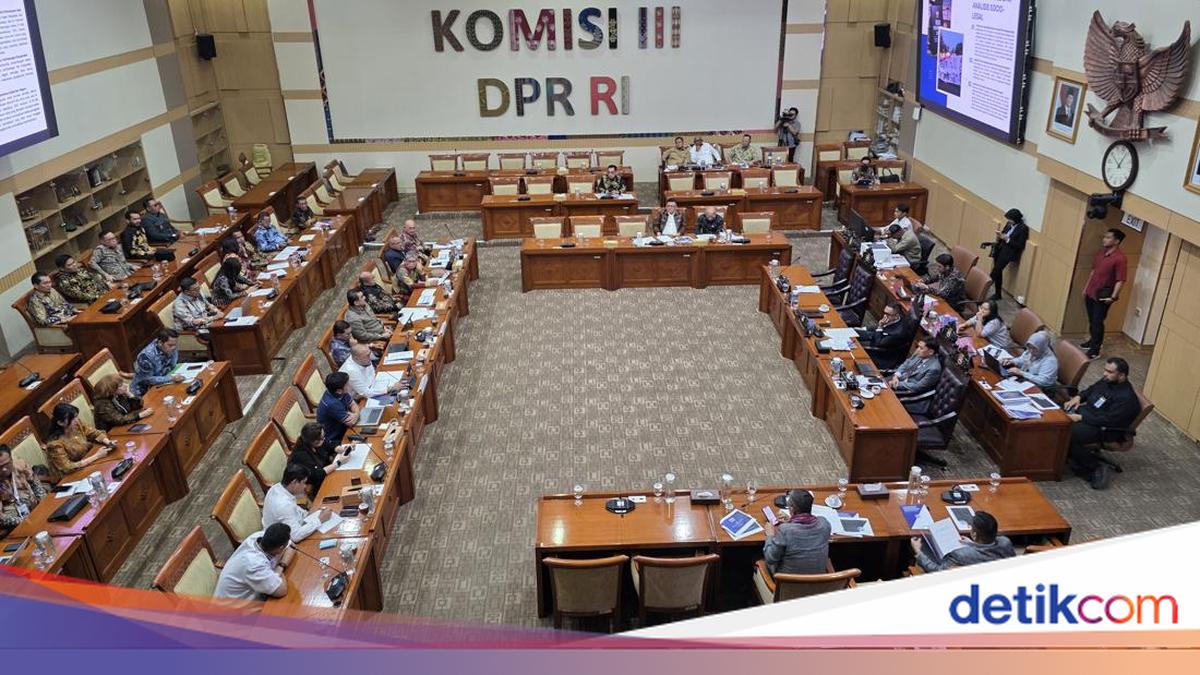
Commission III of the House of Representatives (DPR) again convened a meeting with a number of experts on the Asset Forfeiture Bill. Yuhelson, Secretary-General of the Peradi Profesional DPP, conveyed particular remarks regarding the bill.
The meeting was held at Commission III of the DPR in Jakarta on Monday (7/9/2026), chaired by Deputy Chairman of Commission III Ahmad Sahroni.
“Before we proceed with the presentations, I find it noteworthy that in the deliberation of this Asset Forfeiture Bill, the owner’s wealth and the criminal act must be separated and not treated as if the whole of it were the proceeds of crime. For instance, if a criminal act generated Rp 10 billion, but the perpetrator owns assets worth Rp 100 billion, then only the Rp 10 billion should be forfeited,” said Sahroni as he opened the meeting.
Yuhelson then responded to that statement by offering several remarks on asset forfeiture without sacrificing the perpetrator’s legitimate property rights.
“We must safeguard asset recovery without sacrificing due process of law and legitimate property rights. Peradi Profesional supports the eradication of criminal acts, particularly corruption, and the state’s efforts to recover assets that genuinely originate from criminal proceeds. However, crime eradication must not be carried out at the expense of the rule of law and due process,” said Yuhelson.
Yuhelson said the Asset Forfeiture Bill grants very broad authority to the state and law enforcement to seize perpetrators’ assets. For that reason, he considered it important that the bill does not turn the state into an entity that seizes wealth not derived from criminal acts.
“The Asset Forfeiture Bill will grant very broad authority to the state and law enforcement apparatus to trace, block, confiscate and ultimately forfeit assets. Therefore, the central issue of this bill is not only how the state can forfeit the proceeds of crime, but also how to ensure the state does not seize wealth that is not the product of crime. That is the key point,” he explained.
Yuhelson said the Asset Forfeiture Bill must not permit the forfeiture of a perpetrator’s entire wealth. The bill, he continued, must be able to draw a strict distinction on this matter.
“Asset forfeiture must not turn into the forfeiture of a perpetrator’s entire wealth. Just because someone commits a criminal act does not mean all of their property constitutes proceeds of crime, as the meeting chair stated earlier. A perpetrator still retains rights over their house, land, company, savings, shares, inheritance and other wealth acquired lawfully,” he said.
“A strict distinction must be drawn between assets that are proceeds of crime, assets used as instruments of crime, assets that represent transfers of criminal proceeds and profits derived from crime, losses to the state, and a person’s legitimately owned wealth,” he continued.