
Asset Forfeiture Bill: Deputy Attorney General Cites Abusive History of NCB in Other Countries
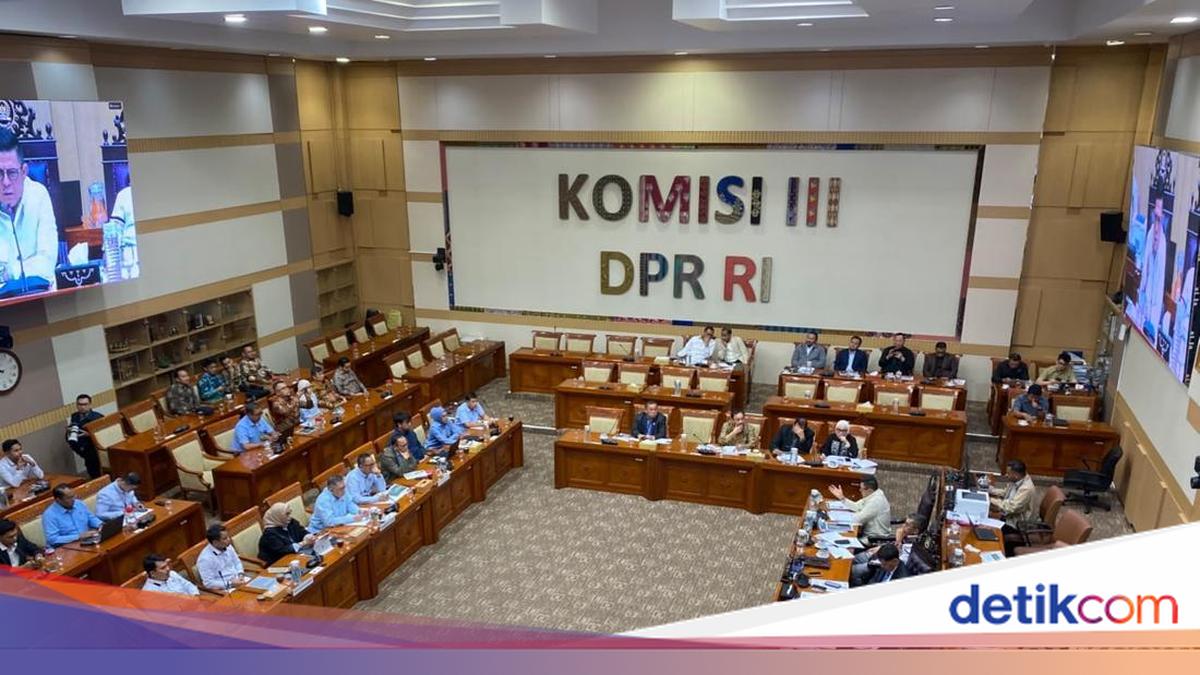
Deputy Attorney General for Civil and Administrative Affairs Narendra Jatna attended a public hearing with Commission III of the Indonesian House of Representatives to discuss the Asset Forfeiture Bill. He cautioned against applying non-conviction-based (NCB) asset forfeiture, which allows assets to be seized without a final court conviction.
Jatna said the approach had been abandoned in England because of its abusive nature. He said something similar had occurred in the United States in the handling of the Pablo Escobar case.
“Historically, NCB was used in England in the Middle Ages in cases of treason against the king. However, it was discontinued because it was used very arbitrarily. The Forfeiture Act 1870 left NCB behind because it was highly abusive,” Jatna said at the parliamentary hearing on Tuesday (3 November 2026).
He said NCB could be misused by investigators. Jatna noted that in the United States, investigators cannot initiate NCB proceedings directly; instead, prosecutors must bring the case.
“In the United States, NCB began to be used in the 1990s to deal with the case of Pablo Escobar and the Medellín Cartel. At the time, his family and associates were still enjoying the proceeds of narcotics, even though Escobar had been convicted. Over time, investigators in Miami abused it as a means of extortion, so the United States changed its approach to NCB,” Jatna said.
“So in the United States, investigators cannot carry out NCB directly. A prosecutor must submit a prima facie case to obtain a court order,” he added.
Jatna also referred to NCB in Australia, where its adoption was prompted by cases involving motorcycle gangs. He said asset forfeiture there is used after a criminal case has been brought.
“In Australia, NCB was prompted by cases involving motorcycle gangs. It turned out that gang members had assets disproportionate to their declared wealth—unexplained wealth. But over time, NCB became an opportunity for investigators to extort people, so Australia changed its approach,” Jatna said.
“NCB is used as a complement to criminal cases. It is applied if, during a trial, previously untraced assets are discovered that were not identified during the investigation. So NCB is used after a criminal case has been brought; that is the Australian approach,” he continued.
Jatna then cited the Netherlands, which considers NCB liable to encourage arbitrary action. The Netherlands has rejected the NCB approach, requiring asset forfeiture to proceed through the criminal justice system.
“The Netherlands takes the view that asset forfeiture must be conducted through criminal proceedings. It has therefore established financial investigations led by prosecutors and their teams. These financial investigations run in parallel with conventional investigations,” he said.
Jatna urged caution over the application of asset forfeiture in Indonesia, saying the country needed to consider which approach would be most suitable.
“Of the three examples, Indonesia needs to choose the approach that is most suitable,” he added.
Source: jawawa.id (https://jawawa.id/newsitem/asset-forfeiture-bill-deputy-attorney-general-cites-abusive-history-of-ncb-in-other-countries-1793685185)
Originally published by detikcom (https://news.detik.com/berita/d-8736006/ruu-perampasan-aset-jamdatun-ungkit-sejarah-ncb-di-negara-lain-abusif), translated from Indonesian