
Asset Forfeiture Bill Deemed Urgent, Academic Highlights Four Loopholes
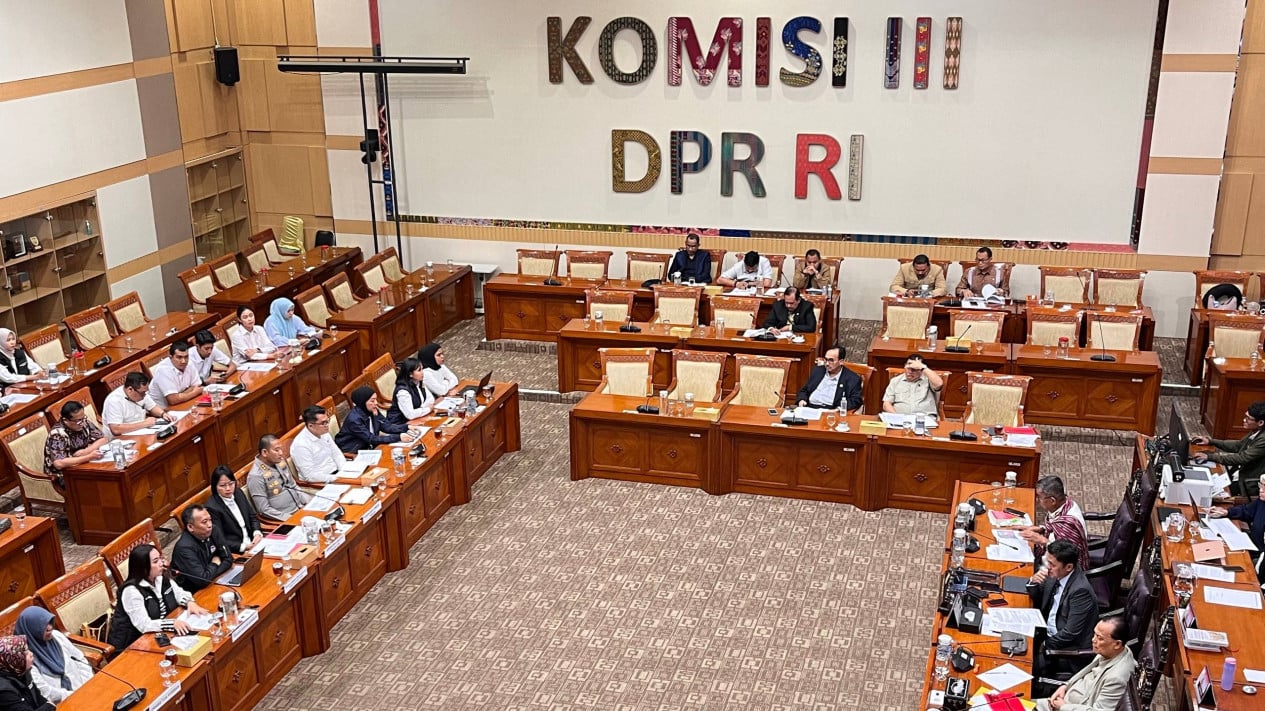
Jakarta, VIVA – Deliberations on the Asset Forfeiture Bill have resumed at Commission III of the Indonesian House of Representatives (DPR RI). During a public hearing, an academic and advocate asserted that the regulation urgently needs to be enacted, as it is deemed capable of strengthening Indonesia’s system for recovering the proceeds of crime.
Ahmad Novindri Aji Sukma, a doctoral researcher at the Institute of Criminology, University of Cambridge, said Indonesia needs a stronger legal framework for asset forfeiture, particularly to close the various loopholes that have so far made criminal proceeds difficult for the state to recover.
Aji delivered his remarks online during the public hearing with the leadership and members of Commission III of the DPR at the Parliamentary Complex in Senayan, Jakarta, on Monday, 20 July 2026.
Academic backs swift enactment of the Asset Forfeiture Bill
Aji stressed his full support for the deliberation and enactment of the Asset Forfeiture Bill. In his view, the regulation deserves to become a new legal instrument to strengthen the mechanism for recovering the proceeds of crime.
“I will give my main conclusion so that my input can be clearly understood. My position here is clear: this bill is worthy and must be supported, because Indonesia genuinely needs a strong asset recovery framework,” Aji said.
Nevertheless, he considered that several aspects still need to be refined before the legislation is enacted.
Scrutiny of evidentiary standards to potential conflicts of interest
In his presentation, Aji cautioned that the draft regulation still contains several weaknesses that warrant the DPR’s attention.
According to him, one of the greatest challenges lies in the design of procedural and institutional safeguards in the execution of asset forfeiture.
He highlighted the need for clarity on evidentiary standards, protection for third parties, the division of authority over asset management, and the potential for conflicts of interest between law enforcement agencies and the parties managing seized assets.
“The main weakness of this bill lies in the design of its institutional procedural safeguards. Evidentiary standards and third-party protection, the division of responsibility for asset management, and the potential conflict of interest between the law enforcement function and the asset management function,” he said.
According to Aji, refining these aspects would make the implementation of the Asset Forfeiture Bill more effective and provide legal certainty.
Source: jawawa.id (https://jawawa.id/newsitem/asset-forfeiture-bill-deemed-urgent-academic-highlights-four-loopholes-1784530296)
Originally published by VIVA.co.id (https://www.viva.co.id/berita/nasional/1914865-ruu-perampasan-aset-dinilai-mendesak-akademisi-ungkap-empat-celah-yang-bikin-aset-koruptor-sulit-disita), translated from Indonesian