
Asset Forfeiture Bill Deemed to Strengthen Government Efforts to Eradicate Crime
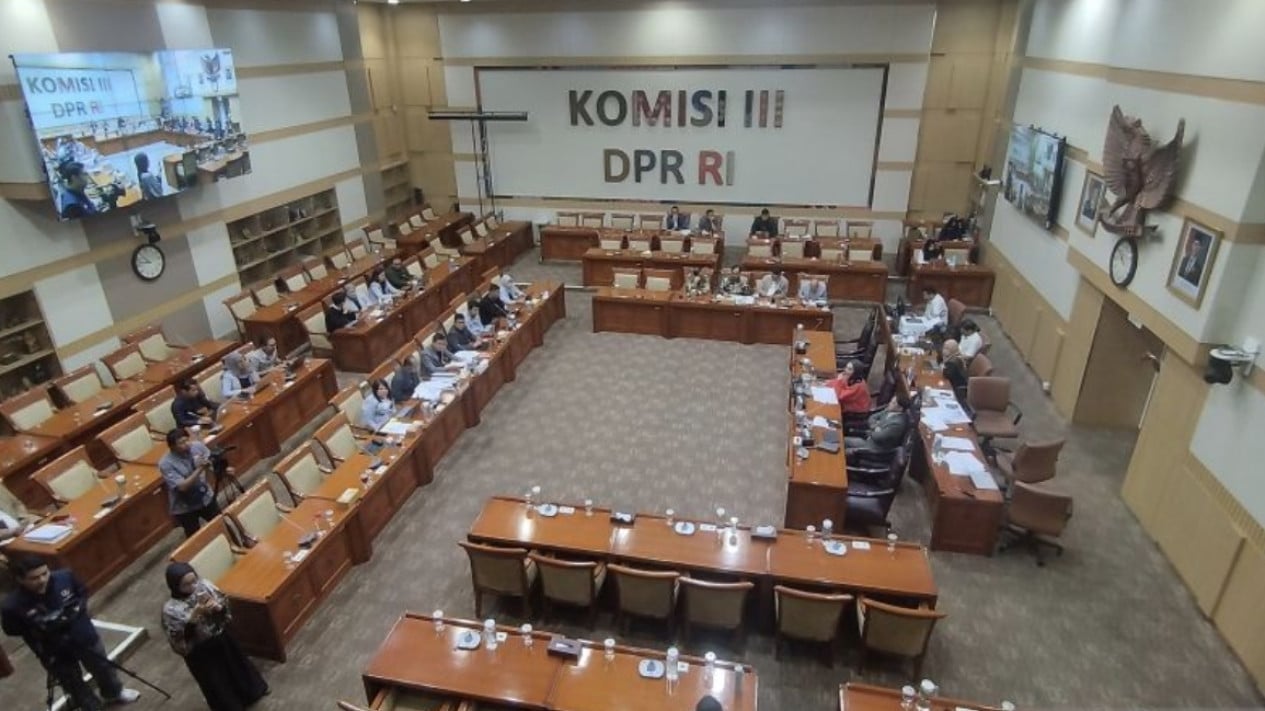
The plan to establish the Asset Forfeiture Bill is considered a vital step by the Government and the House of Representatives (DPR) in strengthening efforts to combat crime, particularly offences that generate economic profit.
Legal observer Professor Henry Indraguna believes that the state’s determination to return assets derived from criminal activities to the state deserves support. However, he maintains that the strengthening of such authority must be accompanied by clear oversight mechanisms.
Henry emphasised that the primary objective of the Asset Forfeiture Bill must be directed towards pursuing and recovering the proceeds of crime.
“The public must understand the fundamental difference between assets derived from criminal acts and the assets of an individual suspected of committing a crime,” he stated, as reported on Sunday, 30 August 2026.
As a member of the Supervisory Board of the Advocacy & Human Rights Law Firm for the Golkar Party, Henry noted that an individual undergoing investigation, inquiry, or even someone who has been indicted for a crime does not automatically lose the right to all of their wealth.
According to him, the asset forfeiture process must remain grounded in the principles of the rule of law and objective evidence, while providing space for asset owners to explain the origins of their wealth.
Henry assessed that concrete evidence regarding the origin of assets and the legal connection between those assets and the crime is still required. He also noted that the mechanism for the reverse burden of proof is something that needs to be formulated carefully within the Asset Forfeiture Bill.
To ensure the Asset Forfeiture Bill remains effective without creating loopholes for the abuse of authority, Henry urged the inclusion of several safeguards within the regulations.
Firstly, the standard of proof must be clear so that forfeiture is not carried out based solely on suspicion. Secondly, there must be judicial oversight. Any seizure that significantly impacts individuals or companies must be testable through legal mechanisms.
Thirdly, protection for bona fide third parties must be clearly stated in the Bill. Fourthly, personal assets must be distinguished from corporate assets; an individual’s criminal liability should not automatically nullify the legal status of a business entity.
Fifthly, a mechanism must be prepared for the return of assets and compensation in the event it is later proven that the seized assets have no connection to criminal activity.