
Assessing the Reasons Behind the Subsidised Fuel Price Freeze
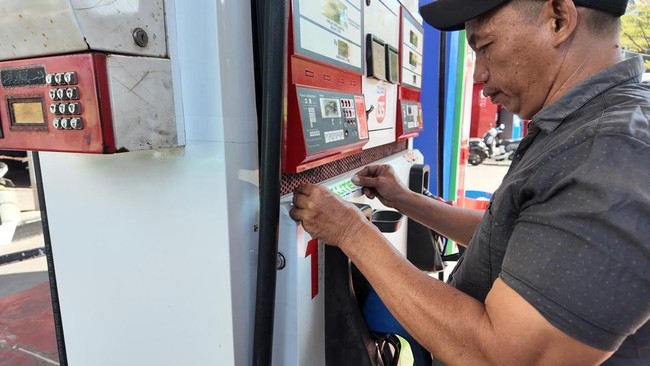
As Brent prices once again breached US$105.68 per barrel at the close of trading on 14 September 2026, debates have emerged regarding how long the government can sustain subsidised fuel prices. Throughout 2026, Indonesian crude oil prices have fluctuated, rising from US$64.41 per barrel in January to nearly double at US$117.31 in April, before retreating to US$81.68 in July.
Prices surged, peaked, and then subsided, all within the same year. The April surge was managed without raising fuel prices, and the surge in the Indonesian Crude Price (ICP)—the benchmark used for the State Budget (APBN)—was higher than the mid-September levels seen currently.
This article argues that the government’s decision to hold subsidised fuel prices until December 2026 is not an arbitrary policy, but rather a measured response to maintain national economic growth and protect the welfare of low-to-middle-income communities.
Volatility Already Experienced
Data shows that the average ICP from January to August 2026 was US$89.24 per barrel. If the September ICP follows the movement of Brent at around US$101 per barrel, the nine-month average will sit around US$90.6 per barrel.
This figure serves as the benchmark for State Budget expansion and explains why the government’s commitment is realistic. As stated by the Minister of Energy and Mineral Resources, Bahlil Lahadalia, at the InTechSEA Award 2026, subsidised fuel prices will be maintained until 31 December, asserting, “regardless of the global price, we will not raise it.”
Coordinating Minister for Economic Affairs, Airlangga Hartarto, stated that subsidised fuel prices can be maintained until December as long as the average global oil price (Brent) does not exceed US$9 97 per barrel. With the January-August Brent average at US$90.66, this threshold has not been breached, and the September-December Brent average can still move up to approximately US$109.7 before the threshold is hit. There is sufficient room, though it requires close monitoring.
Types of Shocks Determine the Response
Kilian (2009) demonstrates that oil price shocks must be categorised by their source. If prices rise due to global economic growth, the burden of oil imports is offset by increased export demand. If prices rise due to supply disruptions, this counterbalance is absent, leading to rising production costs, eroded purchasing power, and stagflationary pressure.
The 2026 shock stems from supply, specifically the escalation of conflict between the United States, Israel, and Iran, which temporarily disrupted shipping in the Strait of Hormuz, a route for approximately 20 per cent of the world’s oil supply. Indonesia does have a counterbalance from coal: non-tax state revenue (PNBP) from minerals and coal reached Rp108 trillion as of August, an increase of Rp21 trillion year-on-year.
However, this counterbalance enters the state coffers, not household pockets. Therefore, the state is better positioned to absorb the shock. Raising fuel prices in the midst of a contractionary shock would be pro-cyclical.
The principle of ‘tax smoothing’ (Barro, 1979) provides a similar basis: temporary shocks are more efficiently absorbed by the state balance sheet, whereas permanent shocks necessitate adjustments. The pattern of the ICP surging and then subsiding suggests that this particular shock is temporary.
So, what is the cost of maintaining subsidised fuel prices?
According to the 2026 State Budget sensitivity table, every US$1 increase in oil prices adds Rp10.3 trillion to expenditure, while revenue only increases by Rp3.5 trillion, resulting in a net deficit increase of Rp6.8 trillion. This asymmetry exists because oil lifting is only around 605,000–620,000 barrels per day, while crude oil and fuel imports are approximately 1 million barrels per day.
The Minister of Energy and Mineral Resources calculated that an increase in the ICP from US$70 to US$100 adds Rp230 trillion to subsidies. After deducting the additional oil and gas PNBP of Rp119 trillion, the net burden is approximately Rp110 trillion. The sensitivity table produces a figure of around Rp204 trillion because it was intentionally made conservative to cover the entire budget structure. Thus, the Minister’s calculation, which is roughly half that amount, should be read as the real cost of maintaining prices.
That cost is far more affordable than the impression given by the sensitivity table. The scenario of a US$100 average throughout the year is becoming increasingly unlikely. If the annual average remains within the range of the first eight months of realisation (US$89.24), the additional net burden would range between Rp71 trillion and Rp131 trillion.
The burden is already being felt. The realisation of subsidies and compensation for the first half of 2026 reached Rp233 trillion, a 44.4 per cent increase, while the volume of subsidised fuel only grew by 7.8 per cent. This discrepancy indicates that most of the pressure stems from prices and exchange rates, rather than volume. Such a migration should be addressed through closed-loop distribution based on recipient data.
Fiscal Capacity
The government possesses an Excess Budget Balance (SAL) of approximately Rp420 trillion that remains unused. Minister of Finance Purbaya Yudhi Sadewa stated that at an average oil price of US$100 per year, the deficit can still be maintained at around 2.9 per cent of GDP, provided there is expenditure efficiency across ministries and agencies.
With a deficit outlook of 2.85 per cent, the remaining room until the 3 per cent limit is approximately Rp39 trillion. This limit would only be exceeded if the ICP for October-December averages above approximately US$102 per barrel. If it subsides to the US$85 range, the additional burden would be around Rp23 trillion and remains manageable.
From an external perspective, foreign exchange reserves of US$146.5 billion, equivalent to 5.4 months of imports, provide room for Bank Indonesia to maintain rupiah stability. This is crucial because the subsidy burden also swells when the rupiah weakens.
The government is also not relying solely on price instruments. The Downstream Oil and Gas Regulatory Agency (BPH Migas) also restricted the purchase of Pertalite and Solar during April-May. If oil prices continue to burden the State Budget, then restrictive policies may be implemented.
Source: jawawa.id (https://jawawa.id/newsitem/assessing-the-reasons-behind-the-subsidised-fuel-price-freeze-1790913196)
Originally published by CNBC Indonesia (https://www.cnbcindonesia.com/opini/20261002084012-14-772731/menakar-alasan-di-balik-penahanan-harga-bbm-subsidi), translated from Indonesian