
Assessing the Quality of Education from Viral Videos
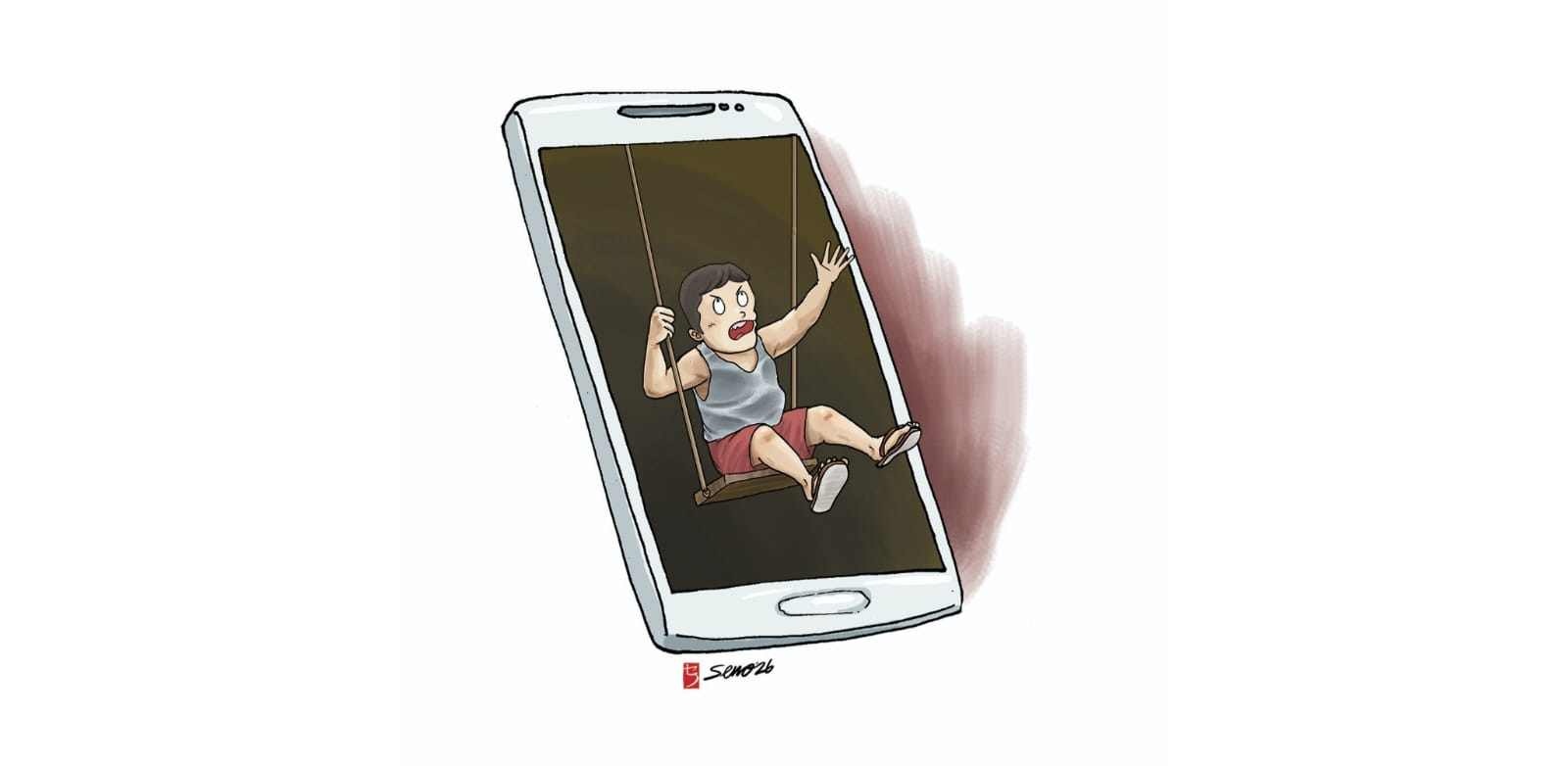
A video shows a male pupil striking his female teacher’s head in a classroom. The video quickly went viral. Public comments poured in: pupils today no longer respect teachers; education is increasingly dire; Indonesian education has deteriorated far compared with the past. Then other clips appeared. There was a senior secondary school pupil unable to answer simple multiplication. There were videos of bullying, violence and behaviour deemed disrespectful. These fragments of events were then strung together into a grand conclusion: our education is in decline.
Such anxiety is understandable. Violence against teachers, bullying, weak discipline and poor mastery of basic competencies must indeed never be treated as normal. However, there is one thing we must also guard against: legitimate anger at an incident must not produce a conclusion that is academically unsound. We need to distinguish between an alarm and a diagnosis.
ONE CASE IS NOT THE ENTIRE POPULATION
In scientific thinking, one of the errors to avoid is overgeneralisation: taking one or several cases and treating them as representative of an entire population. One pupil striking a teacher does not automatically mean Indonesian pupils generally do not respect teachers. A number of pupils unable to answer simple multiplication also does not automatically prove that all Indonesian senior secondary pupils are weak in mathematics. Conclusions about national education require more adequate evidence.
We must ask: how many cases actually occurred? Is the number rising? Is it widespread? How is it distributed? Do conditions differ between regions, schools and social groups? Without such questions and data, the claim that Indonesian education has declined sharply is more an expression of anxiety than an academic conclusion.
Another important point is understanding that Indonesian education is a highly heterogeneous population. Conditions in schools in large cities are not the same as in remote areas. Pupils’ family backgrounds differ. The availability of teachers, the quality of school leadership, educational facilities, the social environment and access to technology all vary greatly. Because the population is heterogeneous, we must not treat it as though it were homogeneous. One school is not Indonesia. One classroom is not the whole of national education. One video is not a portrait of an entire generation. That said, such caution does not mean these cases may be ignored. A case can serve as an alarm. An alarm must be heard and examined. However, an alarm is not a final diagnosis.
VIRAL DOES NOT MEAN COMMON
Social media has changed the way we view reality. In the past, a bad incident might only be known to the school community and local residents. Now, someone need only record a few seconds and upload it. In a short time, millions of people can watch it. A single event can be shared repeatedly by thousands of accounts. Because we see it repeatedly, the impression arises that the event happens repeatedly. In fact, we must distinguish between the frequency of occurrence and the frequency of viewing. An event may happen only once, yet its video can be watched tens of millions of times. Therefore, something that frequently appears on our screens is not necessarily frequent in reality. What goes viral is not necessarily what is most common, let alone most representative.
Videos of this kind should be a source of questions, not an immediate basis for conclusions. The proper sequence is: viral - questions - data - analysis - policy - evaluation. Not: viral - anger - conclusions - action or further sharing. An increasingly educated society is being tested. We must not allow social media algorithms to determine how we understand educational reality.
Another increasingly serious problem is the culture of wanting to be the first to spread information. The value of a post is often no longer determined by its truth, but by its capacity to shock, provoke anger and attract attention. Then emerges the attitude: just post it first; if anything is wrong, someone else will clarify later. This is inverted thinking. What should be done is: check first, re-check, verify the context, then share. Not: share first, then leave the task of clarification to others.
Everyone who uploads and spreads information bears a moral responsibility for its impact. A 30-second video may not show what happened beforehand. We may not know when and where the event took place, whether the video is complete, whether it is an old incident re-uploaded, or whether the accompanying narrative is true. Understanding the context certainly does not mean condoning violence. Striking a teacher can never be justified. However, understanding the context is necessary so that we do not build false conclusions.
We must be able to distinguish between judging an act and concluding the state of an entire education system. When an education problem arises, our tendency is to immediately look for someone to blame. Teachers are blamed. Parents are blamed. Head teachers are blamed. The government is blamed. The curriculum is blamed. Even the younger generation as a whole is blamed. Yet education problems are almost always multidimensional.
A pupil who commits violence cannot be sufficiently explained by the phrase ‘that child is naughty’. We need to ask: what is the family environment like? What is the school culture like? Had certain warning signs emerged previously? How does the pupil discipline and support system work? What is the influence of the social and digital environment? The principle is simple: a problem that is misdiagnosed will almost certainly be mistreated.
Therefore, we need to shift from a culture of seeking scapegoats to a culture of seeking root causes. Violations still require accountability. However, accountability must go hand in hand with efforts to understand and improve the system. We also need to change the overly reactive way of handling education problems. There is violence, then a meeting is held. There is a major case, then rules are made. There is a viral video, then an investigation is carried out. Yet a good education system should work far more preventively.
Schools need to be able to detect early changes in pupil behaviour, developing conflicts, learning difficulties, repeated absences, signs of violence and various other problems before they turn into crises. A good school is not one that never faces problems. A good school is one that can detect, handle and learn from problems before they grow larger.
HONOURING TEACHERS, PUPILS AND KNOWLEDGE
It is impossible to achieve quality education without teachers who are competent, protected, respected and continually developing. Honouring teachers is not merely about ceremonial awards. Honouring teachers means giving them trust, protection, professional development and a working environment that enables them to educate well. However, honouring teachers does not mean demeaning pupils. Good education must honour teachers, pupils and knowledge. Pupils must be treated as human beings who are growing. Teachers must be respected as educators and professionals. Knowledge must be honoured as something to be sought, understood and used responsibly.
FROM BLAMING TO FIXING
Every education problem should be an opportunity to learn. When a problem occurs, our question must not only be: ‘Who should be punished?’ An equally important question is: ‘What can we learn so that this does not happen again?’ Serious violations certainly require accountability. However, education must not stop at punishment. Every problem must produce learning, system improvement, prevention and capacity building. Education becomes a system that continually learns and improves itself.
The video of violence against a teacher and various other negative clips must serve as our alarm. We must not turn a blind eye. Yet we must also not let anger influence our way of thinking. Amid the flood of information and digital sensation, there is perhaps one lesson of growing importance to teach: avoid believing quickly, avoid sharing quickly, and avoid concluding quickly. Education must produce human beings capable of thinking clearly, acting responsibly, respecting others and using their freedom with civility.
Source: jawawa.id (https://jawawa.id/newsitem/assessing-the-quality-of-education-from-viral-videos-1788821432)
Originally published by Media Indonesia (https://mediaindonesia.com/opini/930791/menilai-mutu-pendidikan-dari-video-viral), translated from Indonesian