
Assessing the Impact of the Shenzhen Trilateral Meeting on Indonesia’s Economy
For Indonesia, global geopolitical stability is an opportunity, not a guarantee of sustained national economic growth.
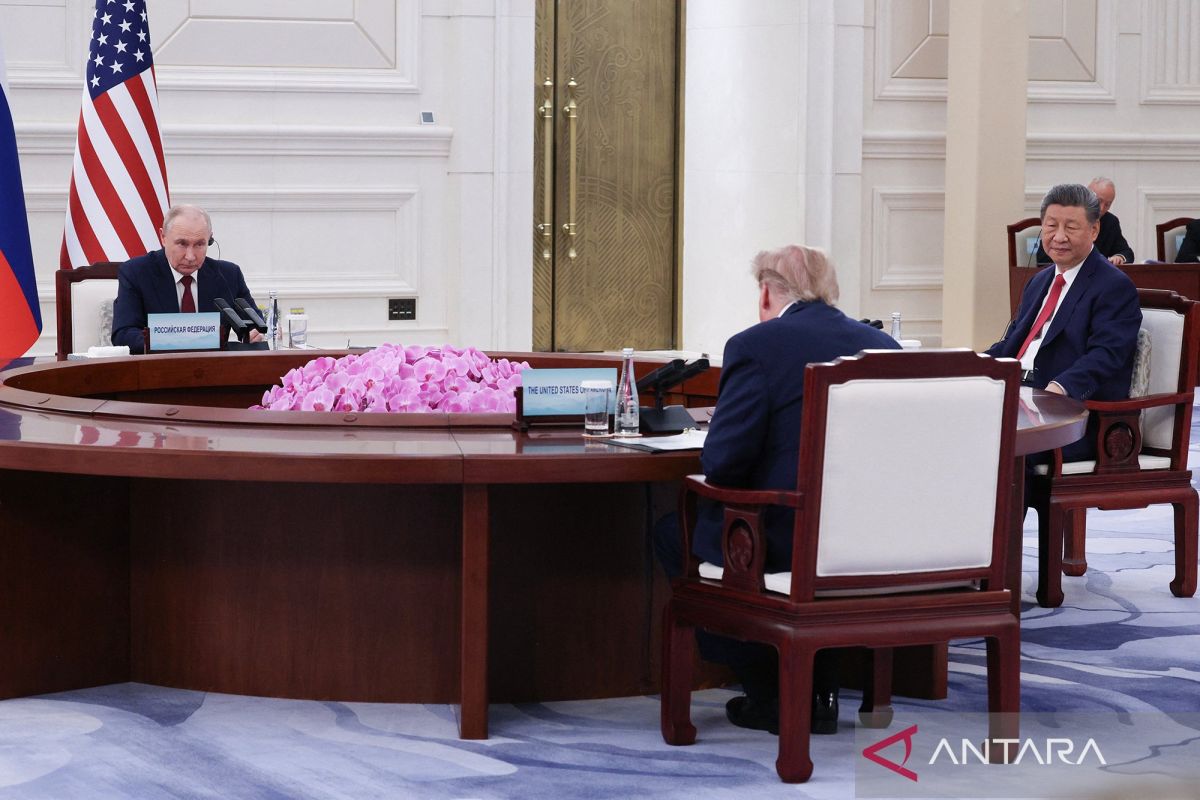
Jakarta (ANTARA) - A trilateral meeting between Chinese President Xi Jinping, US President Donald Trump and Russian President Vladimir Putin at Kylin Villa in Shenzhen, China, on 19 November 2026, has raised new hopes for geopolitical stability and the global economy.
For the first time, the three national leaders met in a trilateral format on the sidelines of the APEC Summit. The 80-minute closed-door meeting produced a document entitled the Declaration of Peace, which gave a positive signal to global markets.
However, behind the cordial diplomacy and historical rhetoric about the Second World War, the substance of the agreement needs to be considered in proportion, particularly with regard to its implications for Indonesia’s economy.
The trilateral meeting in Shenzhen resulted in four key commitments: reform of the United Nations (UN), reducing the risk of nuclear weapons, respecting the immunity of state officials from the jurisdiction of international courts, and increasing the production and supply of refined petroleum products.
Yet the official document made no mention of the two conflicts that have weighed on the global economy: Russia’s war in Ukraine and military tensions in the Middle East.
For Indonesia, this moment comes as the domestic economy demonstrates resilience amid rising global uncertainty.
Statistics Indonesia (BPS) data show that the national economy grew by 5.61 per cent, 5.29 per cent and 5.47 per cent year on year in the first, second and third quarters of 2026, respectively.
Bank Indonesia (BI), meanwhile, forecasts full-year economic growth in 2026 of between 4.9 and 5.7 per cent. Indonesia’s balance of payments also remained in surplus in the third quarter, reflecting the resilience of the external sector.
Even so, relatively sound domestic economic fundamentals do not mean Indonesia is free from global pressures.
Escalating geopolitical conflicts throughout the year had, at one point, pushed the Indonesian Crude Price (ICP) to US$117.24 a barrel in October.
Source: jawawa.id (https://jawawa.id/newsitem/assessing-the-impact-of-the-shenzhen-trilateral-meeting-on-indonesias-economy-1795834308)
Originally published by Antara (Indonesian) (https://www.antaranews.com/berita/5884339/menakar-dampak-trilateral-shenzhen-bagi-ekonomi-indonesia), translated from Indonesian