
Assessing the Halal Industry’s Readiness for the Mandatory Certification Deadline
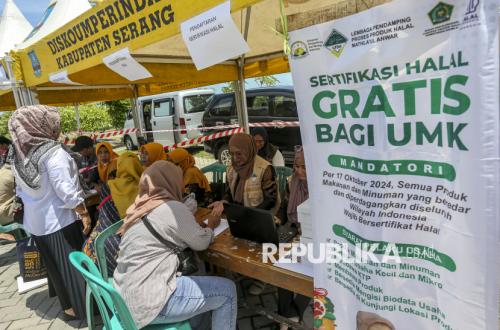
Indonesia will enter the next phase of mandatory halal certification on 18 October 2026, with a base of 2.87 million halal industry businesses, 99 per cent of them micro and small enterprises. The deadline underpins a series of policies developed by the Industry Ministry since 2020 under Agus Gumiwang Kartasasmita, who was removed as industry minister in this month’s Cabinet reshuffle.
According to the Halal Product Assurance Agency (BPJPH), this phase covers several product groups, including cosmetics, textiles and ceramics, as well as food and drink products, in line with the phased implementation. This large market holds considerable potential, but domestic producers have yet to capture its full added value.
The opportunity is substantial. The State of the Global Islamic Economy Report recorded Muslim consumer spending in the halal economy at US$2.6 billion in 2024. That figure is projected to rise to US$3.56 billion by 2029.
In Indonesia, around 87 per cent of the population is Muslim. The food and drink industry, the largest sector in the halal economy, grew by 6.15 per cent in 2025 and contributed about 6.72 per cent of gross domestic product (GDP), while roughly 65 million micro, small and medium-sized enterprises (MSMEs) account for approximately 61 per cent of GDP.
However, the size of the market has not automatically translated into industrial strength. The question policymakers are now asking is no longer how large Indonesia’s halal market is, but how much of its value domestic producers can capture.
“The halal economy is an important part of the global economic war that we must win,” Agus Gumiwang said.
Since 2020, at Agus Gumiwang’s initiative, the Industry Ministry has developed the halal industry along several tracks: institutions, regulation, infrastructure, supply chains, business models, promotion and public services—all parts of the halal economy ecosystem.
Institutionally, the ministry established the Halal Industry Empowerment Centre (PPIH) in 2020, which was renamed the Halal Industry Centre (PIH) in January 2025. The ministry has also established Halal Inspection Bodies, Halal Product Process Assistance Institutions (LP3H), and halal training institutions to prepare halal supervisors and assistants.
On infrastructure, the ministry regulated the establishment of halal industrial estates through Industry Ministerial Regulation No. 17 of 2020 and encouraged the development of Halal Industrial Parks with the Indonesian Industrial Estates Association (HKI). Its medium-term direction is set out in the 2025–2029 Halal Industry Development Roadmap (Industry Ministerial Regulation No. 40 of 2025), which complements the national Indonesia Halal Industry Masterplan 2023–2029.
The Industry Ministry is currently facilitating four halal industrial estates, in Bintan, Cikande, Jababeka and Sidoarjo. The supporting ecosystem includes 22 Halal Inspection Bodies, four Halal Product Process Assistance Institutions, five halal product assurance training institutions and three professional certification bodies.
In 2021, the ministry launched the Indonesia Halal Industry Awards (IHYA) to raise awareness, encourage and recognise industry participants, and promote the sector to businesses and consumers. At the inaugural IHYA, 145 companies entered independently; the awards have been held annually since. Participation rose to 1,091 companies for the 2026 edition.
The most notable shift in recent years has been how the sector is viewed. The halal industry is no longer treated solely as a matter of certification, but is linked to broader priorities such as industrialisation, trade barriers, deeper industrial structures, higher production capacity utilisation and investment, and the development of industrial estates. The rationale is that halal products require raw materials, machinery, packaging, laboratories, workers, financing and logistics, all of which should increasingly be available domestically.