
Assessing Syria's Unification and the Dilemma of Repatriating Indonesian Citizens
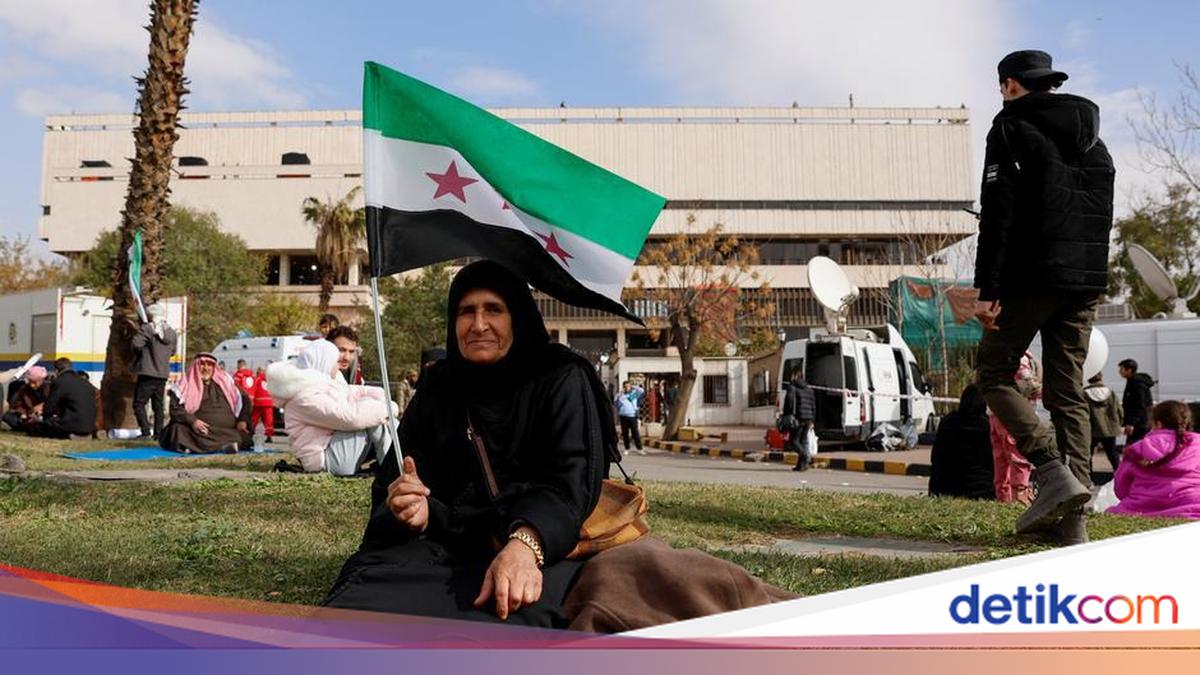
Syria’s geopolitical landscape is once again at a critical crossroads. The announcement of the dissolution of the Syrian Democratic Forces (SDF) militia and its full integration into central defence institutions under the transitional government of President Ahmed al-Sharaa marks the end of an era of the largest Kurdish regional autonomy experiment in northern and eastern Syria.
The doctrinal policy of ‘One state, one army, and one set of institutions’ championed by Damascus now faces its toughest test: whether this forced unification will bring permanent stability, or instead lay the fuse for a geopolitical time bomb ready to explode in the future.
Since the collapse of the Bashar al-Assad regime in December 2024, President Ahmed al-Sharaa’s main priority has been to restore absolute single territorial sovereignty. This tactical unification step began with the dissolution of rebel factions within his own ranks, before finally shifting focus to the north-eastern region controlled by the SDF.
The handover of power by SDF Commander Mazloum Abdi occurred after military confrontation and negotiation deadlock throughout 2025, finally reaching its peak in the second half of 2026. With Kurdish forces withdrawing east of the Euphrates River, Damascus succeeded in taking full control of strategic logistics corridors and nationalising nearly 80 per cent of oil fields in Deir ez-Zor and Hasakah, including the largest Al-Omar oil field and the Conoco gas complex.
This nationalisation step succeeded in boosting Syria’s oil production from an initial 10,600 barrels per day (bpd) to 26,000 bpd, with a short-term recovery target of 45,000 bpd.
This means that with the dissolution of the SDF, Syria’s transitional government in Damascus is now officially the sole ruler over its own natural resources, ending energy dependence caused by the long war.
Domestically, Al-Sharaa also played a fairly clever incentive-disincentive strategy. On one hand, he dissolved the SDF command structure and absorbed around 12,000 of its fighters individually into regular Syrian Army units. On the other hand, to dampen the potential for long-term asymmetric guerrilla warfare from ethnic Kurds, the transitional government granted significant political concessions.
Through a formal decree, the Kurdish language was officially recognised as one of the national languages, the civil rights of Kurdish citizens were restored, and Kurdish technocrat figures were accommodated into government bureaucratic positions. This cultural concession is Damascus’s attempt to win the hearts of the Kurdish population without having to sacrifice centralised military control.
Shifting Regional Poles and the Collapse of US Influence
The dissolution of the SDF is not merely changing the internal political map, but completely overhauling the regional balance of power. The party that benefits most from this scenario is Turkey. For Ankara, the collapse of the SDF—which they view as a political shield for the YPG/PKK terrorist organisation—is the achievement of their primary security aspiration on the southern border.
The disappearance of the existential threat of a ‘Kurdish corridor’ opens wide gates for the normalisation of diplomatic relations, border stabilisation, and closer bilateral economic cooperation between Ankara and Damascus.
Conversely, this new reality confirms the end of direct American influence in eastern Syria. Washington’s military presence for years in the oil-rich region depended entirely on the SDF as the most effective local counter-terrorism partner.
When the US decided to withdraw its military support in favour of a broader strategic compromise, the Kurdish bargaining position immediately collapsed. This provides a valuable lesson in the dynamics of the security dilemma in the Middle East: tactical alliances with global powers are often temporary and vulnerable to sacrifice when macro-interest calculations change.
Regional Security Dilemma and Implications for Indonesia
Beyond the calculation of territory and oil fields, there is one global security variable now in a highly vulnerable position: the fate of tens of thousands of foreign ISIS detainees in giant camps such as Al-Hol and Roj. For years, the SDF acted as the warden securing these emergency detention complexes due to the international community’s reluctance to carry out repatriation.
At its peak, the Al-Hol camp housed up to 80,000 people. When control of the camp was transferred along with the withdrawal of SDF forces, the power vacuum in supervision briefly triggered a mysterious mass escape that made more than 24,000 camp residents ‘vanish’ in a short time.
This reality has a direct and crucial impact on Indonesia’s domestic interests. Based on official data from the Indonesian Ministry of Foreign Affairs, there are at least 359 Indonesian citizens identified as being in refugee camps in the region, excluding an estimated 600 other Indonesian citizens with foreign fighter status. The post-SDF dissolution situation has become more urgent after the FTF Task Force and the Indonesian Ministry of Foreign Affairs succeeded in verifying that at least 182 individuals who were former Al-Hol residents and escaped were proven to have valid Indonesian population data.
For Jakarta, the power transition in eastern Syria cuts through the grey area of diplomacy. If previously Indonesia could delay repatriation on the grounds of having no official relations with the de facto Kurdish authorities, now the Indonesian government is faced with the legal-formal obligation to deal directly with the Syrian central government in Damascus.
The risk of leaving hundreds of Indonesian citizens stranded without legal clarity amid Syria’s transition period is far greater than carrying out measured humanitarian intervention. The Indonesian government is required to immediately formulate selective repatriation steps, particularly for children and women who dominate up to 70 per cent of the deportee population, through strict radicalisation assessments before they become a threat.
Source: jawawa.id (https://jawawa.id/newsitem/assessing-syrias-unification-and-the-dilemma-of-repatriating-indonesian-citizens-1787802735)
Originally published by detikcom (https://news.detik.com/kolom/d-8636072/menakar-unifikasi-suriah-dan-dilema-repatriasi-wni), translated from Indonesian