
Assessing Danantara's Steps to Build an Integrated Textile Industry Ecosystem
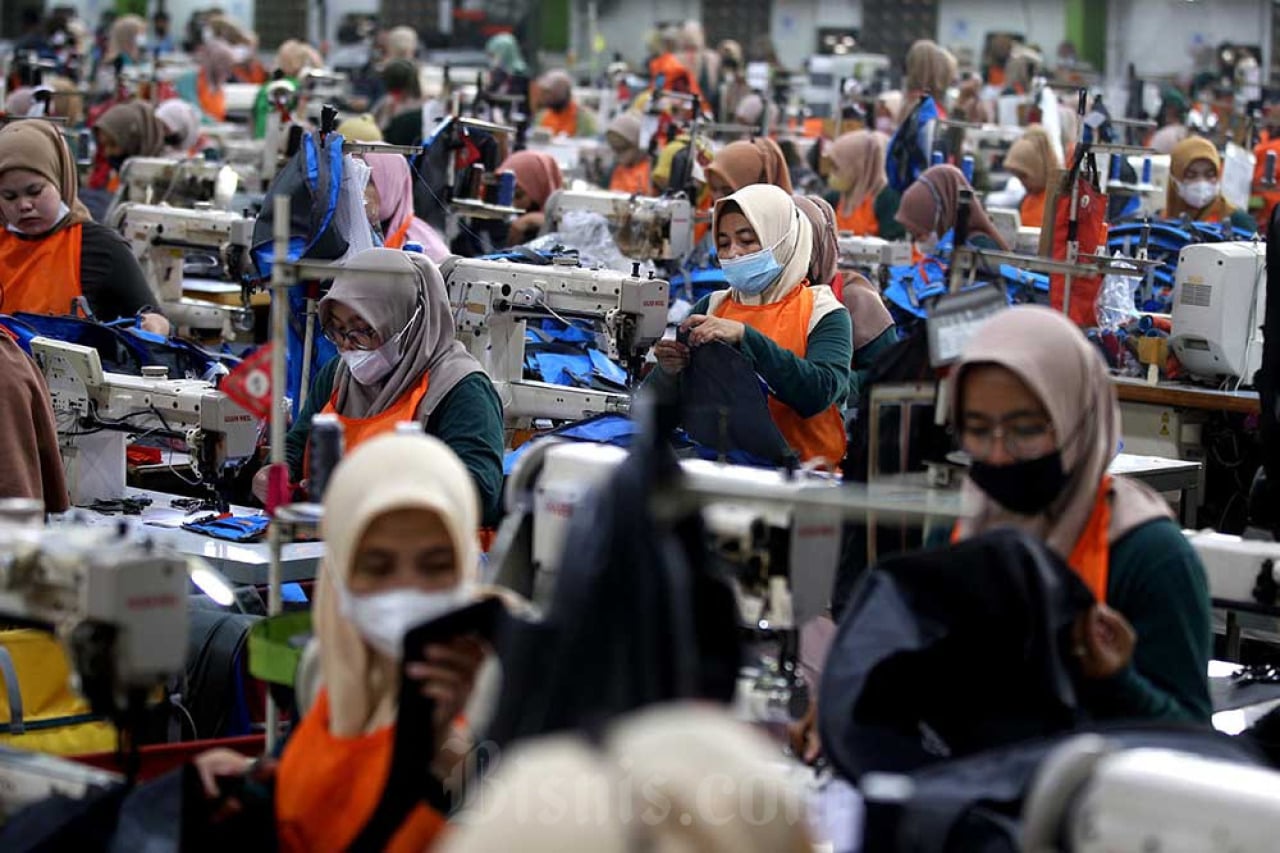
The government’s plan to establish integrated textile and textile products (TPT) industrial zones, spanning from upstream to downstream, has received a positive response from the business community. This concept is viewed as a momentum to fix the TPT ecosystem, which has long been fragmented.
The Danantara Investment Management Agency (BPI Danantara) is one of the primary drivers in preparing these zones. CEO of BPI Danantara, Rosan Roeslani, stated that special zones will be prepared to integrate the TPT industry from upstream to downstream, supported by technology to increase efficiency and competitiveness.
“We at Danantara will also prepare a special area for upstream-to-downstream integration to ensure greater efficiency by using proper and advanced technology, so that our products can achieve better competitiveness,” said Rosan following a limited meeting with President Prabowo Subianto at the Presidential Palace Complex, Jakarta, on Tuesday (22/09/2026).
Responding to this plan, the Chairperson of the Indonesian Garment and Textile Association (AGTI), Anne Patricia Sutanto, proposed the formation of integrated TPT industrial zones by modelling them after the development of industrial zones in Vietnam. This concept could position the government as an industry aggregator. According to her, the government can provide and develop the zone’s infrastructure, while production activities and investments remain managed by private enterprises.
“Fifteen years ago, I visited Vietnam. There are many special economic zones in Vietnam specifically for the TPT industry. The players are the business community, but the zones are owned by the government,” Anne said when contacted by Bisnis on Wednesday (2long/09/2026).
She assessed that such a model could be an option to accelerate the redevelopment of the national TPT ecosystem, which remains fragmented. The government, she continued, does not need to act as an industry operator but should play a role in building an ecosystem that allows businesses from upstream to downstream to thrive within a single zone.
Furthermore, Anne argued that the development of TPT industrial zones must consider the characteristics of each sub-sector. The textile industry, for instance, requires a supply of environmentally friendly energy and wastewater treatment infrastructure that meets Environmental, Social, and Governance (ESG) standards. Meanwhile, the labour-intensive garment industry requires green energy support as well as the availability of a large workforce. The integration of these zones is expected to create an ecosystem that supports industrial sustainability while providing a multiplier effect for the region.
She noted that zone development cannot be based solely on the availability of land or property. Planning must comprehensively consider industrial needs, from the upstream to the downstream sectors. She mentioned that this concept needs to be thoroughly studied by Danantara if the agency takes on the role of a TPT ecosystem aggregator.
“It must be thought through comprehensively. It shouldn’t just be because there is property available, then a zone is created. It must be considered from various angles. Upstream is very important, energy is also important, downstream needs must be met, and garments are more labour-intensive,” Anne remarked.
The plan to form special TPT zones was also welcomed by the Indonesian Association of Fibre and Filament Yarn Producers (APSyFI). The scheme is seen as a way to cut logistical hurdles and simplify the monitoring of export and import goods flows.
Secretary General of APSyFI, Farhan Aqil Syauqi, revealed that regional integration is one of the association’s proposals submitted to the government as part of a solution to strengthen the national textile industry. “Integrating textiles into one zone is our proposal, which has been presented to the government to ease national access and logistics specifically for the textile industry. This also simplifies the supervision of export-import goods if conducted through a single gate,” Aqil told Bisnis.
According to him, the concept does not mean the government will build textile zones in every region. Instead, the industry from upstream to downstream should be integrated into a single zone so that the supply chain can operate more efficiently. Aqil added that this integration could involve various scales of business, including both large-scale industries and Small and Medium Enterprises (SMEs). Thus, the zone would not only serve as a production hub for large companies but also strengthen SME access to textile raw materials.
Meanwhile, the Chairperson of the Ikatan Pengusaha Konveksi Berkarya (IPKB), Nandi Herdiaman, explained that the character of textile SMEs differs from large industries because most players operate as home industries located within residential areas and production centres. This condition makes relocating all SMEs to an integrated zone unrealistic.
“SMEs are home industries, not located in industrial zones. Textile SMEs are widespread in residential areas, villages, and alleys of large cities. It is impossible to move them all to one zone,” Nott said to Bisnis.
He suggested that the integrated zones being prepared by the government should instead function as supply chain strengthening hubs that can serve the textile industry outside the zone. In this way, the benefits of integration would not be limited to companies within the zone. Nandi proposed a ‘hub-and-spoke’ concept. In this model, upstream industries within the zone could serve as raw material providers and off-takers, while downstream production could continue to be carried out by SMEs in various centres. According to Nandi, this approach would give the new industrial zones a broader function as the centre of the national TPT ecosystem. SMEs would not need to be relocated but would instead gain better access to raw materials.
Source: jawawa.id (https://jawawa.id/newsitem/assessing-danantaras-steps-to-build-an-integrated-textile-industry-ecosystem-1790243521)
Originally published by ekonomi.bisnis.com (https://ekonomi.bisnis.com/read/20260924/257/2006624/menakar-langkah-danantara-bangun-ekosistem-industri-tekstil-terintegrasi), translated from Indonesian