
Assessing Conglomerate Stock Prospects After First Half 2026 Earnings
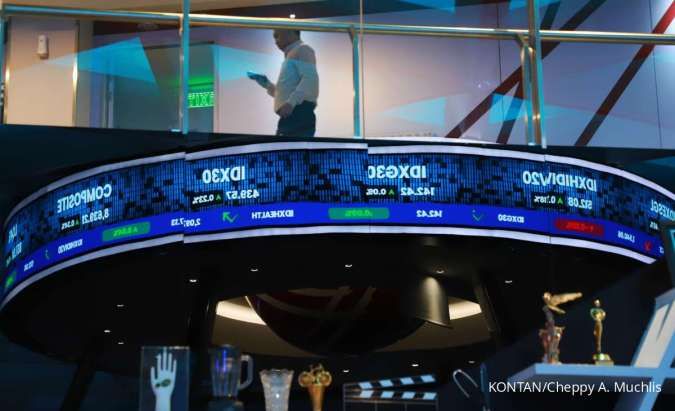
The performance of Indonesian conglomerate issuers varied throughout the first half of 2026. Revenue growth recorded by several companies did not always result in increased net profit.
For instance, within the Salim Group, PT Indofood Sukses Makmur Tbk (INDF) posted revenue of Rp 65.53 trillion, growing 9% year-on-year (YoY). However, its net profit fell 19% YoY to Rp 4.72 trillion. Conversely, the group’s palm oil plantation issuers recorded growth in both revenue and net profit, such as PT PP London Sumatra Indonesia Tbk (LSIP), which saw sales rise 16% YoY and net profit increase 25% YoY.
Shifting to the Emtek Group, PT Elang Mahkota Teknologi Tbk (EMTK) saw its revenue rise 22.7% YoY to Rp 10.81 trillion, but the company posted a loss of Rp 4.23 trillion, reversing from a net profit.
Liza Camelia Suryanata, Head of Research at Kiwoom Sekuritas Indonesia, noted the varied performance of conglomerate issuers in the first half of 2026. Pressure on margins, funding costs, and non-operational factors affected the ability of issuers to generate profits. “Many issuers recorded revenue growth, but not all were able to convert it into profit due to margin pressures, funding costs, and non-operational factors,” she said on Wednesday (5/8).
In terms of performance quality, Liza highlighted DCII, TOWR, BREN, AALI, and SCMA as standout issuers during the first six months of 2026. Meanwhile, the profit surges of CUAN, DMAS, SUPA, and BUMI require further scrutiny, as the high growth partly stemmed from a low base comparison. INDF, ICBP, ROTI, IMAS, ASII, UNTR, and BSDE were considered relatively lagging, while EMTK and BUKA reversed into losses despite growing revenue.
Looking ahead to the second half of 2026, Liza sees the strongest growth opportunities in data centre and digital infrastructure, renewable energy, and plantation sectors. She believes DCII and TOWR could benefit from digital infrastructure momentum, BREN from renewable energy exposure, and AALI and LSIP from sustained plantation sector performance. INDF and ICBP could also improve if rupiah and raw material price conditions become more conducive, while AUTO might benefit from a recovery in automotive sales. However, investors should remain cautious about weakening purchasing power, commodity and rupiah volatility, and funding costs. Premium valuations of some conglomerate stocks with limited free float also pose a risk.
Maximilianus Nico Demus, Associate Director of Research and Investment at Pilarmas Investindo Sekuritas, observed that conglomerate groups generally possess stronger fundamental resilience. He noted that business diversification and established ecosystems allow weakness in one business line to be offset by performance in others. Nico favours the Astra Group, citing ASII’s strong business variety and strategic repositioning to create long-term value through its ecosystem. He also finds the Djarum Group attractive through BBCA and TOWR, while TPIA from the Prajogo Pangestu group is worth monitoring, particularly for its exposure to petrochemicals and renewable energy.
Nico expects conglomerate issuers to remain resilient through the end of 2026, though performance will heavily depend on management’s ability to balance weakening business lines with growing ones. “The opportunity for growth remains far greater compared to ordinary issuers. However, market players and investors will return to the fundamentals of each issuer,” he said.
For stock picks, Nico favours ASII with a target price of Rp 6,580, INDF at Rp 8,420, ICBP at Rp 9,760, SRTG at Rp 2,850, BBCA at Rp 8,130, AUTO at Rp 3,270, and TPIA at Rp 3,190 per share. Meanwhile, Liza places BBCA as a top pick with a buy recommendation and a 12-month target price of Rp 8,075 per share, citing solid fundamentals despite modest first-half profit growth of 1.79%. For the non-banking sector, she views TOWR and AALI as attractive due to healthier profit growth supported by core businesses, while BREN and CUAN are more suitable for aggressive investors given their higher valuations and volatility.